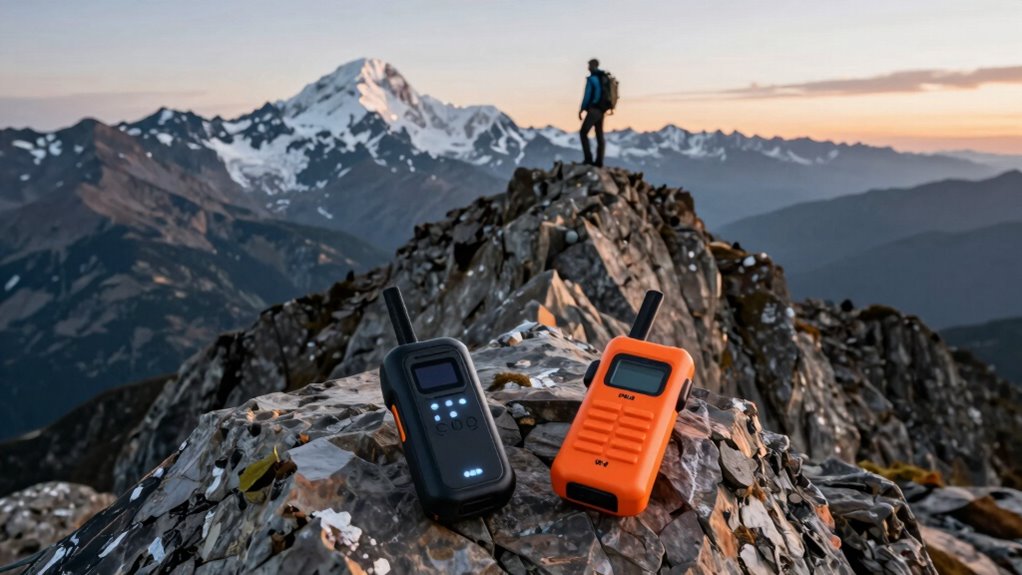

If you’re engaging in activities with moderate risk and want ongoing communication, a satellite messenger is your best choice. It allows you to text, check in, and share your location, giving peace of mind during extended trips. However, if you’re in high-risk, remote environments where quick distress alerts are critical, a PLB offers a reliable, no-frills emergency signal. To find the safest option tailored to your adventure, explore your needs further below.
Key Takeaways
- Use a satellite messenger for ongoing communication and planning in moderate to low-risk activities; choose a PLB for immediate distress alerts in high-risk scenarios.
- Satellite messengers support two-way messaging and check-ins, ideal for extended trips; PLBs transmit only distress signals, suitable for emergency-only use.
- High-risk, remote environments favor PLBs for their simplicity and reliability; lower-risk activities with some communication needs benefit from satellite messengers.
- Both devices operate via satellite networks; select based on the activity’s risk level and whether continuous communication or quick distress signaling is prioritized.
- For activities with minimal risk but requiring connectivity, satellite messengers provide added safety; for critical emergencies in hazardous settings, PLBs are more dependable.
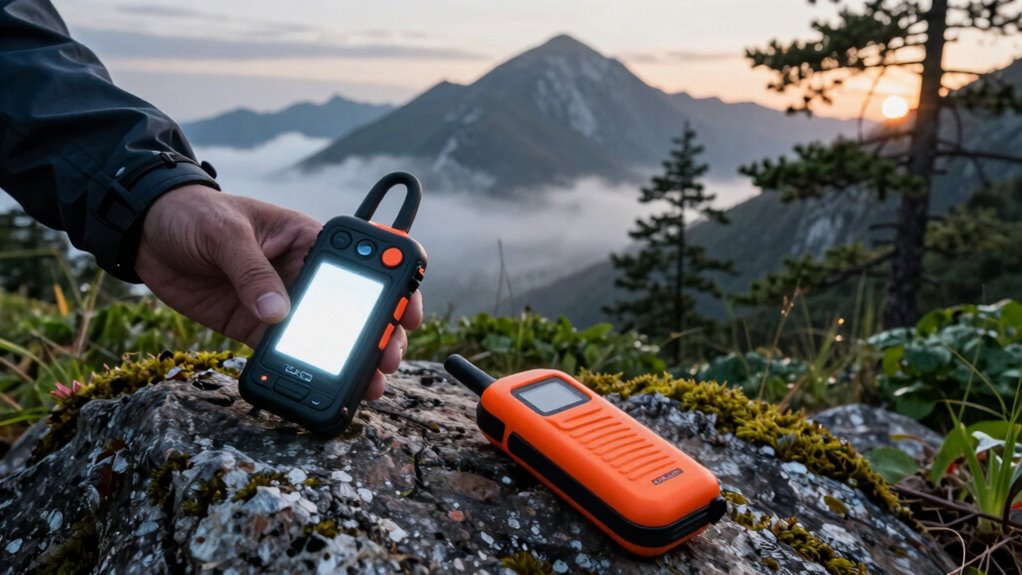
When choosing between a satellite messenger and a Personal Locator Beacon (PLB), understanding their differences can considerably impact your safety and communication needs. Both devices are essential tools for emergency preparedness, especially if you spend a lot of time outdoors or in remote locations. But they operate on different principles, utilizing satellite technology in unique ways to keep you connected or to call for help when it matters most. Knowing which one fits your risk level and activity profile is key to making the right choice.
Choosing between satellite messengers and PLBs depends on your outdoor risk level and communication needs.
Satellite messengers are versatile devices that not only send distress signals but also allow you to communicate with friends, family, or emergency services via text messages or pre-set check-ins. They often feature interactive maps, GPS tracking, and other functionalities that help you stay connected even when you’re out of cell phone range. Because they rely on satellite networks, they work in remote areas where cellular signals are unavailable, making them a reliable part of your emergency preparedness kit. This constant connectivity can provide peace of mind, especially if you’re venturing into wilderness areas, mountains, or oceans where rescue might take hours or even days. Additionally, the advanced satellite networks used by these devices ensure reliable communication in challenging environments.
In contrast, PLBs are dedicated emergency devices designed solely for distress signaling. When activated, they transmit a distress signal with your location to the nearest rescue coordination center via satellite. They typically don’t offer two-way communication, so you can’t check in or send messages. Because of this, PLBs are often considered more robust and reliable, as they’re built to operate in harsh environments and have fewer features that could fail. They’re ideal for high-risk activities like mountaineering, boating, or solo backcountry adventures where the goal is to alert rescuers immediately without relying on your ability to communicate further.
From an emergency preparedness perspective, the choice hinges on your activity level, risk profile, and need for communication. If you want to stay connected with loved ones or coordinate with rescue teams, a satellite messenger is your best bet. It’s like having a safety net that extends beyond just calling for help—allowing you to keep others informed and plan accordingly. On the other hand, if you’re engaging in high-risk activities in extremely remote areas where rescue might take longer and you don’t need regular communication, a PLB offers a straightforward, highly dependable way to signal for help.
Ultimately, understanding satellite technology and how each device functions helps you choose the right SOS tool for your specific risk level. Both are essential components of emergency preparedness; selecting the right one can mean the difference between a safe return and a dangerous situation.
Frequently Asked Questions
Can I Use a Satellite Messenger for Non-Emergency Communication?
Yes, you can use a satellite messenger for non-emergency communication. It’s great for staying socially connected when you’re off the grid, allowing you to send messages, share your location, and check in with loved ones. This helps you maintain social connectivity during outdoor adventures or remote trips, providing peace of mind without relying on traditional cell service. Just remember, it’s designed primarily for communication, not emergency signaling.
What Is the Battery Life Difference Between Satellite Messengers and PLBS?
Satellite messengers generally have longer battery longevity than PLBs because they use less power during regular operation, thanks to more efficient power consumption. PLBs often have shorter battery life since they’re designed for emergency use and need to maintain a high-power signal for distress alerts. If you’re planning longer trips, a satellite messenger’s better power efficiency can be a significant advantage, reducing how often you need to recharge or replace batteries.
Are Satellite Messengers Waterproof and Rugged Enough for Harsh Conditions?
Yes, satellite messengers are waterproof and built with rugged design, making them suitable for harsh conditions. They typically feature waterproof durability to withstand rain, splashes, or immersion, and rugged construction to handle drops and rough terrain. This guarantees your device remains operational in extreme environments, giving you peace of mind during outdoor adventures. Always check the specific model’s ratings to verify it meets your particular needs for waterproof durability and rugged design.
Do Satellite Messengers Require a Subscription Plan?
A satellite messenger definitely requires a subscription plan, but it’s more affordable than you might think. You’ll pay subscription costs for service coverage, ensuring your device stays connected almost anywhere. Think of it as your lifeline to safety—without it, your device’s full potential is wasted. So, yes, you’ll need a plan, but it’s worth the peace of mind knowing you have reliable coverage in the wildest places.
How Quickly Can a PLB Send a Distress Signal?
A PLB can send a distress signal within minutes, typically around 5 to 15 minutes, depending on emergency response times and signal transmission speed. When you activate it, the device transmits an accurate distress signal via satellite to emergency services quickly. This rapid transmission guarantees that rescue teams receive your location promptly, making PLBs especially dependable for urgent situations where swift emergency response times are critical.
Conclusion
Ultimately, choosing between a satellite messenger and a PLB depends on your risk level and adventure style. If you’re venturing into the wilds, a satellite messenger offers near-instant communication—like having a lifeline to civilization. But for quick, reliable emergency alerts, a PLB is your best bet—laser-focused and unstoppable. Don’t gamble with your safety; pick the tool that matches your adventure’s intensity, because when it comes to rescue, every second counts more than you could imagine.