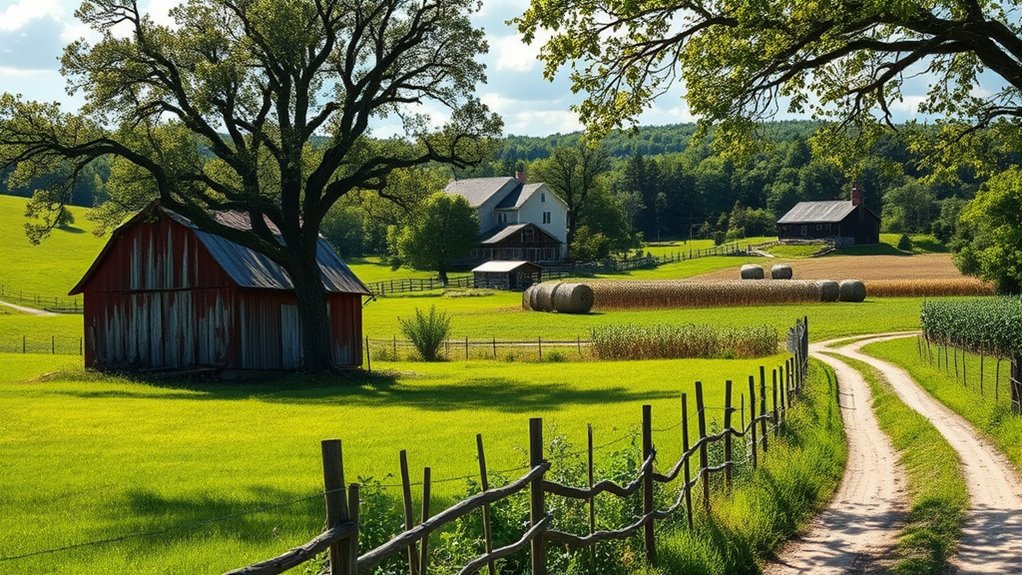

To survive rurally, rely on resourcefulness and strong community ties. Practice bartering with neighbors for goods and services, and share tools and knowledge to build resilience. Conserve water by fixing leaks, using low-flow fixtures, and collecting rainwater. Manage your land wisely through crop rotation, thinning trees, and understanding weather patterns. These sustainable habits strengthen your farm, woodlot, and community, creating a self-reliant lifestyle that faces challenges with confidence—learn more ways to thrive in rural living as you continue.
Key Takeaways
- Foster strong neighbor relationships through resource sharing, bartering, and mutual support to enhance rural resilience.
- Implement water conservation methods like rainwater harvesting and leak repairs to sustain farms and woodlots.
- Practice crop rotation, land reading, and selective thinning to maintain soil health and healthy ecosystems.
- Promote community events and celebrations to strengthen social bonds and collective preparedness.
- Reduce reliance on cash by exchanging surplus goods and services, ensuring sustainability during challenging times.

Have you ever wondered what it takes to thrive in a rural setting? Living far from the hustle and bustle means you need to be resourceful and build strong relationships with your neighbors. Community bartering becomes an indispensable tool in these areas, allowing you to exchange goods and services without relying solely on cash. If your neighbor has a surplus of fresh eggs and you’re skilled at repairs, swapping those eggs for a quick fix on your barn keeps everyone’s needs met. This kind of mutual support fosters a sense of camaraderie and self-sufficiency that’s essential for rural survival. Bartering also helps conserve cash for more imperative supplies, giving you more flexibility during tough times. Effective event planning and promotion can also turn these exchanges into community-building celebrations. Water conservation is another essential aspect of thriving in a rural environment. You might have a well or a natural water source, but understanding how to use water wisely can make a big difference, especially during droughts or dry seasons. Simple practices like collecting rainwater, fixing leaks promptly, and watering only when necessary help stretch your water supply. Installing low-flow fixtures and using mulch around plants can considerably reduce water waste, ensuring your crops and livestock stay healthy without draining your resources. Efficient water management not only preserves a precious resource but also reduces your dependence on external systems that might be unreliable or costly. In rural settings, your farm or woodlot isn’t just about growing food or harvesting timber; it’s about creating a resilient ecosystem. You learn to read the land, understand the weather patterns, and adapt your routines accordingly. This might mean rotating crops to enrich the soil or selectively thinning trees to promote healthy growth. Building a close-knit community of neighbors further enhances your ability to adapt and survive. Sharing tools, seeds, or knowledge about water-saving techniques creates a network that benefits everyone. When everyone contributes and supports each other through bartering and resource sharing, the community becomes stronger and more self-reliant. Rural survival hinges not only on physical resources but also on your ability to foster relationships and manage what you have wisely. Community bartering reduces the need for cash and builds trust, while water conservation ensures that your land remains productive and sustainable. Together, these practices form the backbone of a resilient rural life, allowing you to face challenges with confidence. By working hand-in-hand with your neighbors and respecting the land’s limits, you’ll find that thriving in the countryside isn’t just about surviving—it’s about creating a sustainable, supportive way of life.
Frequently Asked Questions
How Do I Find Reliable Rural Emergency Contacts?
To find reliable rural emergency contacts, start by building a strong emergency preparedness plan that includes local numbers. Use your community’s communication networks, like local radio stations, community boards, and online groups, to stay updated. Contact your local sheriff’s office, fire department, and healthcare providers to get official numbers. Keep a physical list handy and save digital contacts on your phone for quick access during emergencies.
What Are Common Legal Considerations for Rural Land Use?
Think of rural land use as steering a winding trail—you need clear maps and proper permits. Common legal considerations include understanding zoning regulations that dictate what you can build or farm, and securing land use permits before making changes. For example, a neighbor once faced fines for ignoring zoning rules when expanding their barn. Staying informed and compliant helps you avoid costly legal issues and keeps your rural property thriving.
How Can I Prevent Theft or Vandalism on My Farm?
You can prevent theft and vandalism on your farm by implementing strong security measures like installing surveillance cameras, proper lighting, and sturdy fencing. Additionally, organize community patrols with neighbors to keep an eye out for suspicious activity. Building good relationships with nearby residents fosters a sense of shared responsibility, making it less likely for thieves or vandals to target your farm. Consistent security efforts help protect your property effectively.
What Are Effective Ways to Conserve Water on a Farm?
You can conserve water on your farm by improving irrigation efficiency, ensuring you deliver water directly to plant roots and reduce waste. Installing drip or sprinkler systems helps achieve this. Additionally, use rainwater harvesting to collect and store rainwater for later use, reducing reliance on groundwater or municipal supplies. These methods keep your water use sustainable, save costs, and protect your farm’s water resources effectively.
How Do I Build Community Support in Rural Areas?
You build community support by actively participating in community events and encouraging neighbors to join. Host or sponsor local gatherings, farmers’ markets, or workshops that foster connection. Form local partnerships with nearby farms, businesses, and organizations to create a sense of shared purpose. When you engage genuinely, listen to neighbors’ concerns, and collaborate on projects, you’ll strengthen bonds and gain lasting support in your rural community.
Conclusion
Living rurally means you’re always prepared—your farm, woodlot, and neighbors become your safety net. Sure, some say it’s too isolated, but imagine waking up to fresh air, the sound of birds, and knowing your land sustains you. Even if a storm knocks out power, you’re still warm by your woodstove, surrounded by nature’s resilience. Embrace this life, because it’s not just survival; it’s thriving amid the land’s quiet strength.