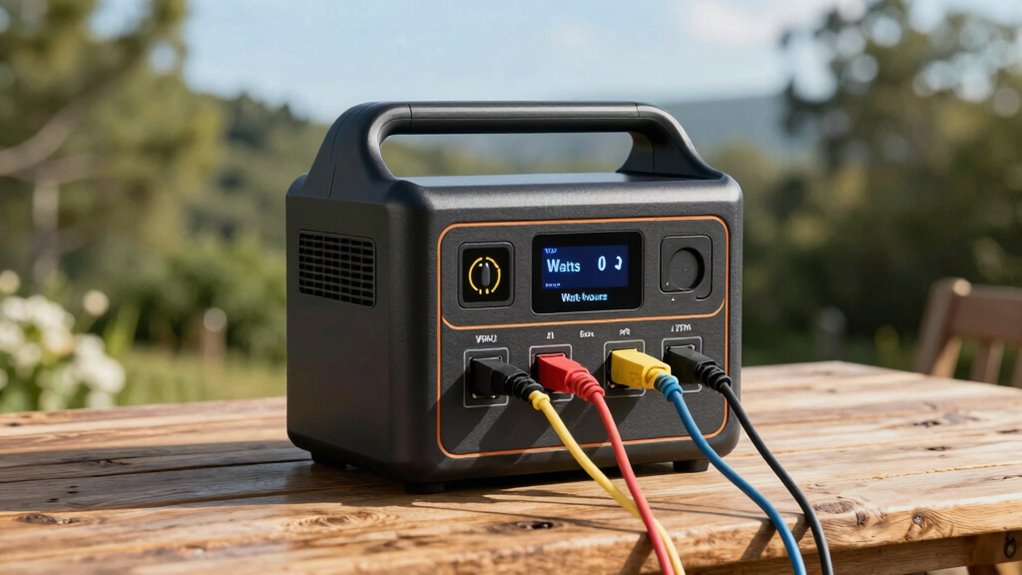
Watts measure the power your devices use at a specific moment, like how much energy they need to run continuously. Watt-hours, on the other hand, show the total energy a power station can store or supply over time, like how long your devices will run before the power runs out. Understanding these helps you choose the right station and plan your usage. Stick around if you want to learn how these differences impact your power needs.
Key Takeaways
- Watts measure the power used or produced at a specific moment, like a light bulb’s brightness.
- Watt-hours indicate the total energy a power station can supply over time, reflecting capacity.
- A higher watt-hour rating means longer device runtime before needing a recharge.
- Watts help determine the power draw of devices, while watt-hours help estimate how long they can run.
- Understanding both ensures proper device compatibility and effective energy management during use.
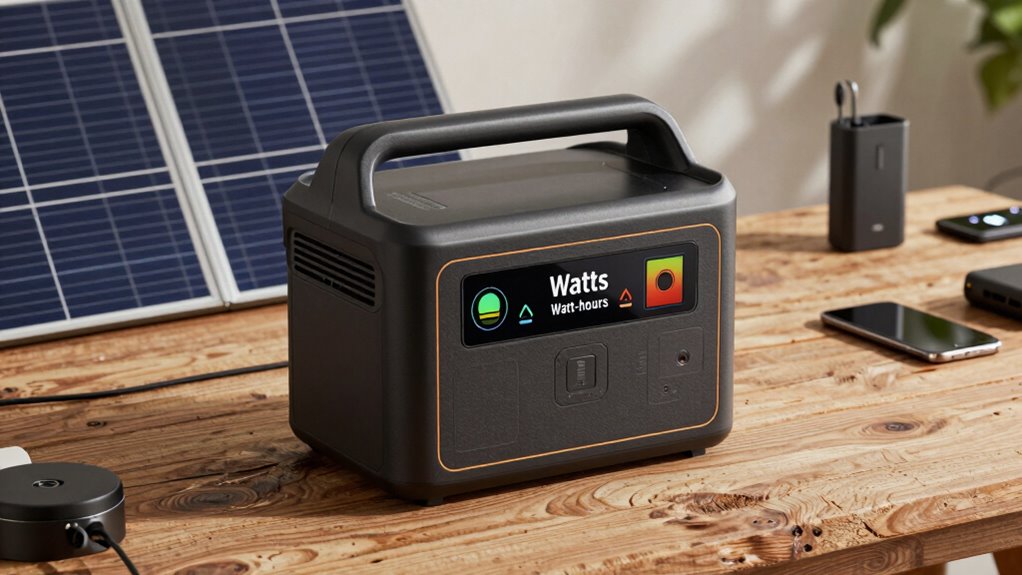
A portable power station is a versatile device that provides electricity wherever you need it, making it an essential tool for outdoor adventures, emergencies, or remote work. One of the most important aspects to understand about these devices is their battery capacity, which determines how much power they can store and deliver. Battery capacity is usually measured in watt-hours (Wh), giving you a clear idea of the total energy available over time. For example, a power station with a 500Wh capacity can theoretically supply 100 watts for five hours or 50 watts for ten hours. Knowing the battery capacity helps you plan which devices you can run and for how long, guaranteeing you don’t run out of power unexpectedly.
Understanding watt-hour capacity helps plan device usage and prevent power shortages during outdoor or emergency situations.
To make the most of your portable power station, it’s crucial to understand the different charging methods and how they impact your device’s usability. Most power stations can be recharged via AC outlets, car chargers, or solar panels. Charging through an AC outlet is typically the fastest and most straightforward method, especially if you’re near a power source. Car charging is convenient when you’re on the road, allowing you to top up the battery while traveling. Solar charging, although slower, offers a sustainable and silent way to recharge your station using sunlight. This method is especially useful during extended outdoor trips where access to grid power is unavailable. The variety of charging options not only increases convenience but also guarantees you can keep your power station ready for use in diverse situations.
The charging methods also influence how quickly your power station’s battery capacity is replenished, which is essential during emergencies or long trips. For instance, if you rely heavily on solar panels, you might need to plan ahead, as it takes longer to recharge the unit. Conversely, AC charging can restore your station’s battery in just a few hours, giving you more flexibility. When choosing a portable power station, consider the charging options that best suit your lifestyle and environment, so you can keep your devices running when it matters most. Additionally, understanding the battery management system inside the device can help prolong its lifespan and maintain optimal performance over time.
Understanding battery capacity and charging methods helps you select the right power station for your needs. Whether you’re camping, working remotely, or facing a power outage, knowing these basics ensures you’re prepared. You’ll be able to estimate how long your devices will last, how quickly you can recharge, and which methods will work best in your situation. This knowledge empowers you to make smarter decisions, maximize the utility of your portable power station, and avoid surprises when you need power the most.
Frequently Asked Questions
How Do I Choose the Right Portable Power Station for My Needs?
To choose the right portable power station, consider your battery capacity needs based on what devices you’ll power and for how long. Think about charging speed too; faster charging gets you up and running quicker. If you need to run high-power devices, opt for higher wattage and watt-hour ratings. Balance capacity with portability, ensuring it’s manageable for your activities while providing enough power to meet your needs.
Can Portable Power Stations Charge Multiple Devices Simultaneously?
Imagine a busy highway packed with cars—your portable power station can handle multiple devices charging at once, just like cars on a road. Yes, many power stations support simultaneous charging, especially those with higher battery capacity. Check if it’s solar panel compatible and compare battery capacity to make certain it can handle your devices’ power needs. This way, you keep everything running smoothly without missing a beat.
What Is the Lifespan of a Typical Portable Power Station?
A typical portable power station lasts about 3 to 5 years, depending on usage. You’ll experience battery degradation over time, which reduces capacity. Every charging cycle—when you fully charge and use the station—contributes to this wear. To extend its lifespan, avoid deep discharges and store it in cool, dry places. Proper care helps maximize the number of charging cycles and keeps your station reliable longer.
Are Portable Power Stations Safe to Use Indoors?
You can safely use portable power stations indoors if you follow proper battery safety and guarantee good indoor ventilation. These stations are designed with safety features, but it’s wise to keep them in well-ventilated areas to prevent overheating. Always read the manufacturer’s guidelines, avoid overloading, and keep the device away from moisture. With careful use, your portable power station can be a reliable, safe companion indoors.
How Do Temperature Changes Affect Portable Power Station Performance?
Temperature changes can impact your portable power station’s performance because of its thermal regulation and temperature sensitivity. If it gets too hot or cold, it might run less efficiently or shut down to protect its components. To keep your station working at its best, store it in a cool, dry place and avoid exposing it to extreme temperatures. Proper thermal regulation helps ensure reliable power and extends its lifespan.
Conclusion
So, next time you’re amazed by a portable power station’s capacity, remember: watts tell you how fast it can deliver power, but watt-hours show how long it lasts. Ironically, all those impressive specs mean nothing if you don’t understand what they really mean. So, don’t just buy the biggest number — know what you need, or you might just end up in the dark when you least expect it. Who knew power could be so confusing?