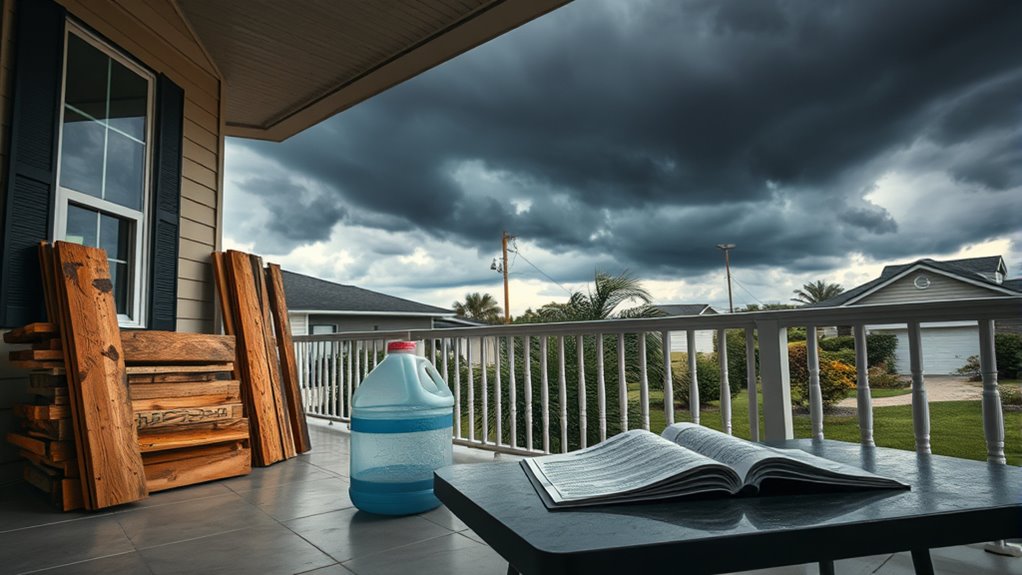

To prepare for a hurricane, secure your home by installing boards or shutters on windows and clearing outdoor items. Stock enough water for several days and gather non-perishable foods, batteries, flashlights, and medications. Plan multiple evacuation routes, know local shelters, and keep essential documents handy. Confirm your vehicle has a full tank and practice your evacuation plan regularly. Staying prepared now can help you stay safe; learn more to strengthen your readiness.
Key Takeaways
- Stock enough water, food, batteries, and hygiene supplies to last several days before a storm.
- Use storm shutters or boards to protect windows and reinforce entry points for home safety.
- Identify multiple evacuation routes, shelters, and keep printed maps for quick reference.
- Ensure transportation is ready, fuel tanks are full, and practice evacuation plans regularly.
- Secure outdoor items, monitor weather alerts via battery-powered radio, and prepare emergency supplies in portable containers.
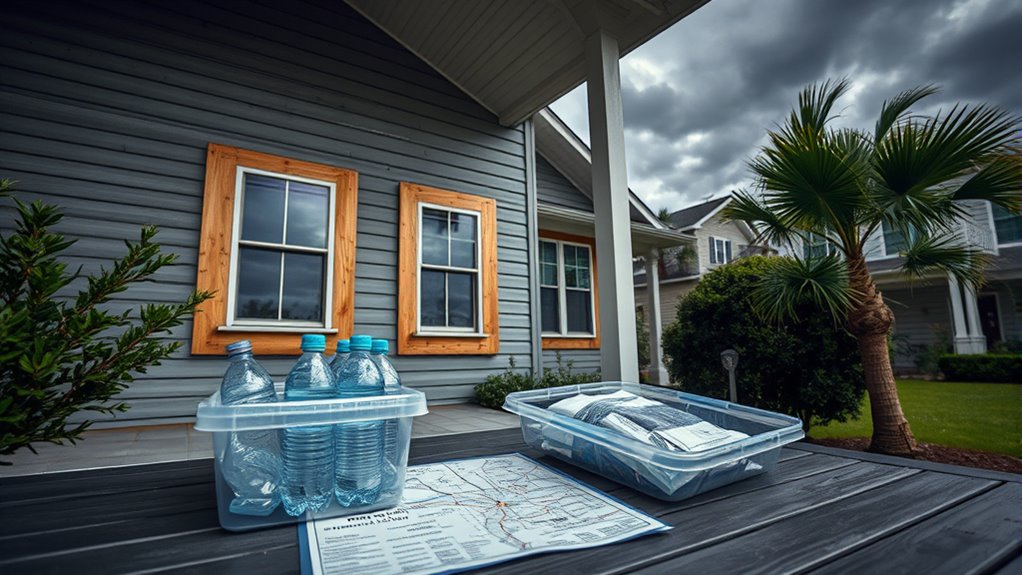
Hurricanes can strike with little warning, so being prepared is crucial to protect yourself and your family. One of the most important steps is gathering emergency supplies that can sustain you through power outages, flooding, or if you need to evacuate quickly. Stock up on water—at least one gallon per person per day for several days—and non-perishable food that’s easy to prepare. Include essentials like batteries, flashlights, a first aid kit, hygiene products, and any necessary medications. Don’t forget to have a battery-powered radio to stay updated on weather alerts and emergency instructions. Make sure your supplies are stored in a portable container, so you can grab them easily if evacuation becomes necessary. The importance of reliable communication devices, such as a battery-powered radio, cannot be overstated during disaster scenarios.
Planning your evacuation routes is equally critical. Knowing multiple routes out of your area can save precious time if streets become blocked or flooded. Familiarize yourself with local evacuation zones and shelters, and keep maps or printed directions readily available. Your goal is to avoid last-minute scrambling, so plan your routes in advance, considering potential obstacles and alternate paths. Make arrangements for transportation, whether it’s your own vehicle or a plan to carpool with neighbors or friends. Keep your vehicle’s fuel tank full, as gas stations might be closed or out of fuel during an emergency. Share your evacuation plan with everyone in your household, ensuring everyone knows where to go and what to do in case of an emergency. Proper planning and understanding of your home’s structure can help prevent damage and increase safety during the storm.
Frequently Asked Questions
How Do I Secure My Electronics During a Hurricane?
To secure your electronics during a hurricane, you should unplug devices and use electronic surge protectors to prevent power surges. Store valuable electronics in waterproof storage containers or bags to protect them from water damage. Additionally, consider moving essential devices to higher, safer locations in your home. Taking these steps helps keep your electronics safe from flooding and electrical issues caused by the storm.
What Are the Best Non-Perishable Food Options?
In uncertain times, comfort often clashes with necessity. Emergency food and shelf-stable options keep you prepared when supplies run low. Stock up on canned fruits, vegetables, and proteins, along with energy bars and dried fruits. These non-perishable foods provide sustenance in emergencies, ensuring you stay nourished without refrigeration. By choosing reliable, long-lasting options, you safeguard yourself and your loved ones, turning hardship into resilience amidst chaos.
How Do I Communicate if Power and Cell Service Are Down?
If power and cell service are down, you need to focus on emergency communication and alternative contact methods. Use a battery-powered or hand-crank radio to receive updates. Inform your family and friends about your location and safety plans through text messages when possible, or establish a meetup point beforehand. Keep a list of emergency contacts written down, and consider using social media or community notice boards to stay connected.
When Is the Safest Time to Evacuate?
The safest time to evacuate is early, before hurricane risk reaches its peak. Don’t wait until the storm’s imminent; instead, monitor official updates and evacuation alerts. Emergency officials often recommend leaving when there’s a clear evacuation order or when winds and rain start intensifying. Prompt evacuation minimizes danger, so plan ahead, stay informed, and act quickly to guarantee your safety during hurricane season.
How Can I Protect My Pets During a Hurricane?
To protect your pets during a hurricane, prioritize pet safety by creating an emergency pet supplies kit with food, water, medications, and comfort items. Keep your pets indoors and secure them in a safe, quiet space away from windows. Make sure your pets are identified with collars and tags. Stay calm and monitor updates, ensuring you have everything needed to care for your pets throughout the storm.
Conclusion
Stay prepared and don’t wait until it’s too late. With sturdy boards, enough water, and a clear evacuation plan, you can safeguard yourself and your loved ones. Some might think it’s unnecessary to act early, but delaying could leave you unprotected when a storm hits. By taking these simple steps now, you’ll gain peace of mind and ensure you’re ready to face whatever Mother Nature throws your way. Stay safe and be proactive today.