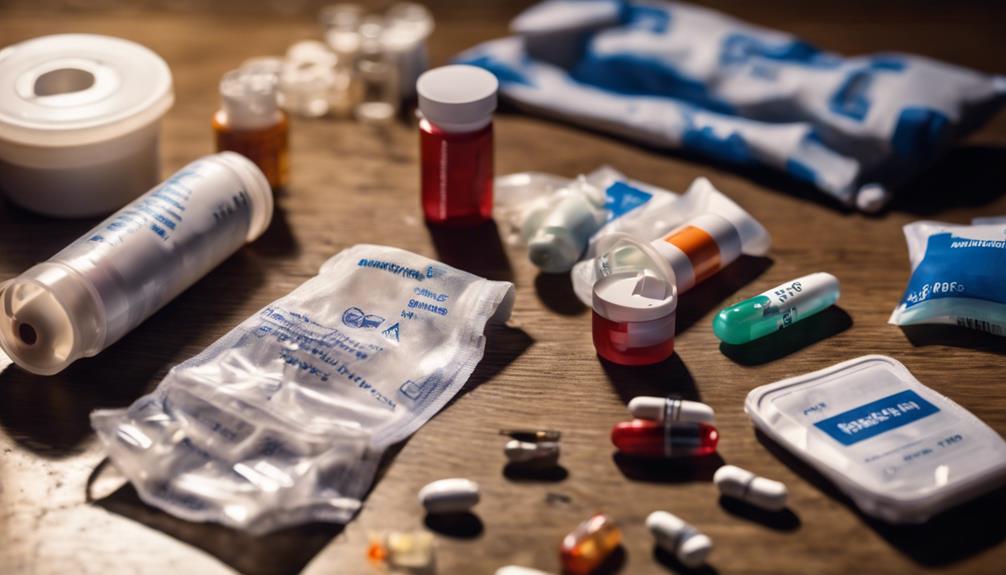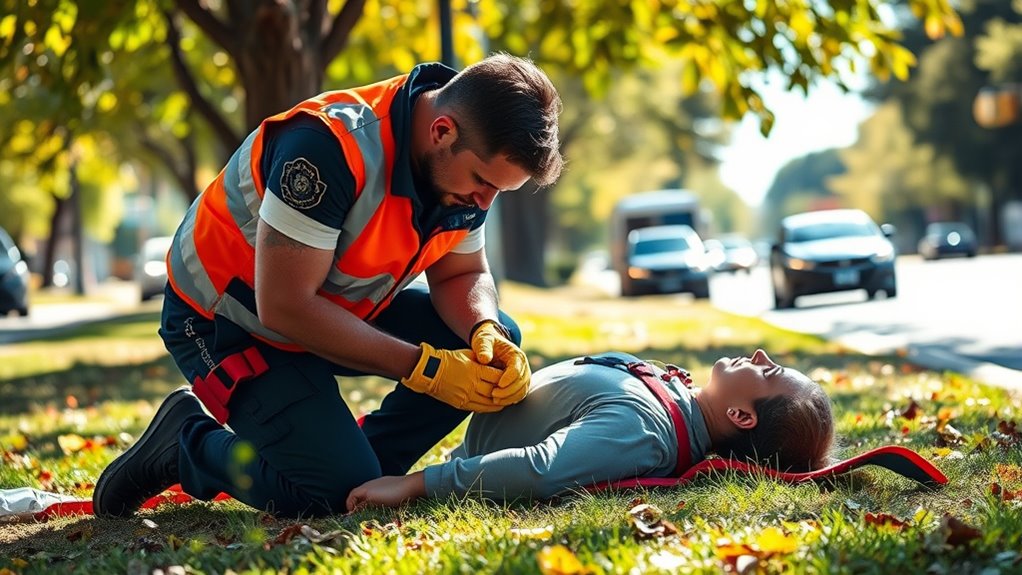
When providing first aid, your top priorities are ensuring scene safety and evaluating the victim using the ABCs—airway, breathing, and circulation. First, check for hazards like fire or traffic to protect yourself and others. Then, quickly assess responsiveness and crucial signs. If necessary, perform CPR or control bleeding to stabilize the victim. Focusing on these key steps helps prevent further harm. Continuing with these guidelines will help you respond confidently in emergencies.
Key Takeaways
- Ensure scene safety first by identifying and removing hazards before approaching the victim.
- Check responsiveness by tapping and shouting, then assess airway, breathing, and pulse promptly.
- Prioritize opening the airway and providing rescue breaths if necessary to maintain oxygen flow.
- Initiate CPR immediately if the victim is unresponsive and not breathing normally.
- Continuously monitor the victim’s condition and stay alert for worsening symptoms or hazards.
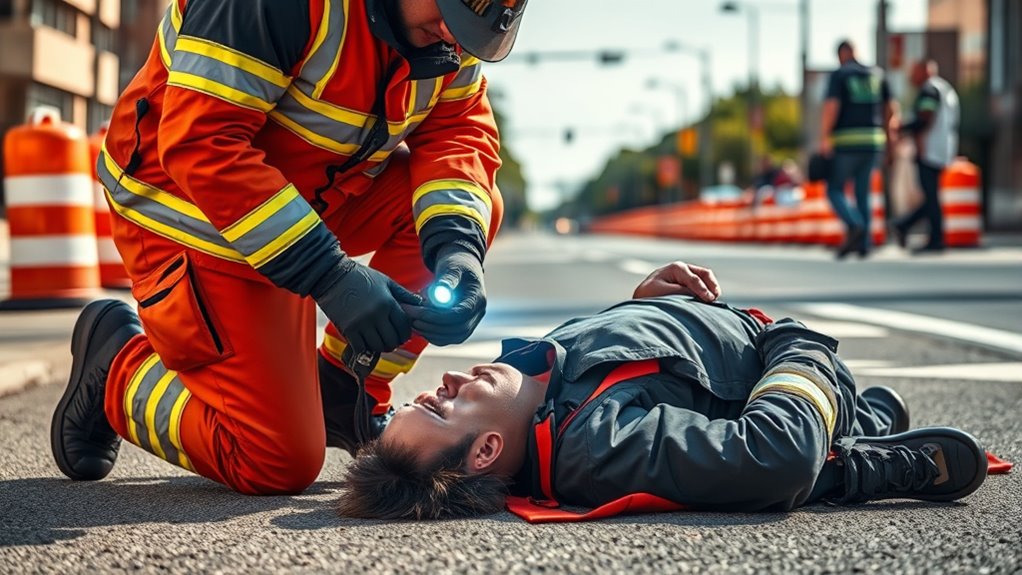
Have you ever wondered what to do first when faced with a medical emergency? The answer lies in understanding the first aid priorities: ensuring scene safety, performing an emergency assessment, and then applying CPR techniques if necessary. Your immediate response can make a life-saving difference, so knowing the correct sequence is essential.
First, before rushing in to help, you need to assess the scene. Is it safe for you and the victim? Check for hazards like fire, traffic, or unstable structures. If the scene isn’t safe, don’t hesitate to call emergency services and wait until conditions improve. Prioritizing scene safety protects both you and the injured person from further harm. Once you’re sure the area is safe, approach the victim with caution, ready to evaluate their condition.
Next, conduct an emergency assessment to determine the severity of the situation. Look for responsiveness—are they conscious? Gently tap and shout to see if they respond. If they don’t, check their airway, breathing, and pulse. Is the airway clear? Are they breathing normally? Is there a pulse? These steps are critical, as they help you decide whether to initiate CPR techniques. If the person is unresponsive and not breathing, immediate CPR is essential to keep oxygen flowing to vital organs. Remember, effective CPR involves chest compressions at a rate of about 100-120 per minute and rescue breaths if you’re trained and comfortable doing so.
While performing emergency assessment, also look for visible injuries, bleeding, or signs of shock. Provide first aid accordingly—stop bleeding, position the victim to maintain an open airway, and keep them warm. Always keep monitoring their condition until professional help arrives. Attention to detail during this phase is vital, as it ensures no critical signs are overlooked and appropriate care is given promptly. Your quick actions during this phase can stabilize the victim and prevent deterioration.
Applying CPR techniques correctly is essential when the assessment indicates it’s needed. Ensure you are trained and confident in the proper method—center your hands on the chest, press hard and fast, and follow the rhythm. Remember, your goal is to maintain circulation and oxygen delivery until advanced medical personnel take over. Throughout this process, stay calm, speak reassuringly, and follow your training. Your ability to perform scene safety checks, conduct an emergency assessment, and execute CPR efficiently can be the difference between life and death. Being prepared to act confidently and swiftly ensures you provide the best possible first aid response in any emergency situation.
Frequently Asked Questions
How Do I Handle Multiple Victims at Once?
When handling multiple victims, you should use triage techniques to prioritize care effectively. Quickly assess each victim’s condition and categorize them based on severity, focusing on those with life-threatening injuries first. Use victim prioritization to determine who needs immediate attention versus those who can wait. Stay organized, allocate resources wisely, and keep the scene safe. Your goal is to provide the most critical help to save lives efficiently.
What Should I Do if the Scene Is Unsafe?
Imagine you’re in a scene that feels like a scene from a war movie—dangerous and unpredictable. Your first step is to assess the scene carefully, focusing on your personal safety. If it’s unsafe, don’t hesitate to call emergency services and move to a safer location. Never attempt to help victims if the environment puts you at risk. Always prioritize your safety to effectively assist others later.
How Can I Recognize Signs of Shock?
You recognize signs of shock by noticing symptoms like pale, clammy skin, rapid breathing, weakness, and dizziness. Your goal is to identify recognizing symptoms early, so you can act quickly. If someone shows these signs, keep them lying down, elevate their legs if possible, and keep them warm. Staying alert to these signs helps you provide prompt first aid, improving their chances of recovery.
When Should I Call Emergency Services First?
Don’t wait to call emergency services when life is on the line. If you’re a bystander assisting someone showing signs of severe injury, chest pain, difficulty breathing, or unconsciousness, call emergency services immediately. Emergency communication is vital; it guarantees professional help arrives quickly. Remember, acting fast can save lives — “a stitch in time saves nine.” Prioritize your safety, then make the call to get the help needed.
What Are Common Mistakes to Avoid During First Aid?
You should avoid distracted responders and improper technique during first aid, as these can worsen the situation. Stay focused on the victim, keep your attention on their needs, and follow proper procedures. Don’t rush or guess, and always assess the scene safely before acting. Remember, mistakes like neglecting scene safety or using incorrect methods can cause harm, so stay calm, trained, and attentive throughout.
Conclusion
Remember, in an emergency, your first steps are like guiding a lighthouse through a storm—shining a safe path amid chaos. By checking the scene, then focusing on ABCs—airway, breathing, and circulation—you become the steady anchor for someone in distress. Stay calm, act swiftly, and picture yourself as a guardian, providing hope and safety. Your quick, confident actions can turn a chaotic situation into a story of rescue and recovery.