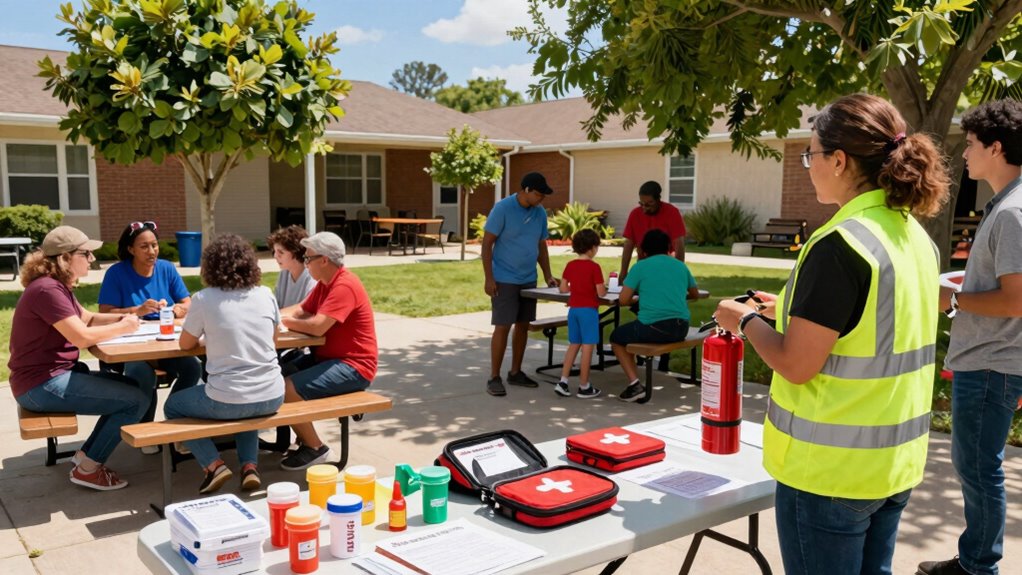
Community preparedness is your best survival tool because it boosts resilience and resource sharing during crises. When you connect with neighbors and establish communication plans, you can respond quickly and efficiently. Sharing skills, supplies, and responsibility reduces chaos and vulnerability. Building trust and practicing drills strengthen your collective ability to handle emergencies. If you keep exploring, you’ll uncover more ways that teamwork and planning can make all the difference when it counts most.

Get garden gear delivered free with Prime
- Fast, free delivery on millions of items
- Prime Video, Amazon Music and more included
- Member-only deals all year
Key Takeaways
- Community building enhances resource sharing and management, increasing collective resilience during crises.
- Effective emergency communication strategies within communities ensure rapid information flow and coordinated responses.
- Regular drills and trust-building activities prepare communities to respond swiftly and efficiently in emergencies.
- Strong community networks enable quick mobilization, reducing panic and confusion during disasters.
- Proactive community engagement fosters shared responsibility, improving long-term safety and crisis adaptability.
In times of crisis, individual efforts can only go so far; building a strong, prepared community often proves to be the most effective survival strategy. When disaster strikes, your ability to thrive depends not just on your skills or supplies but on how well your community functions as a unit. Resource sharing becomes critical, allowing neighbors to pool their food, water, tools, and skills. Instead of everyone hoarding supplies, you can create a network where resources are distributed based on need, reducing waste and ensuring that no one is left vulnerable. This cooperation amplifies your collective resilience, making it easier to withstand prolonged disruptions.
Strong communities sharing resources and skills build resilience and ensure no one is left vulnerable during crises.
Emergency communication plays a vital role in this collective effort. When traditional channels like cell towers or internet services falter, having a community-based communication plan keeps everyone connected. Whether it’s a simple walkie-talkie system, a designated meeting point, or a neighborhood messenger chain, staying in touch lets you coordinate responses more effectively. Emergency communication ensures that vital information—such as safety alerts, resource availability, or medical needs—gets to the right people quickly. It prevents chaos and helps maintain order, which is crucial during uncertain times.
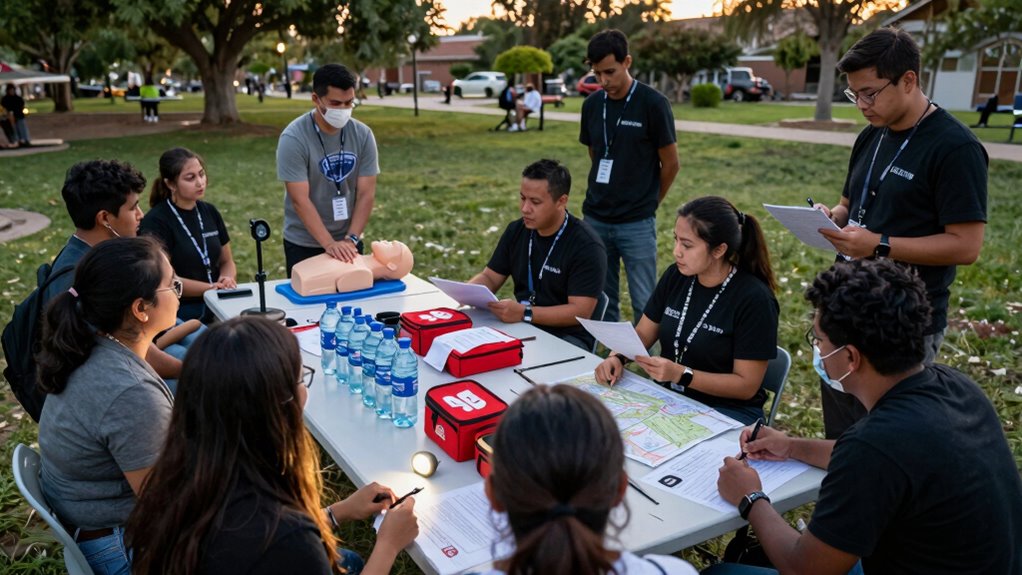
Building this kind of preparedness doesn’t happen overnight. It requires proactive planning, trust, and regular drills. You should connect with neighbors, share knowledge about basic first aid, fire safety, and resource management. Establishing a community plan that includes resource sharing agreements and communication protocols ensures everyone knows their role when disaster strikes. It also fosters a sense of collective responsibility, making each person more committed to the group’s safety. When everyone participates, the community becomes a well-oiled machine capable of adapting to various crises. Community cohesion is essential for creating a resilient and effective response network. Developing these bonds can strengthen social ties, which are fundamental to community resilience and effective cooperation. Additionally, understanding how to properly manage and utilize marine equipment can be crucial if your community is located near water or needs to rely on marine resources during a crisis. Recognizing the importance of resource management can help optimize the use of available supplies and tools, further enhancing community resilience. You can also enhance your community’s preparedness by learning about disaster planning, which provides a structured approach to dealing with various emergencies.
Moreover, a prepared community can mobilize faster. When emergencies occur, you won’t be scrambling to find supplies or figure out how to contact loved ones. Instead, you’ll rely on established networks and shared resources. This preparedness reduces panic and confusion, allowing for quicker decision-making and action. Your community’s strength lies in its ability to adapt and support each other, transforming individual vulnerabilities into collective resilience. By sharing resources and maintaining open lines of emergency communication, you create a safety net that can catch everyone when they need it most.
Ultimately, community preparedness isn’t just about survival; it’s about creating a foundation of trust and cooperation that lasts beyond disasters. When everyone works together, the odds of overcoming hardships increase significantly. Your community becomes a powerful force, capable of facing uncertainty with confidence, knowing that together, you’re stronger.
community emergency communication devices
As an affiliate, we earn on qualifying purchases.
As an affiliate, we earn on qualifying purchases.
Frequently Asked Questions
How Do I Find Local Community Preparedness Groups?
To find local community preparedness groups, start by checking social media platforms or neighborhood communication boards for alerts and events. Attend local meetings or workshops focused on emergency resource sharing and disaster readiness. Talk to neighbors or community centers about existing groups. You can also contact local emergency management agencies—they often organize or promote community preparedness efforts. Engaging actively helps build connections and improves overall neighborhood resilience.
What Skills Are Most Valuable in Community Survival Efforts?
Did you know 85% of survival success depends on skills like emergency communication and resource sharing? In community efforts, your ability to relay critical info quickly and coordinate resources is essential. Learning how to establish emergency communication channels and share supplies efficiently can make a real difference. These skills foster trust and resilience, ensuring everyone’s safety during crises. Your proactive involvement in developing these skills strengthens your entire community’s survival chances.
How Can I Motivate Neighbors to Participate?
To motivate neighbors to participate, you should foster open neighborhood communication by organizing casual meetings or online groups where everyone can share ideas. Highlight the benefits of community preparedness and involve neighbors in volunteer coordination efforts, making them feel valued and essential. When people see how their contributions directly impact everyone’s safety, they’re more likely to get involved and stay committed to building a resilient community together.
What Resources Are Essential for Community Disaster Planning?
Think of community disaster planning as building a sturdy bridge—your resources are the planks, and communication strategies are the ropes holding it tight. You need essential resources like first aid kits, food supplies, and emergency tools, plus clear plans for resource allocation. Effective communication guarantees everyone stays connected and informed, turning chaos into coordinated effort. With these elements, you create a resilient network ready to weather any storm together.
How Do I Handle Conflicts Within a Preparedness Group?
When handling conflicts within a preparedness group, address leadership conflicts and resource disagreements openly and calmly. You should listen actively to all parties, validate their concerns, and facilitate constructive discussions. Establish clear roles and decision-making processes beforehand to reduce disputes. If disagreements persist, consider involving a neutral mediator to help find common ground. Staying focused on shared goals keeps the group unified and effective during crises.
disaster preparedness survival kit
As an affiliate, we earn on qualifying purchases.
As an affiliate, we earn on qualifying purchases.
Conclusion
So, next time disaster strikes, don’t forget: your best survival tool isn’t just a bug-out bag or emergency kit—it’s your community. Ironically, in our rush to prepare solo, we often overlook the strength in numbers. When chaos unfolds, it’s those you trust and work with that truly make a difference. Sometimes, your greatest safety net is simply knowing you’re not alone. After all, in the end, community might just save your life.
neighborhood resource sharing supplies
As an affiliate, we earn on qualifying purchases.
As an affiliate, we earn on qualifying purchases.
emergency communication walkie talkies
As an affiliate, we earn on qualifying purchases.
As an affiliate, we earn on qualifying purchases.
Fall Picks
fall essentials
As an affiliate, we earn on qualifying purchases.