
To sustain yourself off-grid for three days, focus on foraging familiar, nutrient-rich plants like wild spinach, dandelion greens, and nettles for bulk, along with berries such as raspberries and blackberries for quick energy. Incorporate nuts like acorns or walnuts for fats and proteins, and guarantee proper identification to avoid toxins. Combine these with simple food prep and strategic routes to maximize calories. Keep exploring to uncover more tips on creating a balanced, safe foraging plan.
Key Takeaways
- Prioritize high-calorie, nutrient-dense wild foods like nuts, berries, and edible greens to meet energy needs.
- Map out foraging routes focusing on abundant, safe plants such as wild spinach, blackberries, and acorns for sustained calories.
- Combine foraged foods with lightweight staples like dried grains, nuts, and jerky to supplement caloric intake.
- Properly identify and prepare plants, especially those requiring cooking to neutralize toxins, ensuring safety and digestibility.
- Harvest responsibly by limiting collection to abundant plants and avoiding overharvesting to maintain ecosystem health.
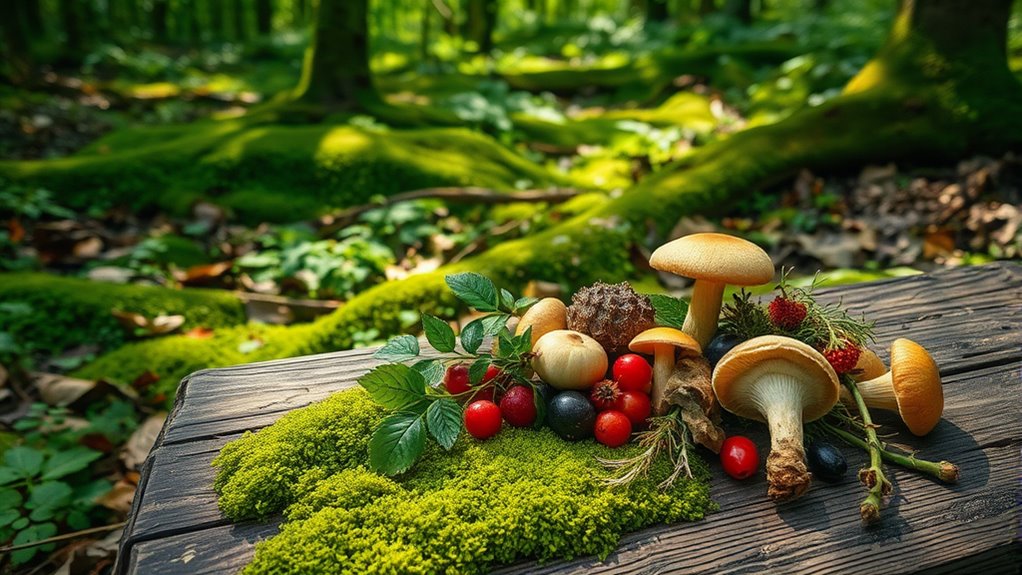
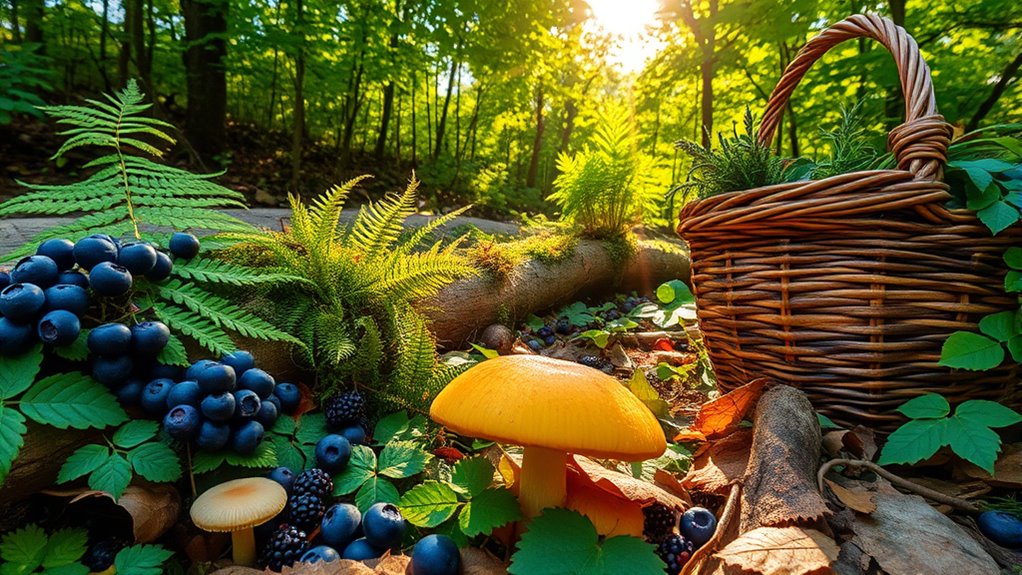
Ever wondered how to plan meals that keep you energized and satisfied for an entire 72 hours in the forest? The key is knowing what wild edible plants to find and how to forage safely. When you’re out in the wilderness, your food sources depend on your ability to identify and harvest plants that provide essential calories, vitamins, and minerals. Start by familiarizing yourself with common wild edible plants native to the area. Edible greens like wild spinach, dandelion leaves, and nettles are great for adding bulk and nutrients to your meals. Berries such as blackberries, raspberries, and wild strawberries can supply quick energy, while nuts like acorns or walnuts offer fats and proteins necessary for sustained energy.
However, foraging safety is critical. Misidentifying plants can lead to poisoning or illness, so never consume anything unless you’re 100% sure it’s safe. Use reliable field guides, apps, or consult experienced foragers before eating wild plants. Pay attention to details like leaf shape, smell, and habitat. Avoid plants growing near polluted water sources or busy trails, as they might be contaminated. Stick to a handful of familiar, easily recognizable species until you’re confident in your knowledge. Also, be mindful of the environmental impact—harvest responsibly by taking only what you need and leaving enough for wildlife and plant regeneration.
Once you’ve identified safe wild edible plants, plan your foraging routes to maximize calorie intake while conserving energy. Incorporate plants that are abundant in the area to avoid overharvesting. Combine foraged foods with lightweight, high-calorie staples like dried grains, nuts, or jerky to round out your 72-hour menu. Cooking some plants can increase digestibility and nutrient absorption, but always ensure you know which plants require proper preparation—some are toxic unless cooked. Boiling or steaming can neutralize certain toxins and make plants safer to eat. Additionally, understanding the role of color accuracy in preparing and identifying edible plants can help ensure correct identification and safe consumption.
Frequently Asked Questions
How Do I Identify Safe Edible Plants in the Wild?
When it comes to edible plant identification, you need to stay cautious and observant. Use wild foraging tips like checking leaf shapes, smells, and growing habits to spot safe plants. Always cross-reference with reliable guides or local experts before consuming anything. Avoid plants with milky sap, berries, or unfamiliar features. Remember, if you’re unsure, it’s better to skip it—mistakes can be dangerous. Practice patience and learn gradually.
What Tools Are Essential for Foraging During This Menu?
Foraging safety relies on essential tools that help you identify safe edible plants and apply proper harvesting techniques. Carry a sharp knife for precise harvesting and a field guidebook to verify plant identification. A small, durable basket makes collecting plants easier, while gloves protect your hands. Using these tools guarantees responsible foraging, minimizes damage to plants, and helps you avoid dangerous look-alikes, keeping your foraging safe and sustainable.
How Can I Ensure Balanced Nutrition Over Three Days?
Imagine your body as a symphony that needs all instruments in harmony. To guarantee balanced nutrition, focus on nutrient diversity, seeking out different plants, nuts, and berries. Meal planning helps you combine these elements thoughtfully, avoiding monotony and deficiencies. By intentionally selecting a variety of foods, you create a nourishing melody that sustains you through three days off-grid, keeping your energy steady and your health in tune.
What Are Common Mistakes to Avoid While Foraging?
When foraging, avoid common mistakes like misidentifying toxic plants—always double-check toxic plant identification guides. Stick to foraging ethics by harvesting sustainably, only taking what you need, and leaving enough for wildlife. Don’t assume all wild plants are safe; some may be harmful or inedible. Stay cautious, educate yourself beforehand, and respect nature’s rules to guarantee a safe and responsible foraging experience.
How Do I Prepare and Store Foraged Foods Safely?
Did you know that misidentifying wild mushrooms causes over 90,000 poisoning cases annually? To prepare and store foraged foods safely, wash and cook edible berries thoroughly, and keep wild mushrooms separate until confirmed safe. Learn wild mushroom safety tips, and always double-check edible berry identification. Store your foraged finds in breathable containers in cool, dry places, and consume them quickly to enjoy their freshness and prevent spoilage.
Conclusion
With this 72-hour forest menu, you’ll be a foraging legend, practically living off the land like a wild survival superhero. Forget grocery stores—you’ll gather enough calories to conquer three days of off-grid adventure, all while feeling like a master forager with superpowers. Just imagine the envy of city folks stuck in their cubicles while you feast on nature’s bounty. So go ahead, channel your inner wilderness warrior and turn this menu into your legendary survival story!