
When planning dives, understanding how visibility changes with depth is key. The thermocline marks a sharp temperature drop and often causes a noticeable color shift or shimmer, alerting you to its presence. Recognizing these cues helps you avoid surprises and plan your depth accordingly. Keep an eye on water hue and temperature fluctuations because they directly impact safety and comfort. Want to learn more about spotting thermoclines and maximizing your dive experience?
Key Takeaways
- Recognize visual cues like color shifts and shimmering bands to locate the thermocline during descent.
- Understand that light diminishes sharply at the thermocline, affecting visibility and water appearance.
- Use temperature readings to confirm the thermocline’s depth, aiding in safe dive planning and equipment adjustment.
- Plan dive depths to stay within the euphotic zone or below the thermocline, depending on visibility and experience.
- Monitor temperature changes to manage buoyancy, comfort, and safety throughout the dive, especially near the thermocline.

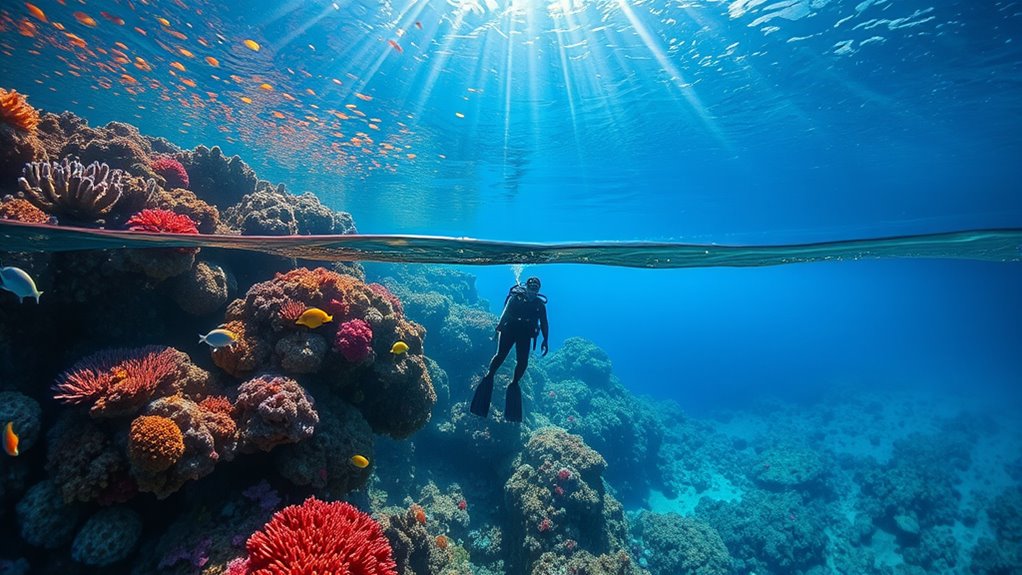
Have you ever wondered why underwater visibility can change so dramatically at different depths? It all comes down to how light penetrates the water. As you descend, sunlight diminishes because water absorbs and scatters it. The upper layers of water, called the euphotic zone, are filled with enough light to see clearly. But just a few meters below, visibility can suddenly drop as the light fades. This change isn’t gradual; instead, it often occurs at a specific boundary known as the thermocline. Detecting this thermocline is essential for planning a safe and enjoyable dive because it marks the shift from warm, well-lit waters to colder, darker depths. The thermocline often appears as a noticeable color change—sometimes a shimmering band or a sudden shift in water hue. This is a visual cue that you’ve reached the thermocline detection point, signaling a transition zone. Detecting the thermocline isn’t just about observing color shifts; it’s also about feeling the temperature change. As you go deeper, the water temperature typically drops sharply at the thermocline, which can affect your buoyancy and comfort. Being aware of this helps you adjust your equipment and dive plan accordingly. Many divers carry a thermometer or rely on their immersion suits to monitor temperature changes, making thermocline detection more precise. Recognizing these cues enables you to plan your dive depth, duration, and even your ascent to avoid surprises. Additionally, understanding the role of thermoclines can help you anticipate changes in visibility and plan your dive routes more effectively.
Frequently Asked Questions
How Does Thermocline Depth Vary With Different Water Bodies?
You’ll find that thermocline depth varies across water bodies due to temperature gradients. In lakes, it’s usually shallower, often near the surface, causing noticeable visibility impacts as colder, denser water stays below. In oceans, thermoclines can be much deeper, sometimes hundreds of meters down, which affects your visibility and dive planning. Understanding these differences helps you anticipate conditions and stay safe while exploring diverse underwater environments.
Can Thermoclines Be Avoided During Dives?
You can’t always dodge thermoclines, but with proper dive planning, you can minimize their impact on visibility. Think of it like steering clear of rough waters—by researching water conditions beforehand and choosing dive sites with stable thermocline depths, you can better manage visibility. During your dive, monitor thermocline depth closely, adjust your buoyancy, and stay alert. This way, you keep your experience smooth, even if thermoclines can’t be completely avoided.
How Do Thermoclines Affect Underwater Navigation?
Thermoclines can considerably affect your underwater navigation by creating sudden changes in temperature that impact underwater visibility. When you detect a thermocline, it signals a sharp temperature gradient which can reduce visibility, making it harder to see landmarks or your guide. To navigate effectively, pay attention to thermocline detection cues and adjust your buoyancy and navigation tools accordingly, ensuring you maintain orientation despite the visibility challenges caused by the thermocline.
Are Thermoclines Present in Freshwater Lakes?
Think of a freshwater lake as a layered cake, with distinct temperature layers called thermoclines. Yes, thermoclines are present in freshwater lakes, creating sharp boundaries between warmer surface water and cooler depths. These layers profoundly impact visibility, often causing a sudden decrease as you pass through. As a diver, you’ll notice the change vividly, making thermoclines a vital factor to consider for safe, enjoyable underwater exploration.
What Equipment Is Best for Diving in Thermocline Zones?
For diving in thermocline zones, you should prioritize thermal protection, like a wetsuit or drysuit, to stay comfortable and safe. Use a dive light to see clearly through the changing temperatures and visibility shifts. During dive planning, account for potential changes in buoyancy caused by temperature variations. Always carry a backup light, monitor your depth closely, and adjust your gear accordingly to guarantee a safe, enjoyable dive through the thermocline.
Conclusion
As you plan your dives, remember that visibility and thermoclines are your guiding stars—shaping your underwater adventure. Think of them as the secret verses of nature’s poetry, revealing hidden worlds and vibrant contrasts. By understanding these clues, you unveil the ocean’s mysteries and guarantee a safe, unforgettable experience. Embrace the dance of light and temperature, and let the ocean’s rhythm lead you to the depths of discovery. Dive in with curiosity, and let the ocean tell its story.