In fish behavior, you’ll find that ambush species rely on stealth, hiding among coral, rocks, or vegetation, waiting patiently to strike prey with quick bursts of speed. Pelagic fish, on the other hand, stay active in open water, often swimming in schools to hunt or filter food from the water column. Understanding these strategies helps you see how each type adapts to its environment, and exploring further reveals even more fascinating differences.
Key Takeaways
- Ambush fish rely on stealth, patience, and rapid strikes to catch prey, often remaining stationary in sheltered habitats.
- Pelagic species are active hunters or filter feeders that roam open water using speed and agility.
- Habitat choices differ: ambush fish prefer reefs and dense cover, while pelagic fish inhabit the water column away from the seafloor.
- Movement patterns vary: ambush fish stay still or move slowly; pelagic fish often swim actively in schools.
- These strategies reflect adaptations to environmental conditions and prey availability, supporting diverse oceanic ecosystems.

Have you ever wondered why fish swim in schools or how they find food in the vast ocean? It all comes down to their behavior, especially their feeding strategies and habitat preferences. Fish have evolved different ways to survive, depending on where they live and what they eat. Some prefer to hide and wait for prey, while others chase after it openly. Recognizing these differences helps you understand why certain species behave the way they do.
Ambush predators, for example, rely on stealth and patience. They often stay motionless or move slowly, blending into their environment. These fish tend to have habitat preferences that include coral reefs, rocky outcrops, or dense vegetation, where they can remain hidden. By choosing such habitats, they maximize their chances of catching unsuspecting prey. Their feeding strategies involve waiting for the right moment to strike—often using rapid bursts of speed to capture their target. Think of a lion stalking its prey; ambush fish use their surroundings to their advantage, conserving energy while waiting for a meal to come close. This approach is especially effective when food is scarce or when prey is quick and difficult to chase.
Ambush fish rely on stealth and habitat to conserve energy and catch quick prey efficiently.
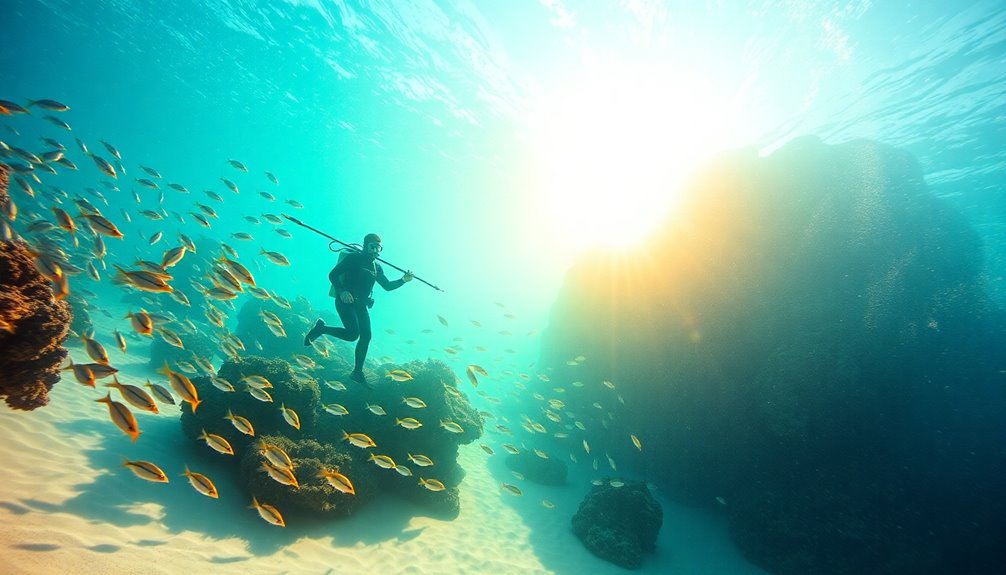
On the other hand, pelagic species are more active and tend to roam the open waters. They prefer habitats in the water column away from the seafloor, often swimming in large schools for safety and efficiency. Their feeding strategies involve actively hunting or filtering food from the water. Many pelagic fish, such as sardines or tuna, rely on speed and agility to catch their food or to stay ahead of predators. Their habitat preferences are influenced by factors like water temperature, depth, and the availability of plankton or smaller fish. Because they are constantly moving, they require different energy expenditure patterns compared to ambush species. Their active lifestyle allows them to cover large areas in search of food, making them more adaptable to changing conditions in the ocean. Additionally, the availability of prey sources significantly influences their distribution and behavior.
Understanding these differences in feeding strategies and habitat preferences reveals why fish behave the way they do. Ambush fish tend to be more stationary, relying on camouflage and patience, while pelagic species are built for speed and exploration. Both strategies are effective, tailored to their environments and the types of food available. Whether they’re lurking in the shadows or patrolling the open water, each fish’s behavior is a testament to how they’ve adapted to thrive in their specific habitats. Knowing this helps you appreciate the diversity of fish behavior and the complex ways they survive in the ocean’s vast ecosystem.
Frequently Asked Questions
How Do Ambush and Pelagic Fish Communicate With Each Other?
You might wonder how ambush and pelagic fish communicate. They primarily use visual signaling, like body movements and color changes, to warn or attract others. Chemical communication also plays a role, especially in detecting predators or prey. While they don’t typically communicate directly, these methods help them interpret each other’s actions and stay aware of their environment, ensuring survival in their respective habitats.
What Are the Primary Predators of Ambush Versus Pelagic Species?
Imagine predators as the ocean’s fiercest warriors, hunting with relentless agility. Ambush species face predators like larger predatory fish and sharks that use predator adaptations like camouflage and surprise attacks. Pelagic species are targeted by swift predators such as tuna and larger pelagics, relying on prey evasion tactics like rapid swimming and schooling. Both strategies keep these fish alive, but the predators’ skills are equally formidable in the vast ocean battlefield.
How Do Water Temperature Changes Affect Their Hunting Strategies?
You’ll notice that water temperature changes influence how ambush and pelagic fish hunt. Thermal adaptation allows ambush predators to stay hidden in colder or warmer waters, while pelagic species often migrate seasonally to ideal temperatures. These temperature shifts prompt strategic adjustments, with ambush fish relying on thermal camouflage and pelagic species using seasonal migration to enhance hunting efficiency and predator avoidance in varying conditions.
Are Certain Environments More Suitable for One Type Over the Other?
Certain environments favor either ambush or pelagic fish, based on habitat preferences and feeding adaptations. You might think these strategies are rigid, but many species adapt to their surroundings. Ambush fish thrive in complex habitats like reefs or rocky areas, where cover aids their stealth. Pelagic species prefer open waters, utilizing their agility for active hunting. Your understanding of these environments reveals how fish optimize survival through tailored feeding behaviors.
How Do Fishing Techniques Differ Between Ambush and Pelagic Fish?
You use different fishing techniques for ambush and pelagic fish based on their feeding habits and camouflage tactics. For ambush species, you employ stationary or slow-moving gear, like bottom trawls or concealed baits, mimicking their prey. For pelagic fish, you opt for active methods like trolling or casting, targeting their fast, open-water feeding habits. Understanding their camouflage tactics helps you choose the right approach to increase your catch.
Conclusion
Now that you understand the differences between ambush and pelagic fish, you’ll see nature’s strategies in a new light. Remember, knowing their tactics helps you appreciate the complexity of underwater life. Whether they lie in wait or swim freely, each species has found its own way to thrive. Keep in mind, it’s often the quietest fish that make the biggest splash—sometimes, the best moves are the ones you don’t see coming.