

To help your dog during storms, use calming techniques like gentle reassurance, distraction with toys or treats, and calming music or white noise. Create a safe, cozy space with familiar items, soundproofing, and blankets to muff out storm sounds. Close windows, draw curtains, and secure the area to reduce visual stimuli and noise. Be patient and consistent, and if you stick with these strategies, you’ll discover more ways to ease your dog’s storm anxiety effectively.
Key Takeaways
- Use calming techniques like gentle reassurance, treats, and calming music to soothe anxious dogs during storms.
- Create a secure, cozy retreat area with familiar items and soundproofing to provide a safe space.
- Close windows, draw curtains, and add soft materials to minimize visual and auditory stimuli.
- Incorporate background noise such as fans or radio to mask storm sounds and reduce stress.
- Apply consistent, patient routines and environmental modifications to help dogs gradually adapt to storm conditions.
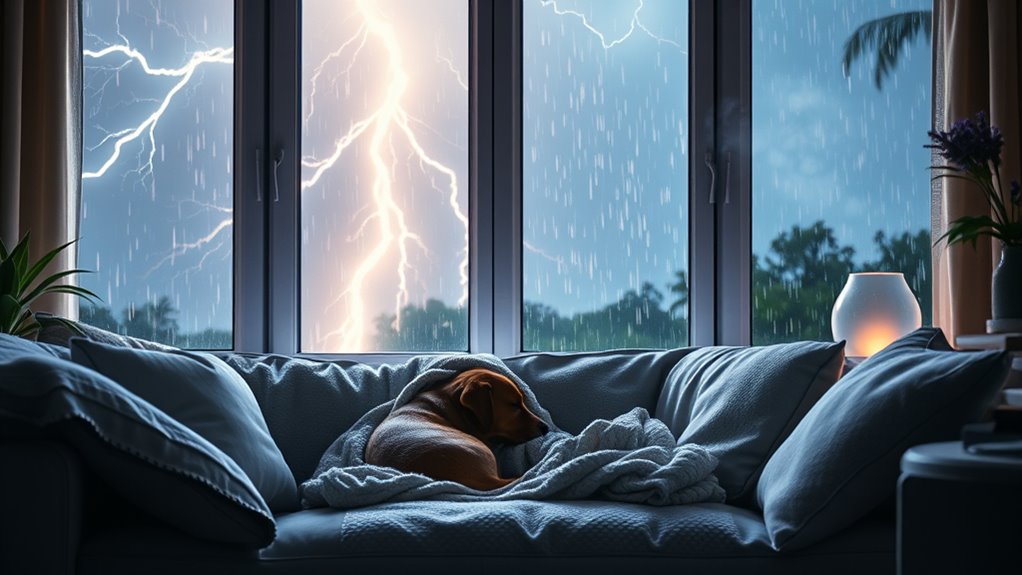
When thunderstorms roll in, many dogs become fearful and distressed, making it challenging for owners to keep them calm. The loud thunder, flashing lightning, and sudden changes in the weather can trigger intense anxiety in your dog, leading to destructive behaviors or hiding. To help your furry friend cope, it’s essential to implement effective calming techniques and environmental modifications. These strategies create a reassuring space and reduce the noise and chaos that escalate their fear.
Start by establishing calming techniques that you can use during storms. Gentle, consistent reassurance is key—speak softly, offer calm petting, or use a soothing voice to let your dog know they’re safe. You might also try creating a distraction with toys or treats, redirecting their focus away from the storm’s noises. Some dogs respond well to calming aids such as pheromone diffusers or calming collars, which release comforting scents or provide gentle vibrations to soothe anxiety. Additionally, play calming music or white noise to help mask the storm sounds, creating a more peaceful environment. During thunderstorms, remain calm yourself; dogs pick up on your mood, so your relaxed demeanor can help ease their tension.
Use soothing voices, gentle petting, and distractions to comfort your dog during storms.
Environmental modifications are equally essential in reducing your dog’s storm anxiety. Designate a safe, cozy space where your dog can retreat during thunderstorms, such as a small room or crate covered with blankets. Use soundproofing techniques like closing windows, drawing curtains, or lining the space with soft materials to dampen the noise. Consider placing comforting items nearby—your dog’s favorite blanket, bed, or a piece of clothing with your scent can provide additional reassurance. Playing background noise, like fan or radio, can help drown out thunderclaps and lightning flashes. If your dog tends to hide or try to escape, secure the area to prevent injury or escape attempts. Creating a predictable, secure environment helps your dog feel protected and less vulnerable to storm-related fears.
Implementing these calming techniques and environmental modifications before storms occur can markedly decrease your dog’s anxiety levels. Consistency and patience are essential because it might take time for your dog to adjust. With thoughtful preparation and a calm approach, you can help your dog feel more secure during thunderstorms, making those distressing moments more manageable for both of you.
Frequently Asked Questions
Can Thunderstorm Anxiety Be Genetic in Dogs?
Yes, thunderstorm anxiety can be genetic in dogs. If a dog has a genetic predisposition or inherited traits that make them more sensitive to loud noises and sudden sounds, they’re more likely to develop storm phobia. You might notice this anxiety running in your dog’s family. Understanding this can help you better manage their fear, as some dogs are naturally more prone to storm-related stress due to their genetics.
How Long Does Thunderstorm Anxiety Treatment Typically Take?
Treatment duration for thunderstorm anxiety varies, but you can expect it to take several weeks to months, depending on your dog’s response. Consistent therapy sessions, positive reinforcement, and environmental modifications can improve treatment effectiveness over time. You should notice gradual calming behaviors and reduced fear responses as you stick with the plan. Patience and commitment are key, and some dogs may see quicker results than others.
Are There Any Natural Remedies for Thunderstorm Anxiety?
Yes, you can try natural remedies like herbal supplements such as chamomile or valerian root to help calm your dog. Additionally, playing calming music during thunderstorms can reduce anxiety levels. These methods work best when combined with a comforting environment and positive reinforcement. Always consult your veterinarian before starting any new herbal treatments, ensuring they’re safe and suitable for your dog’s specific needs.
Can Thunderstorm Anxiety Affect Puppies Differently?
You’ll find that thunderstorms can affect puppies differently, especially since their temperament varies widely. Research shows that nearly 50% of dogs develop storm phobia, often influenced by early training and socialization. Puppies with more anxious temperaments are more prone to intense reactions. Starting early training can help, but keep in mind that some puppies may still be sensitive to loud noises, requiring tailored comfort and gradual exposure to reduce fear effectively.
Is It Safe to Leave Medication With My Dog During Storms?
Yes, it’s safe to leave medication with your dog during storms if stored properly. Use secure, child-proof containers to keep medication safe and away from curious paws. Incorporate medication storage into your emergency preparedness plan, ensuring you have enough in case of power outages or emergencies. Always follow your vet’s instructions, and avoid giving your dog medication without guidance, especially during stressful weather events.
Conclusion
By following these thunderstorm anxiety protocols, you’ll help your dog feel safer and more secure during storms. Remember, patience and consistency are key—you’re their anchor in turbulent times. It’s important to recognize that storms come and go, and with your support, your furry friend will weather the storm just fine. Don’t forget, a calm and reassuring presence can turn a stormy night into a night they’ll never forget—hopefully for all the right reasons.