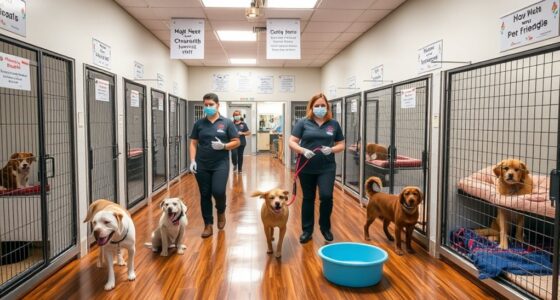

Creating a neighborhood pet mutual-aid network involves organizing neighbors to share responsibilities like feeding, walking, and caring for pets, fostering community bonds. You can pool resources for veterinary expenses and coordinate group visits to local clinics. Regular communication guarantees everyone is aware of pets’ needs, creating a safety net for sick or injured animals. Building this network encourages collective responsibility and support. If you want to discover more ways to strengthen your neighborhood’s pet care, keep exploring further tips.
Key Takeaways
- Organize residents to share pet care duties like feeding, walking, and vet visits for consistent support.
- Establish communication channels such as group chats or meetings to coordinate efforts and share updates.
- Develop a shared fund or pool resources to cover veterinary expenses and emergency care.
- Promote awareness of local stray or abandoned pets to facilitate responsible rehoming within the community.
- Foster a culture of mutual responsibility and compassion to strengthen neighborhood bonds and improve pet well-being.
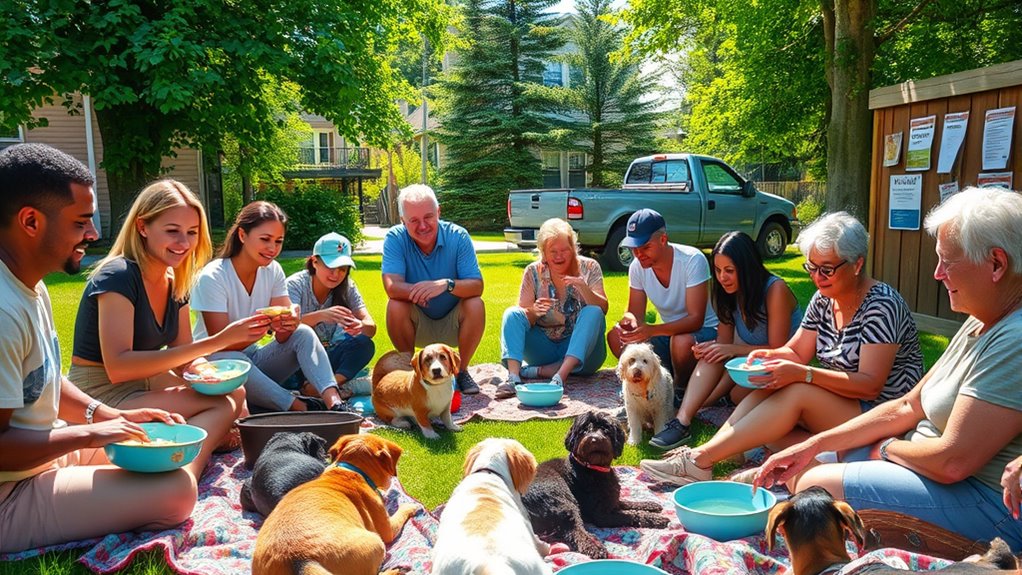
In many neighborhoods, residents are creating mutual-aid networks to care for their pets, fostering a sense of community and shared responsibility. These networks are more than just informal groups—they’re a way to guarantee that every pet receives the attention and support it needs, especially in bustling urban environments where pet owners often juggle busy schedules. By banding together, neighbors can coordinate responsibilities like feeding, walking, and checking on animals, reducing the burden on individual owners and ensuring no pet is left neglected. This collective approach also enhances the safety and well-being of urban animals, who may face unique challenges like limited outdoor space or unfamiliar environments.
Neighborhood pet mutual-aid networks foster community, ensuring pets are cared for amid urban challenges.
One of the key benefits of these mutual-aid networks is access to urban adoption opportunities. When neighbors actively engage with each other about pet care, they’re more aware of animals in need of homes. If someone notices a stray or a pet needing rehoming, the network becomes an essential channel for finding responsible adopters within the community. Urban adoption through these networks helps keep pets within their familiar surroundings, easing their transition and reducing the stress often associated with moving to a new home. It also fosters a sense of belonging and commitment among residents, who see their neighbors’ pets as part of the local fabric.
Veterinary support plays an integral role in sustaining these neighborhood networks. When residents collaborate, they can pool resources to cover veterinary costs for injured or sick pets, making professional care more accessible. Some networks establish a shared fund or coordinate group visits to local clinics, which is especially helpful in urban areas where veterinary services can be expensive or hard to access on short notice. Having a trusted point of contact within the community who understands the specific needs of local pets guarantees quicker response times and better health outcomes. It also encourages regular health check-ups and vaccinations, which are essential in densely populated neighborhoods where diseases can spread rapidly. Promoting community-based veterinary care ensures that support is tailored to the neighborhood’s unique needs and resources.
Ultimately, creating a neighborhood pet mutual-aid network empowers you to contribute directly to your community’s well-being. It’s a practical way to look out for each other’s pets, guaranteeing they’re well cared for and protected. With urban adoption opportunities and reliable veterinary support, your neighborhood can become a more compassionate, connected place for all animals and their owners. This shared effort not only improves the lives of pets but also strengthens neighborhood bonds, fostering a community where everyone looks out for one another—even the four-legged residents.
Frequently Asked Questions
How Do I Start a Neighborhood Pet Mutual-Aid Network?
You start a neighborhood pet mutual‑aid network by engaging your community and emphasizing pet health. Talk to neighbors, share ideas, and identify those interested in supporting pet care. Use social media or flyers to spread the word. Organize regular meetings to discuss needs and resources, such as pet supplies or vet visits. By fostering community engagement, you’ll create a supportive network that keeps pets healthy and strengthens neighborhood bonds.
What Are Common Challenges in Maintaining These Networks?
Think of your network as a fragile garden needing constant care. Common challenges include sustaining community engagement and securing ongoing funding. You might struggle with fundraising strategies that resonate or keeping volunteers motivated. To overcome this, nurture relationships with residents, create engaging events, and diversify your fundraising efforts. Staying connected and adaptable guarantees your network flourishes, like a garden thriving with diligent tending and shared passion.
How Can Technology Enhance Neighborhood Pet Mutual Aid?
Technology can enhance your neighborhood pet mutual aid network by using digital mapping to identify nearby resources and volunteers quickly. Social media platforms allow you to coordinate efforts, share updates, and mobilize community members efficiently. These tools streamline communication, improve response times, and help build stronger connections among pet owners and caregivers, ensuring pets receive timely care and support when needed.
What Legal Considerations Should I Be Aware Of?
Think of your network as a bridge, but beware of the legal stones beneath. You should be aware of liability concerns, ensuring you’re protected if something goes wrong. Licensing requirements are like the rules of the road, keeping everyone safe and compliant. Check local laws, get necessary permits, and consider insurance. Staying informed helps you build a sturdy, legal bridge that supports your neighborhood pet aid efforts confidently.
How Do I Recruit and Retain Volunteers?
You should focus on engaging volunteers by highlighting the meaningful impact they can have and offering flexible opportunities. Use clear communication and celebrate successes to boost volunteer retention. To attract new volunteers, showcase strong funding strategies like local grants or donation drives that support your network. Keep volunteers motivated by providing training, recognition, and a sense of community, ensuring they stay committed to your neighborhood pet mutual‑aid efforts.
Conclusion
By building neighborhood pet mutual-aid networks, you become the guardian of your community’s well-being, echoing the spirit of ancient village bonds. Just as the Greeks relied on their agora for support, your efforts foster trust and resilience among neighbors and their pets. Embrace this collective strength, knowing that, like the timeless networks of kinship, your small acts ripple outward, creating a sanctuary where every creature’s needs are met with compassion and unity.