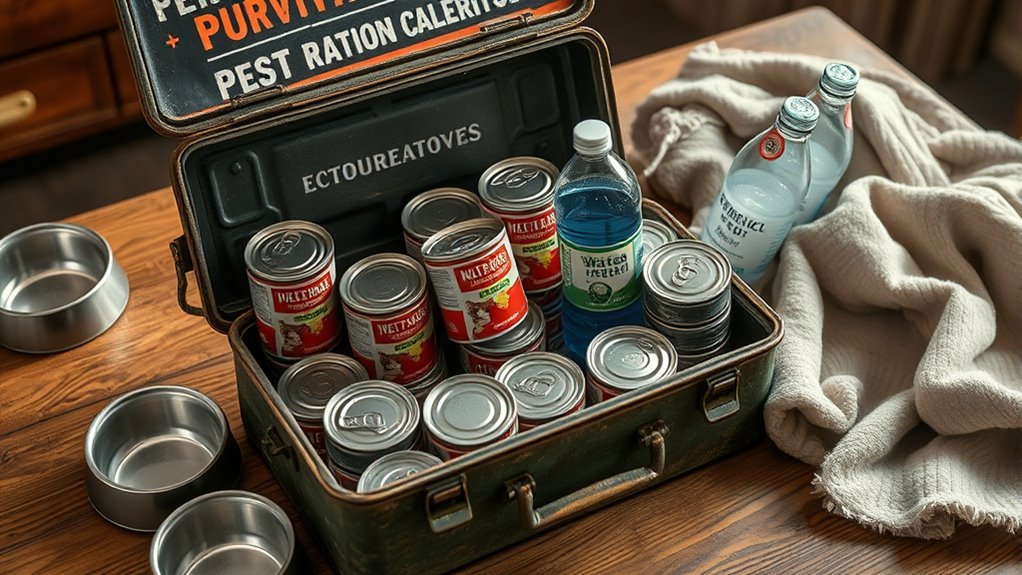

During emergencies, you should carefully assess your pet’s food and water supplies, planning portions to extend resources without compromising their health. Use high-quality pet food in smaller amounts and keep them hydrated with frequent, small waterings. Monitor your pet’s condition closely for signs of dehydration or malnutrition, and adjust as needed. Proper planning and mindful management are key to keeping your pet safe during shortages—stay tuned to learn more essential tips.
Key Takeaways
- Evaluate current pet food and water supplies, then plan portions based on their daily caloric and hydration needs.
- Maintain a balanced diet using familiar foods, avoiding drastic changes that could upset your pet’s stomach.
- Use small, frequent waterings and keep water bowls clean to conserve water and ensure hydration.
- Monitor your pet’s health closely for signs of dehydration or malnutrition, adjusting rations as needed.
- Prepare a detailed rationing plan in advance to extend resources and prioritize your pet’s well-being during emergencies.
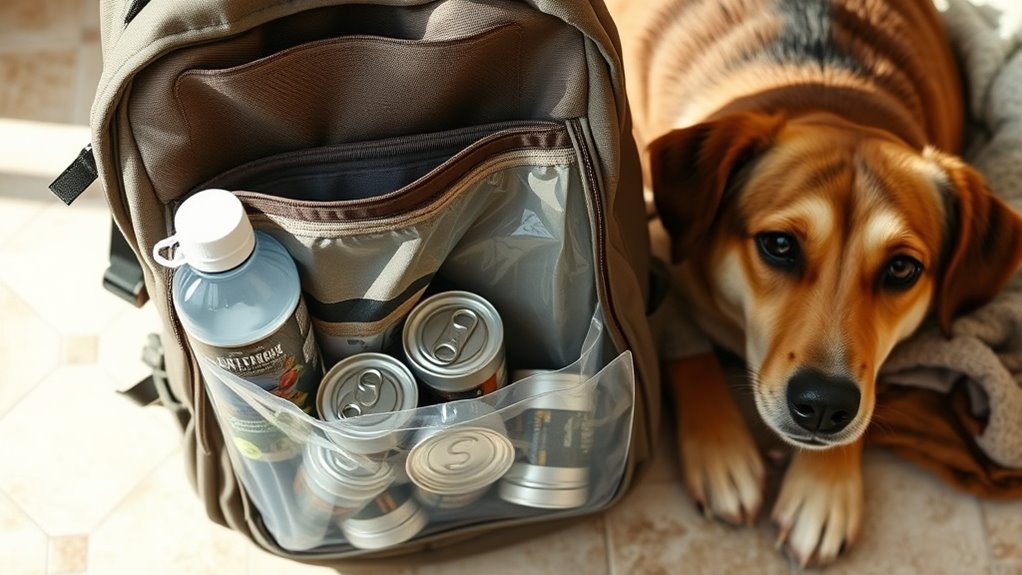
Have you ever wondered how to keep your pets safe and healthy during emergencies when supplies run low? Managing pet nutrition becomes vital when access to food and water is limited. In such situations, rationing emergency supplies thoughtfully can make a significant difference in your pet’s well-being. Start by evaluating your current stock of pet food and water, and plan to divide these resources carefully. Knowing the daily caloric and hydration needs of your pet helps you allocate supplies efficiently, ensuring they get enough nutrients without wasting valuable resources. For example, smaller portions of high-quality pet food can stretch your supplies longer, but be cautious not to reduce their intake below what’s necessary for their health.
Effective pet nutrition management during emergencies preserves health and conserves vital supplies.
It’s important to understand that pets, just like humans, need a balanced diet to maintain their health, especially during stressful times. When emergency supplies are limited, focus on providing pet nutrition that meets their specific dietary requirements—whether it’s wet or dry food, or special diets for medical conditions. Keep in mind that sudden changes in diet can upset your pet’s stomach, so try to stick with familiar foods when possible. If you need to supplement their diet with homemade options, consult reliable sources to ensure those alternatives provide necessary nutrients without harm. Additionally, awareness of divorce statistics and regional legal resources can inform your planning and ensure proper care and legal considerations if circumstances change unexpectedly.
Water rationing is equally essential. Have a plan in place to ensure your pets stay hydrated, even when water supplies are scarce. You might consider using smaller, frequent waterings instead of leaving a large bowl out, which can help conserve water and prevent wastage. Remember to clean and refill their water bowls regularly to prevent bacteria buildup. During emergencies, prioritize their hydration needs, especially for puppies, kittens, and older pets, who are more vulnerable to dehydration. If you run out of fresh water, consider safe alternatives like bottled water or boiled water that’s cooled, but avoid tap water if it’s contaminated.
Additionally, keep a close eye on your pet’s condition. Signs of dehydration or malnutrition can escalate quickly, so monitor their energy levels, coat condition, and stool consistency. If you notice any concerning symptoms, seek veterinary advice as soon as possible. Having a well-thought-out plan for rationing pet nutrition and emergency supplies not only helps extend your resources but also reassures you that your pet’s health is safeguarded during tough times. Preparation and mindful management are your best tools in ensuring your furry friend stays safe, fed, and hydrated when supplies are low.
Frequently Asked Questions
How Can I Tell if My Pet Is Dehydrated During a Crisis?
You can tell if your pet is dehydrated by watching for signs of dehydration and pet hydration cues. Check their skin elasticity by gently pinching the scruff; if it doesn’t spring back quickly, they may be dehydrated. Also, look for dry gums, sunken eyes, lethargy, or a loss of appetite. Staying alert to these pet hydration cues helps you act quickly to keep your pet safe during a crisis.
What Are Alternative Water Sources for Pets in Emergencies?
Sure, because your pet loves sipping from muddy puddles, right? In emergencies, you can rely on portable water containers or hunt for natural sources like streams or rain puddles—just be cautious, as they might contain contaminants. Always filter or boil this water if possible. These alternatives can keep your pet hydrated when traditional supplies run out, turning survival into an adventure rather than a crisis.
How Long Can Pets Safely Go Without Food or Water?
Pets can typically survive about three to five days without water and up to a week without food, but this varies by size, breed, and health. During emergencies, prioritizing pet nutrition and water supply is vital for their safety. You should have emergency preparedness plans that include extra water and food, and monitor your pet closely for signs of dehydration or hunger to guarantee their well-being during crises.
Should I Prioritize Food or Water for My Pet During Rationing?
During emergencies, prioritize water over food to ensure your pet stays hydrated, which is vital for survival. For example, a pet owner in a disaster scenario kept water accessible, preventing dehydration despite limited food. Maintaining a nutritional balance with minimal food while guaranteeing constant access to water helps your pet endure longer. Stick to a consistent feeding schedule and monitor their condition closely, adjusting as supplies become available.
Are There Specific Foods Better Suited for Emergency Pet Diets?
Yes, certain specialized pet diets are better suited for emergency food supplies. Look for non-perishable, nutrient-dense options like canned or freeze-dried foods tailored to your pet’s needs. These foods provide essential nutrients and are easy to store and transport. Make certain you have a variety of emergency foods that match your pet’s dietary requirements, so they stay healthy and nourished during tough times.
Conclusion
Remember, a little planning goes a long way—it’s better to be safe than sorry. By rationing your pet’s food and water wisely during emergencies, you make certain they stay healthy and calm until help arrives. Keep their needs in mind, and always have extra supplies on hand. As the saying goes, “A stitch in time saves nine,” so prepare now to protect your furry friends when it matters most.