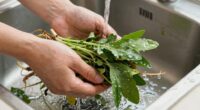
To keep foraged greens crisp during your hike home, wrap them in a damp cloth or paper towel to maintain moisture, and pack them in a breathable container like a perforated bag or layered with padding to prevent crushing. Store them in a cool, insulated bag away from sunlight, and check periodically to rehydrate if they wilt. With these tips, you’ll preserve their freshness and vibrant crunch—keep going to discover even more ways to stay fresh on the move.
Key Takeaways
- Wrap greens in a damp cloth or paper towel to retain moisture and prevent wilting during the hike.
- Use a breathable container like a perforated bag or mesh wrap to allow airflow and reduce humidity buildup.
- Pack greens gently, layering delicate leaves on top and filling gaps with padding to prevent crushing.
- Keep greens cool in an insulated bag or cooler, avoiding direct sunlight and heat exposure during the hike.
- Rehydrate wilted greens with a damp cloth or water spray if needed to maintain crispness upon arrival.
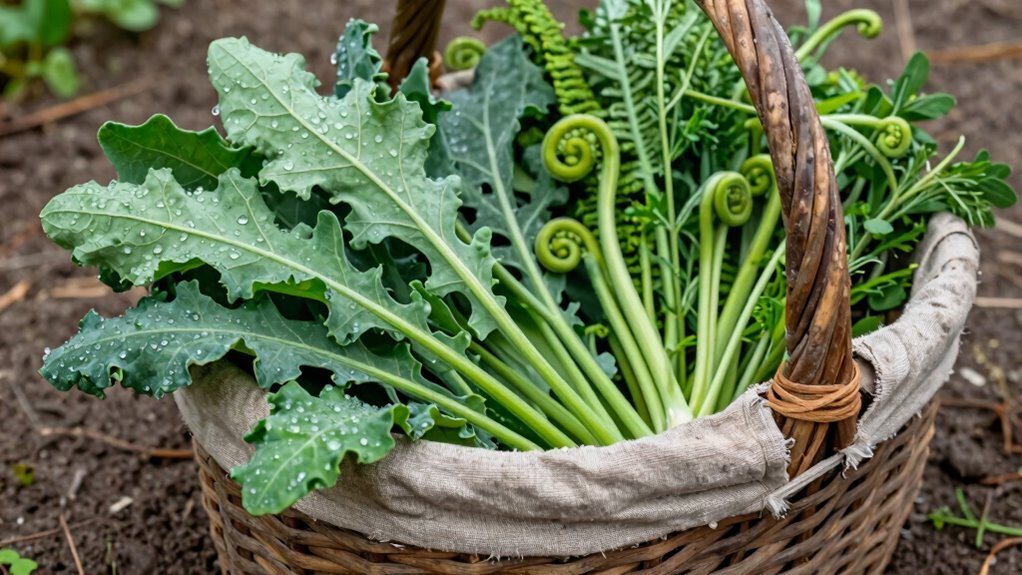
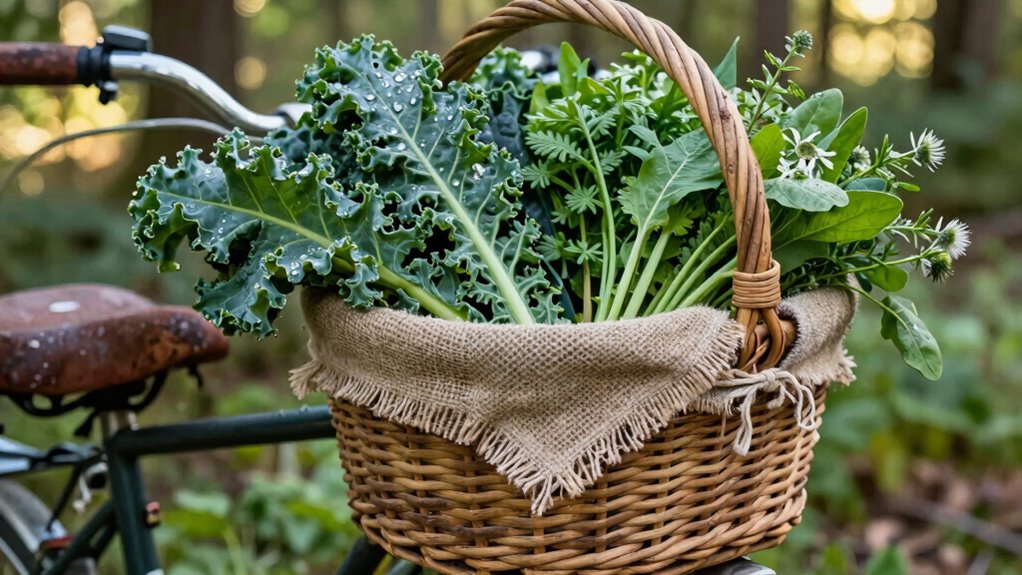
Transporting foraged greens requires careful planning to guarantee their freshness and safety. When you’re out in the field, it’s essential to think about how you’ll keep your greens crisp during the journey home. Proper hydration techniques play a crucial role here. Instead of simply tossing your greens into a bag, consider ways to maintain their moisture. You might use a damp cloth or paper towel to wrap the greens gently, ensuring they stay hydrated without becoming soggy. Another effective method is placing the greens in a container with a small amount of water at the bottom, similar to how you would keep fresh herbs. Just be sure to change the water if it becomes cloudy, and don’t submerge the greens entirely—just enough to maintain moisture. This approach helps prevent wilting and keeps the greens vibrant longer.
Container selection is equally critical when transporting greens. You want a container that’s breathable yet protective. A mesh or perforated plastic bag allows air circulation, reducing moisture buildup that can lead to spoilage. If you prefer using a rigid container, choose one with vent holes or a breathable lid. Avoid airtight containers, which trap moisture and promote rot. When packing your greens, layer them carefully to prevent crushing or bruising. Place the more delicate leaves on top and pack sturdier greens at the bottom, filling any gaps with crumpled paper or cloth to prevent shifting during transit. This not only preserves the integrity of the greens but also minimizes damage.
Additionally, think about temperature control during transport. Keep your greens cool by storing them in a insulated bag or cooler if possible. Heat accelerates spoilage, so minimizing exposure to direct sunlight and warm environments is crucial. If you’re hiking a long distance, plan for periodic checks along the way. Rehydrate the greens if they start to look wilted, and adjust your packing as needed.
Frequently Asked Questions
What Are the Best Containers for Transporting Greens?
You should use airtight containers or reusable bags to transport greens. Airtight containers help keep greens fresh and prevent moisture loss, while reusable bags are lightweight and convenient for carrying your foraged finds. Make sure to pack greens loosely to avoid crushing them. Keep the containers cool and out of direct sunlight during your hike. These options guarantee your greens stay crisp and fresh until you get home.
How Long Can Foraged Greens Stay Fresh During Transport?
Foraged greens typically stay fresh for up to 24 hours if you use proper transport techniques. To guarantee green preservation, keep them in a breathable container, like a paper bag or a loosely closed vented box, and store them in a cool, shaded spot. Avoid crushing or packing them tightly, as this accelerates spoilage. With these methods, your greens will remain crisp and fresh during your hike home.
Should I Wash Greens Before or After Transport?
You should avoid pre-washing greens before transport to prevent excess moisture, which can cause spoilage. Instead, keep greens dry and clean, and do post-transport cleaning when you’re ready to use them. This minimizes pre-wash concerns like wilting or sogginess during your hike home. Once home, give the greens a thorough rinse and dry them well to make certain they’re fresh and crisp for your meal.
Can I Transport Greens With Other Foraged Items?
You can definitely transport greens with other foraged items, but use proper preservation techniques to maintain everything fresh. For example, if you’re gathering wild herbs and berries, pack the greens in a breathable container like a paper bag or cloth to prevent moisture buildup. This way, your foraged greens stay crisp, and other items don’t spoil. Mixing items carefully ensures your haul remains fresh and vibrant on the hike home.
What Are Quick Tips to Prevent Greens From Wilting?
To keep greens from wilting, you should use proper watering techniques, like misting them lightly before transport. Keep the greens cool by controlling the temperature, ideally around 32°F to 40°F, and avoid exposing them to direct sunlight or heat sources. Wrapping them in damp paper towels and placing them in breathable containers can also help preserve moisture. This way, you’ll ensure your greens stay fresh and crisp during your hike home.
Conclusion
Now that you know how to keep your foraged greens crisp on the hike home, you’re ready to enjoy your wild harvest at its best. Will you let these fresh greens wilt before you even get a chance to savor their flavor? Probably not. With a little preparation and care, you can preserve their crunch and freshness. So next time you head out, remember these tips—your greens will thank you, and so will your taste buds.