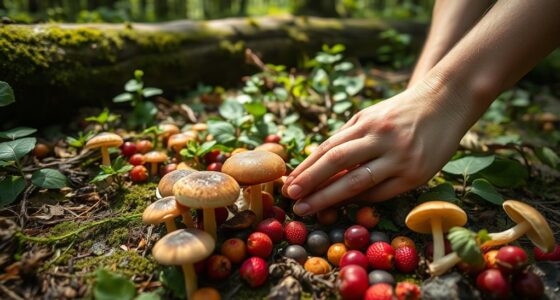
To find the tastiest wild plants, focus on soil pH levels. Acidic soils (below 5.5) often host berries like blueberries and cranberries, while neutral to slightly alkaline soils (6.0–7.5) support greens, root vegetables, and certain fungi like chanterelles and morels. Using soil testing kits can help you identify promising spots. With this knowledge, you can target areas where delicious plants are most likely hiding—keep exploring to learn more about soil and foraging success.
Key Takeaways
- Acidic soils (pH below 5.5) are ideal for berries like blueberries and cranberries.
- Neutral to slightly alkaline soils (pH 6.0–7.5) support greens, root vegetables, and many fungi.
- Soil testing helps identify promising foraging spots based on plant and fungi preferences.
- Forested, organic-rich areas with specific pH levels often harbor tastiest wild edibles.
- Recognizing soil conditions increases foraging success by targeting plants suited to local pH.

Understanding soil pH is essential for successful foraging because it directly influences the growth of edible plants and fungi. When you’re out exploring, knowing how soil acidity affects plant preferences can make the difference between finding a bountiful patch or missing out on prime foraging spots. Soil pH measures how acidic or alkaline your soil is, and this factor plays a *vital* role in determining which plants thrive there. Some species prefer acidic conditions, while others flourish in more neutral or alkaline soils. Recognizing these preferences helps you target the right areas and increases your chances of discovering tasty, wild edibles.
For example, blueberries and cranberries love acidic soils with a pH below 5.5. If you’re hunting for these berries, focusing on forested areas with naturally acidic soil—such as peatlands or areas with decayed organic matter—can lead you straight to their hiding spots. Conversely, many wild greens and root vegetables favor neutral to slightly alkaline soils, around pH 6.0 to 7.5. If you know the plant preferences, you’ll be better equipped to interpret soil conditions and focus your search accordingly. For instance, wild carrots and parsnips often grow in areas with less acidic soils, so avoiding overly acidic patches can save you time.
Understanding soil acidity also helps you avoid areas where certain edible fungi won’t grow. Mushrooms like chanterelles and morels tend to thrive in specific soil conditions, often favoring slightly acidic to neutral soils. If you’re trying to find these fungi, it’s smart to look in forested regions where the soil pH aligns with their preferences. Knowing that some plants and fungi have narrow pH tolerances can prevent you from wasting time in unsuitable terrain. Additionally, soil testing kits can provide quick and accurate insights into local soil conditions, making your foraging efforts more precise. As you become more familiar with soil chemistry, you develop a sharper eye for spotting promising foraging grounds based on subtle environmental clues.
Frequently Asked Questions
How Does Soil pH Affect Plant Nutrient Absorption?
Soil pH directly affects nutrient availability, impacting how well your plants can absorb essential minerals. When pH is too acidic or alkaline, it hampers root uptake, making nutrients less accessible. You can improve nutrient absorption by adjusting soil pH to match specific plant needs, ensuring your roots efficiently access the minerals they require. Monitoring and managing soil pH helps you optimize plant growth and maximize the taste and health of your foraged plants.
Can Soil pH Influence the Presence of Specific Edible Fungi?
Did you know that soil pH can determine up to 70% of fungi growth? Yes, soil acidity directly influences the presence of specific edible fungi. You’ll find certain mushrooms thriving in more acidic soils, while others prefer alkaline conditions. By testing and adjusting soil pH, you can predict where these tasty fungi are more likely to grow, making your foraging more successful and rewarding.
What Tools Are Best for Testing Soil pH Accurately?
You should use a reliable digital pH meter or a high-quality pH test kit for accurate soil acidity readings. These tools often need pH calibration with standard buffers to guarantee precision. Digital meters provide quick, precise results, ideal for foragers wanting to identify suitable soil conditions. Always calibrate your device regularly and follow the instructions to get the most accurate soil pH measurements for successful foraging.
How Often Should I Test Soil pH When Foraging?
You should test soil pH at least once a season to monitor soil health and guarantee ideal plant growth. Regular testing helps you identify pH changes that may affect the taste and abundance of foraging plants. If you’re exploring new areas or after heavy rain, test more often. Maintaining proper soil pH supports healthy plant growth, making your foraging more successful and enjoyable.
Are There Seasonal Changes in Soil pH That Affect Plant Growth?
Yes, seasonal soil pH fluctuations can affect plant growth. During different seasons, factors like rainfall, temperature, and organic matter decay cause pH levels to shift. These changes may influence which plants thrive or become less flavorful. You should monitor seasonal soil, pH fluctuations regularly, especially if you’re foraging, to identify the best spots for tasty plants. Adjusting your foraging based on these pH changes helps you find healthier, more flavorful plants.
Conclusion
Think of soil pH like a secret handshake with nature’s tasty treasures. When you understand it, you’re revealing a map to hidden flavors, just like discovering a hidden trail in a familiar forest. I once found wild strawberries thriving in slightly acidic soil, turning an ordinary walk into a treasure hunt. By paying attention to soil pH, you’ll uncover the tastiest plants waiting just beneath the surface, turning foraging into an exciting adventure.