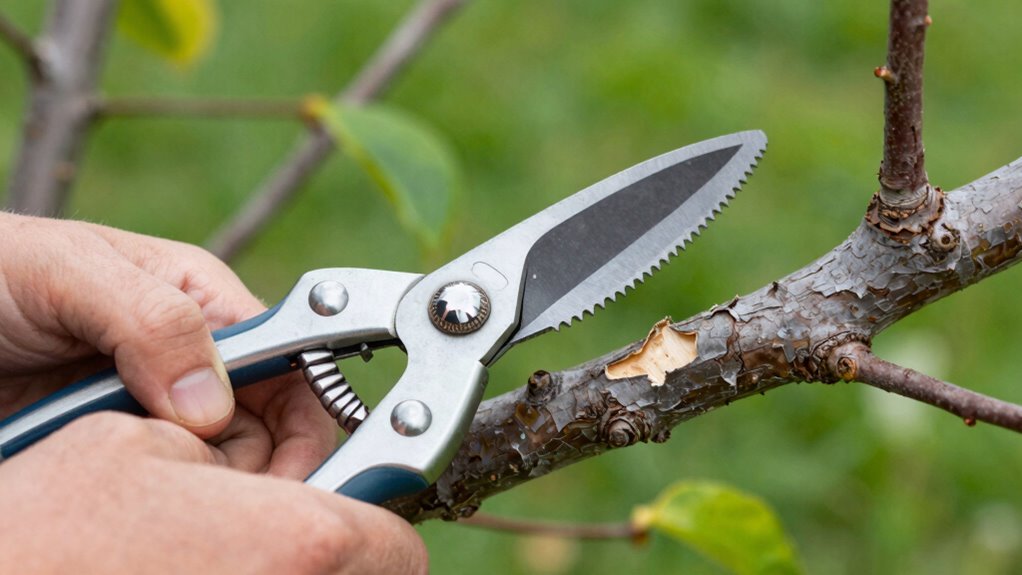

Choosing the wrong tool, like using shears on thick branches or a saw on delicate foliage, can tear bark and harm your plants. Shears are best for small, precise trimming, while pruning saws are designed for thicker branches. Using the wrong method increases injury risk and makes pruning harder. Avoid damage by selecting the proper tool for each job. Keep going, and you’ll get even more tips to keep your plants healthy and safe.
Key Takeaways
- Using shears on thick branches causes bark tearing, damaging plant health and increasing disease risk.
- Pruning saws are designed for heavy, thick branches, ensuring clean cuts without tearing bark.
- Choosing the wrong tool, like shears for large branches, results in ineffective cuts and plant injury.
- Proper tool selection preserves plant integrity and promotes faster healing by avoiding unnecessary tearing.
- High-quality, ergonomic pruning tools improve control, reduce fatigue, and prevent accidental damage to delicate stems.

When it comes to maintaining your garden, choosing the right tool can make all the difference. Whether you’re trimming branches or shaping shrubs, the decision between a pruning saw and shears impacts the health of your plants and your ease of work. Pruning saws are designed for larger, thicker branches, while shears excel at shaping and trimming smaller growth. Picking the wrong tool can cause damage; for example, using shears on a thick branch might tear bark, leading to wounds that invite disease. Conversely, trying to prune delicate foliage with a saw can be cumbersome and ineffective. Knowing which tool suits each task is essential to avoid injuring your plants and wasting effort.
Choosing the right garden tool prevents damage and promotes healthy, beautiful plants.
A key factor in selecting the right pruning tool is considering blade durability. A pruning saw with a robust, high-quality blade can cut through tough branches without dulling quickly. Durable blades stay sharper longer, reducing the need for frequent replacements and ensuring clean cuts that promote faster healing. When choosing shears, ensure the blades are made from hardened steel, which resists wear and maintains a sharp edge through repeated use. A dull blade, whether on a saw or shears, increases the risk of tearing bark or crushing stems, which can harm your plants rather than help them. Besides blade quality, ergonomic design plays a vital role in your comfort and control. An ergonomic handle reduces hand fatigue during extended pruning sessions, giving you better grip and precision. This design minimizes strain on your wrists and fingers, especially when working on larger projects, making the task less tiring and more enjoyable.
Using tools with good ergonomic design also means you’re less likely to slip or make accidental cuts. In a pruning saw, an ergonomic handle aligns naturally with your hand, giving you maximum leverage and control. For shears, especially ones with extended handles, ergonomic features allow for smooth, controlled cuts without exerting excessive force. When both blade durability and ergonomic design are considered, you get tools that are safer, more efficient, and kinder to your plants. Properly chosen tools reduce the risk of damaging bark or stems, preserving the health and aesthetic of your garden.
Ultimately, selecting the right pruning tool requires understanding your specific needs. For thick branches, a sturdy pruning saw with a durable blade and ergonomic grip is ideal. For delicate trimming, high-quality shears with sharp blades and comfortable handles are your best bet. Avoid the temptation to use the wrong tool for a task; it can do more harm than good. By investing in quality, ergonomic tools designed for the job, you’ll prune with precision, protect your plants, and make gardening a lot more satisfying.
Frequently Asked Questions
Can Pruning Saws Be Used for Cutting Thicker Branches Than Shears?
Yes, pruning saws can handle thicker branches than shears. They’re designed for larger diameters, offering better control over branch thickness and reducing the risk of tearing bark. You get more cutting precision with a saw when dealing with heavy, woody stems. Shears work best for smaller, delicate branches, but if you need to cut thicker limbs, a pruning saw is your best choice for clean, efficient cuts.
Are Electric Pruning Saws Better Than Manual Ones for Garden Pruning?
You’ll find electric pruning saws often have an advantage when tackling larger, tougher branches because they cut faster and with less effort. However, manual saws give you more precision, perfect for delicate pruning and fine cuts. If you need speed and power, go electric. But for control and detailed work, manual saws are the better choice. Think about your garden’s needs before deciding.
How Do I Maintain and Sharpen Pruning Shears and Saws Effectively?
Think of blade maintenance as nurturing a trusted tool—you’ll need to regularly clean, oil, and sharpen your pruning shears and saws. Use proper sharpening techniques, like filing or honing, to keep blades razor-sharp. Always wipe blades after use to prevent rust, and tighten screws as needed. By caring for your tools, you’ll guarantee smooth cuts and extend their lifespan, making garden work easier and more efficient.
Is There a Significant Difference in Pruning Time Between Saws and Shears?
Yes, there’s a noticeable difference in pruning time. Shears offer better pruning accuracy and are quicker for small, precise cuts, especially on branches up to a finger’s thickness. Saws take longer but excel with larger or thicker branches. Tool ergonomics also matter; comfortable, well-designed tools reduce fatigue and speed up your work. Choose based on branch size and your comfort to optimize pruning efficiency.
Can Improper Pruning Damage Trees or Plants Permanently?
Improper pruning can definitely harm trees or plants permanently. If you cut too aggressively or at the wrong angle, it can damage tree health and stunt growth. Poor pruning may create open wounds that attract pests or disease, leading to long-term structural issues. To protect your plants’ growth impact, always prune carefully, using the right tools, and follow proper techniques to guarantee healthy, sustainable growth.
Conclusion
Choosing the right tool matters—using shears on thick branches can tear bark like paper, harming your plant. Did you know that improper pruning causes over 30% of tree health issues? So, always pick a pruning saw for larger cuts and shears for smaller ones. This simple choice can preserve your plants from unnecessary damage and ensure they stay healthy and strong. Make smart cuts and keep your garden thriving!