
To safely dry and store wild herbs, harvest them at their peak just before flowering to maximize flavor and medicinal properties. Air dry by hanging small bundles in a well-ventilated, dry space, or use a dehydrator set to low heat to preserve aroma. Make certain herbs are thoroughly dry and brittle before storing them in airtight, dark-colored containers kept in a cool, dry place. Following these steps helps maintain their potency and freshness—continue exploring for more tips.
Key Takeaways
- Harvest herbs just before flowering for optimal flavor and potency.
- Air dry or use a dehydrator at low temperatures to preserve aroma and active compounds.
- Ensure herbs are fully brittle and crumble easily before storing.
- Store dried herbs in airtight, dark glass containers in a cool, dry place away from light and heat.
- Label storage jars with herb name and drying date to maintain freshness and quality.

Drying and storing wild herbs properly guarantees they retain their flavor, aroma, and medicinal properties. When you’re involved in herb preservation, mastering effective drying techniques is vital. The goal is to remove moisture without compromising the herbs’ natural qualities, ensuring they stay potent and fresh for future use. To start, choose the best herbs at their peak, ideally just before they flower, because this is when they contain the highest concentration of essential oils and active compounds. Proper herb preservation begins right here, as harvesting at the right time impacts the overall quality of your dried herbs.
Harvest herbs at their peak, just before flowering, to maximize flavor, aroma, and medicinal potency.
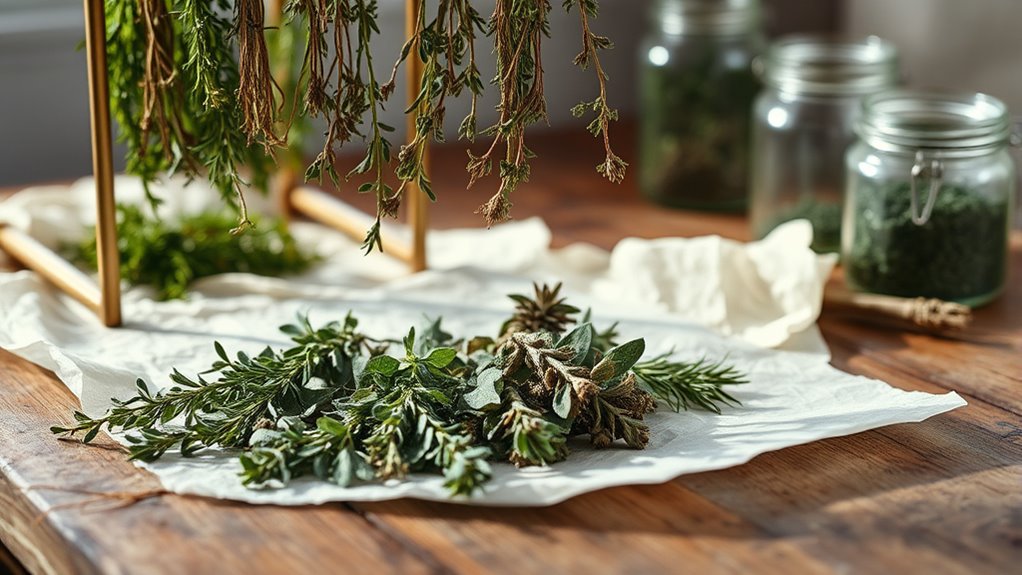
There are several drying techniques you can utilize, each with its advantages. Air drying is one of the simplest methods—simply bundle small amounts of herbs and hang them upside down in a warm, well-ventilated, dry space away from direct sunlight. This method preserves the herbs’ delicate aroma and flavor better than exposing them to heat or light. Alternatively, using a dehydrator allows for faster, more controlled drying. Set the temperature to a low setting, around 95 to 115°F (35-46°C), and spread the herbs evenly on the trays. This method is efficient and reduces the risk of mold or spoilage, especially if you’re drying larger quantities or more moisture-rich herbs. Incorporating mindfulness during the drying process can help you stay attentive to the herbs’ condition and prevent over-drying.
Oven drying is another option, but it requires caution. Keep the oven on the lowest setting, and leave the door slightly open to allow moisture to escape. Check frequently to prevent overheating, which can destroy essential oils and diminish medicinal properties. Whichever drying method you choose, guarantee the herbs are thoroughly dry before storage. They should feel brittle and crumble easily, with no remaining moisture that could cause mold growth over time.
Once dried, proper storage is vital to maintain the herbs’ qualities. Use airtight glass jars or containers, ideally with darkened lids to protect against light degradation. Store the containers in a cool, dark place, away from heat and humidity. Label each jar with the herb’s name and date of drying so you can keep track of freshness. Avoid storing herbs near spices or strong-smelling foods, as they can absorb unwanted odors, diminishing their flavor.
Frequently Asked Questions
Can I Dry Wild Herbs Indoors Safely?
Yes, you can dry wild herbs indoors safely. Using indoor drying methods helps preserve the herbs’ flavor and aroma while avoiding outdoor elements. Hang your herbs upside down in a well-ventilated, dry area away from direct sunlight. This method guarantees proper herb preservation, maintains their quality, and prevents mold. Just make sure the space has good airflow, and you’ll have fresh-tasting herbs ready for use later.
How Long Do Dried Herbs Stay Potent?
Time flies when herbs are stored properly, and their potency can last quite a while. Usually, dried herbs stay potent for about 1 to 3 years, but herb potency diminishes over time. Proper storage duration is key—keep them in airtight containers away from light and heat. While they won’t lose all their flavor overnight, after a couple of years, their effectiveness drops, so check for freshness before use.
Are There Any Wild Herbs That Shouldn’t Be Dried?
You should avoid drying wild herbs that are poisonous varieties, as ingestion can be dangerous even after drying. Also, some herbs have higher spoilage risks if not dried properly or stored correctly, which can lead to mold or spoilage. Always identify herbs accurately and research their safety before drying. If you’re unsure about a herb’s safety, it’s best to skip drying it to prevent any health risks.
What’s the Best Method to Store Dried Herbs Long-Term?
Storing dried herbs long-term is like preserving a piece of nature’s essence; you want it to stay fresh and potent. Keep your herbs in airtight containers, which shield them from air and moisture, and place them in cool, dark storage areas. Avoid sunlight and heat, as they can degrade flavor and aroma. This method guarantees your herbs maintain their qualities for months, ready to elevate your culinary or medicinal uses.
How Can I Tell if Dried Herbs Are Still Good?
You can tell if dried herbs are still good by checking their herb potency and storage lifespan. If they smell fresh and have retained their aroma, they’re likely still potent. Look for any signs of mold, discoloration, or loss of scent; these indicate they’ve deteriorated. Properly stored herbs usually last 1-3 years, but always trust your senses—if they seem off, it’s best to replace them for ideal flavor and effectiveness.
Conclusion
By drying and storing your wild herbs properly, you’re channeling the wisdom of ancient herbalists who trusted nature’s secrets. Think of yourself as a modern-day alchemist, preserving the magic of wild plants for future use. Handle them with care, like a treasure chest of nature’s bounty, and enjoy their flavors and benefits long after the harvest. With patience and respect, you’ll keep their essence alive—ready to inspire your culinary and medicinal adventures.