TL;DR

Get garden gear delivered free — and shop member deals
- Fast, free delivery on millions of items
- Access to Prime Big Deal Days deals on October 6–7
- Prime Video, Amazon Music and more included
Deer may eat chrysanthemums in fall because other food is becoming scarce and fresh mums offer tender, moist growth. Gardeners can try repellents, barriers and porch placement, though no method described is guaranteed to stop hungry deer.
Hungry deer may eat fall chrysanthemums even though mums have a strong, somewhat bitter scent, according to Country Living’s report featuring florist Christina Stembel. As other foliage dries back before winter, freshly watered and fertilized mums can offer tender leaves and buds, putting a popular seasonal flower at risk just as it is reaching its display period.
Stembel, founder and chief executive of Farmgirl Flowers, said deer in her experience eat a wide range of plants, including some sold as deer-resistant. She described rosemary, lavender and eucalyptus as among the few plants she has found safe from browsing in her garden. These are her observations, not a guarantee that deer will avoid those plants in every location.
The report says fall mums may be especially appealing because deer are preparing for winter while their usual food sources are drying up or have already been eaten. Freshly planted mums are often watered and fertilized, and their tender foliage and buds provide moisture. The article also notes that deer are not the only possible source of damage: rabbits, groundhogs and voles may eat mums, while squirrels and chipmunks may dig them up.
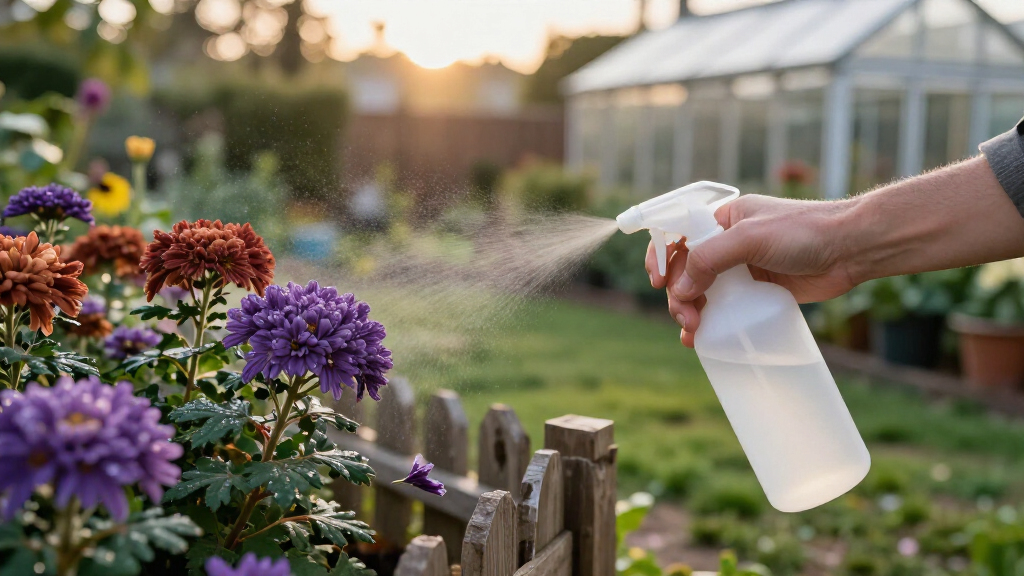
Options described for discouraging deer include commercial sprays or granular repellents, and homemade sprays using strong-smelling ingredients such as garlic and vinegar. The report advises reapplying repellents every few days and after rain, or following the product’s directions, and suggests rotating products because deer may become accustomed to odors. Stembel also recommends placing pots near the home, using motion-activated sprinklers for a limited time, or covering plants with chicken wire or netting. She says fencing is another option.
Protecting the Fall Bloom
Mum damage is partly a timing problem. Browsing in early or midsummer may leave hardy mums enough time to regrow, according to the report. But if deer eat the buds in September or October, there may be too little time before frost for the large flowers gardeners expected that season.
Stembel says hardy mums whose roots remain healthy can be cut back and mulched after damage and may return the following year. That offers a possible path to recovery, but it does not restore a lost fall display. For gardeners buying mums for seasonal color, the report’s practical point is that location and physical barriers may matter alongside scent-based products.
deer repellent spray for garden plants
As an affiliate, we earn on qualifying purchases.
As an affiliate, we earn on qualifying purchases.
Why Fall Mums Attract Deer
Chrysanthemums are widely planted for their bright fall blooms, when many other plants are beginning to die back. Their scent can lead gardeners to assume they will be left alone, but the report cautions that the label “deer-resistant” is not a promise. Stembel characterizes that description as a loose suggestion based on her experience with deer feeding.
The article also distinguishes damage to flowers from damage to the plant’s longer-term growth. Early-season browsing may be followed by regrowth if the plant is hardy and its roots survive. Late-season browsing can remove buds too close to frost for a comparable flush of flowers to form.
motion-activated sprinkler for deer deterrence
As an affiliate, we earn on qualifying purchases.
As an affiliate, we earn on qualifying purchases.
How Much Protection Works
No method is guaranteed in the source material. The effectiveness of commercial and homemade repellents varies, and Stembel says deer may get used to their odors. Motion-activated sprinklers may also lose their effect after a few days. The report does not provide controlled comparisons of these approaches or specify how well they work across different gardens.
It is also not always clear which animal caused a plant’s damage. Deer, rabbits, groundhogs and voles may eat mums, while squirrels and chipmunks can disturb pots by digging. The report does not establish a way to identify the animal from damage alone.
garden fencing for deer protection
As an affiliate, we earn on qualifying purchases.
As an affiliate, we earn on qualifying purchases.
Steps Before the Next Frost
Gardeners trying to preserve this season’s flowers can place mum pots near the home, apply repellents according to directions and renew them after rain, or add a barrier such as chicken wire or netting. Those weighing a longer-term solution can consider fencing, while recognizing that the report does not compare fence designs or costs.
If browsing has already removed late-season buds, the immediate display may be lost. For hardy plants with surviving roots, the report recommends cutting them back and adding mulch so they can return next year. Whether they recover will depend on the plant’s condition and local growing conditions.
As an affiliate, we earn on qualifying purchases.
Key Questions
Do deer eat chrysanthemums?
They can. Country Living’s report says deer may eat mums despite their scent, particularly when other food is becoming scarce in fall.
Are mums deer-resistant?
The report cautions that “deer-resistant” is not a guarantee. Christina Stembel says hungry deer may eat many plants that are described that way.
What can I do to protect mums?
Options in the report include repellents used according to directions, placing pots near the home, and covering plants with chicken wire or netting. Fencing may also help, but the source does not identify one approach as certain to work.
Can mums recover after deer eat them?
Hardy mums browsed earlier in the growing season may have time to regrow. If late-season buds are eaten, the plant may not produce its large fall flowers before frost. The report says hardy mums with healthy roots can be cut back and mulched for a chance to return next year.
Which animals besides deer may damage mums?
The report names rabbits, groundhogs and voles as animals that may eat mums. Squirrels and chipmunks may dig up plants while seeking places to stash acorns.
Source: rss
Evergreen bestsellers Picks
bestsellers
As an affiliate, we earn on qualifying purchases.