
TL;DR

Get garden gear delivered free — and shop member deals
- Fast, free delivery on millions of items
- Access to Prime Big Deal Days deals on October 6–7
- Prime Video, Amazon Music and more included
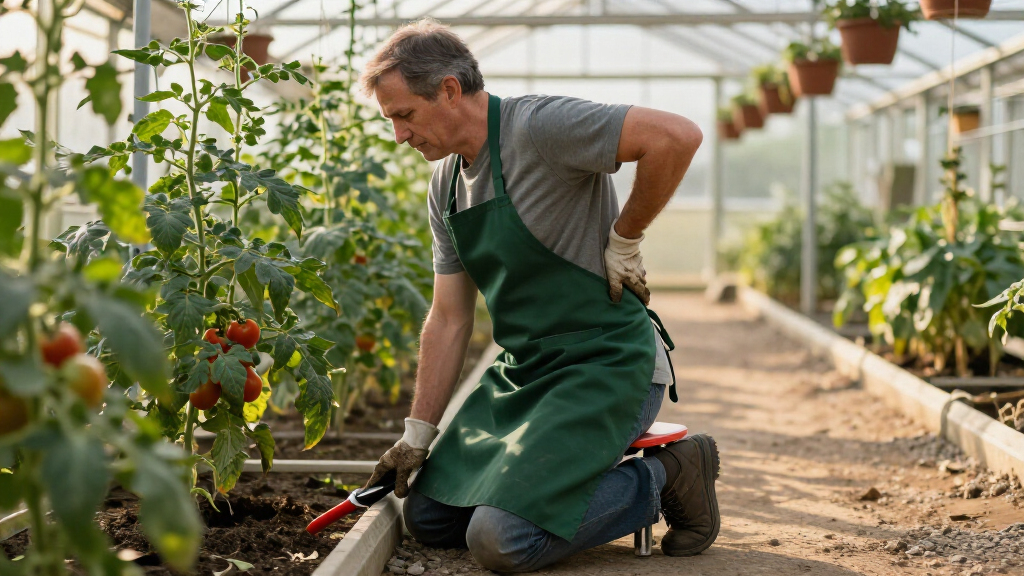
Researchers at the University of Florida’s Southeastern Coastal Center for Agricultural Health and Safety are studying whether pain self-management and ergonomic modifications can reduce back pain in horticulture workers. Early findings show improvements in pain and work task difficulty.
University of Florida researchers are studying whether pain self-management and ergonomic modifications can effectively address back pain in the horticulture industry, a condition so common among nursery and landscape workers that many treat it as simply part of the job. Preliminary findings from the study, led by faculty affiliated with the Southeastern Coastal Center for Agricultural Health and Safety (SCCAHS), show improvements in both pain and work task difficulty.
The study is being conducted by scientists from the UF-based SCCAHS, including faculty from UF’s College of Public Health and Health Professions and the Department of Family, Youth and Community Sciences. The lead researcher is Kim Dunleavy, a clinical professor in UF’s Department of Physical Therapy. The project is examining whether self-management of pain combined with ergonomic changes in the workplace can reduce back pain among workers who perform physically demanding horticulture tasks.
In the study’s first phase, stakeholders from the nursery and landscape industry — including supervisors, workers, and insurance consultants — confirmed that many employees continue working despite ongoing pain. Workers described long hours spent lifting heavy plants, carrying materials, digging, and working in bent or awkward positions, all of which can accumulate physical strain over time.
According to Dunleavy, participants indicated that preventing back injuries would not require major changes in workplace practices, but pointed to the need for tailored interventions for the horticulture industry specifically. Interviewees also identified a need for greater workplace awareness about pain and more guidance on injury prevention, an area where formal training is often limited.
Costs for Workers and Employers
The research addresses a workforce whose livelihoods depend directly on physical capacity. According to Dunleavy, back pain affects both employees and businesses: reduced productivity, the loss of experienced workers, and injury costs carry major consequences for companies in the sector.
The study also highlights medication-related concerns. Dunleavy noted that back pain can lead workers to rely on pain medications, including opioids and muscle relaxers, or over-the-counter options such as acetaminophen and anti-inflammatories, all of which carry potential negative health side effects. Early results, she said, point to the value of introducing workers to the risks of pain medication and to simple strategies for managing pain before it becomes a more serious or long-term problem.
Top picks for "university florida study"
As an affiliate, we earn on qualifying purchases.
Seasonal Workload Challenges
Back pain in horticulture has received limited formal attention despite the physically demanding nature of the work. According to the study’s early interviews with workers and industry leaders, workloads in the nursery and landscape sector vary with seasonal and weather-related factors, which means practical solutions must work for both employees and employers. The interviews also surfaced a pattern in which working through pain offers short-term benefits but longer-term costs, including injuries, worker burnout, lost productivity, and difficulty retaining skilled employees. Formal training on injury prevention in the industry is often limited, according to Dunleavy.
“Not only is back pain debilitating for workers who rely on their bodies for income, reduced productivity, losing experienced workers, and overall costs for injury have major consequences for companies.”
— Kim Dunleavy, clinical professor, UF Department of Physical Therapy, and lead researcher
Unanswered Questions in the Findings
Several aspects of the research remain unresolved. The full findings have not yet been published, and the preliminary improvements in pain and work task difficulty have been described by the research team but not quantified in publicly released detail. The size of the study population, the specific ergonomic modifications tested, and the duration of the interventions have not been disclosed in the initial report.
It is also not yet clear whether the self-management and ergonomic approaches will prove effective across the full range of horticulture operations, given that early interviews highlighted seasonal and weather-related variability in workloads. Whether the interventions can be scaled across the industry remains to be determined.
Next Steps for the Research
The research team is expected to continue the study beyond its initial phase, with a fuller article on the study and its findings written by Chris Vivian available on the UF/IFAS website. According to Dunleavy, the preliminary results highlight the importance of encouraging workers to use simple pain-management strategies and of tailoring prevention approaches to protect workers before pain becomes chronic or more severe. Employers and workers in the nursery and landscape sector can watch for forthcoming guidance from UF and SCCAHS on workplace practices and pain management.
Key Questions
What is the University of Florida study investigating?
Researchers are testing whether self-management of pain and ergonomic workplace modifications can effectively reduce back pain among nursery and landscape workers in the horticulture industry.
Who is leading the research?
The lead researcher is Kim Dunleavy, a clinical professor in the Department of Physical Therapy at UF’s College of Public Health and Health Professions. The study involves faculty associated with the UF-based Southeastern Coastal Center for Agricultural Health and Safety.
What did the first phase of the study find?
Industry stakeholders — supervisors, workers, and insurance consultants — confirmed that many workers continue working despite pain. Workers described tasks such as lifting heavy plants, digging, and working in awkward positions, and participants indicated that prevention would not require major changes in workplace practices.
What have the preliminary results shown?
According to Dunleavy, early findings are encouraging, showing improvements in work task difficulty and pain. Detailed quantitative results have not yet been released.
Why is back pain a concern beyond worker discomfort?
Besides being debilitating for workers who rely on their bodies for income, back pain can lead to reduced productivity, loss of experienced workers, injury costs for employers, and reliance on pain medications — including opioids — that carry negative health side effects.
Source: rss
Fall yard work Picks
leaf blowers
As an affiliate, we earn on qualifying purchases.