TL;DR

Get garden gear delivered free with Prime
- Fast, free delivery on millions of items
- Prime Video, Amazon Music and more included
- Member-only deals all year
An Amateur Gardening report says the Royal Horticultural Society is encouraging gardeners to plant some trees, shrubs and perennials in autumn rather than waiting for spring. The seven suggestions include lavender, yarrow and field maple, though a plant’s success will depend on local conditions and appropriate care.
The Royal Horticultural Society (RHS) is urging gardeners to rethink spring planting and put selected trees, shrubs and perennials in the ground in autumn, arguing that cooler weather and seasonal rainfall can give them time to establish roots before summer heat. An Amateur Gardening report lists seven candidates, including lavender, common yarrow and field maple, for gardens preparing for hotter, drier conditions.
The report says autumn planting can let roots develop while soil remains relatively warm and rainfall is more reliable than during summer. Plants established before spring may then be better placed to produce top growth as temperatures rise. The RHS advice described in the report applies to selected plants, rather than a blanket recommendation to move all sowing and planting out of spring.
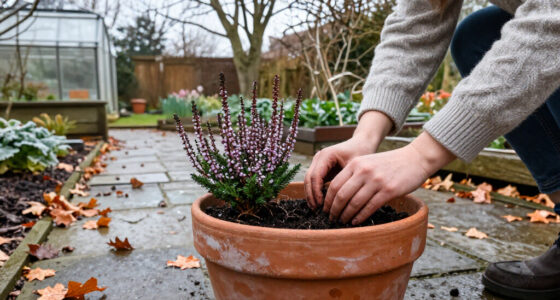
The seven suggestions are hardy outdoor ferns, wisteria, English lavender, common yarrow (Achillea millefolium), geraniums, verbena and field maple. The report describes lavender and yarrow as drought-tolerant, and says field maple prefers fertile, well-drained soil in sun or light shade. It notes that lavender does not suit shade, heavy soil or wet, freezing conditions, while French lavender is less hardy than English lavender.
Other choices have their own needs: wisteria is a vigorous climber suited to full sun and well-drained soil; verbena can reach about two metres and flowers from summer into autumn; and the report says some geranium varieties, including ‘Orion’, can grow in a range of soils, including heavy clay. These are planting suggestions, not a guarantee that any species will thrive in every garden.
Autumn Planting Before Summer Drought
Planting in autumn could give roots a longer period to establish before plants face summer heat and dry soil. That matters to gardeners trying to reduce the risk of plants struggling during drought and to limit the need for watering. The report frames the approach as one way to prepare gardens for changing weather, not a substitute for suitable plant selection and ongoing care.
The list also includes plants with potential value beyond their appearance. According to the report, yarrow can support more than 100 insect species, while the flowers of lavender and verbena attract pollinators. Choosing plants for local conditions and wildlife can therefore serve more than one garden aim, although the report does not quantify how much water these choices might save.
Popular right now

Shark Navigator Lift-Away Upright Vacuum, NV360

Hisense 85 U7 Mini-LED ULED 4K UHD Smart Google TV (85U7SG, 2026)

De'Longhi Dinamica Plus Fully Automatic Espresso Machine
As an affiliate, we earn on qualifying purchases.
Why Gardeners Are Rethinking Spring
Spring is often treated as the main season for planting, but the RHS recommendation described by Amateur Gardening challenges that routine for certain plants. The report says autumn offers cooler temperatures, rain and time for roots to grow before the first frost. It argues that plants put in then may be better positioned to develop healthy growth in spring.
Amateur Gardening says the UK’s summer 2026 was the hottest on record to date, citing the Met Office, and reports that heat and prolonged periods without rain stressed plants, reduced soil moisture and affected root vegetables and tubers. That weather is the report’s immediate reason for discussing planting choices, but it does not establish that autumn planting alone will protect gardens from future extreme conditions.
Limits of the Planting Advice
The source report does not provide a formal RHS statement, named spokesperson or detailed trial data, so the recommendation is presented through the article’s account of RHS advice. It also gives no measured estimate of how much autumn planting improves survival, reduces watering or helps gardens cope with heat. The effects will depend on soil, exposure, rainfall, frost and local climate.
Although the article links its advice to summer 2026, it does not provide the underlying Met Office figures or specify which measurement defines the UK’s hottest summer. The seven plants should be treated as options to investigate, not as a definitive list for every garden; site-specific planting guidance and the needs of each species still matter.
Choosing Plants for Your Site
Gardeners considering autumn planting can start by matching each plant to its conditions: for example, the report recommends full sun and well-drained soil for lavender and wisteria, while field maple can grow in sun or light shade. Check local planting guidance for timing, soil preparation and protection from frost, and follow any care instructions for the plant purchased.
The practical test will come as these plants establish and face later summers. The source does not set out a monitoring programme or a further RHS announcement, so any assessment of results will depend on gardeners’ experience and future evidence on plant performance and water use.
Key Questions
Which seven plants does the report recommend?
The list is hardy outdoor ferns, wisteria, English lavender, common yarrow, geraniums, verbena and field maple.
Why plant these species in autumn?
The report says cooler temperatures and seasonal rain can give plants time to establish roots before spring and summer. It does not claim that autumn planting guarantees survival during drought.
Will all seven plants suit any garden?
No. They have different requirements. For instance, the report says lavender needs sun and does not suit heavy soil or wet, freezing conditions. Check the needs of each species against your soil, light and local weather.
Does autumn planting save water?
The report presents the approach as a way to prepare plants for hotter, drier summers and reduce pressure on future water supplies. It provides no measured water-saving figure, so the size of any benefit is unclear.
Source: amateurgardening.com