
Choosing the wrong canning method based on food acidity can ruin your batch and risk safety. Water bath canning works only for high-acid foods like fruits and tomatoes, while low-acid foods need pressure canning to reach the necessary temperature. Using the wrong method may leave bacteria like *Clostridium botulinum* alive, causing spoilage and health hazards. Keep in mind how pH levels determine the best approach—stay with us to discover more essential tips for safe canning.
Key Takeaways
- Using water bath canning on low-acid foods can allow bacteria like botulinum to survive and cause food poisoning.
- Pressure canning is necessary for low-acid foods to reach the high temperatures that kill harmful bacteria.
- Choosing the wrong method due to pH misunderstanding can spoil batches and pose health risks.
- Proper sterilization of jars and equipment is essential regardless of the chosen canning method.
- Skipping pressure canning for low-acid foods is a shortcut that can ruin the entire batch and jeopardize safety.
Have you ever wondered which method is best for preserving your homegrown fruits and vegetables—water bath canning or pressure canning? The answer hinges on understanding the differences in pH levels and the importance of equipment sterilization. These factors are vital because they directly impact food safety and the success of your preserved goods.
First, it’s essential to recognize that pH level differences determine which canning method is safe. Fruits like peaches, apples, and tomatoes are more acidic, typically having a pH below 4.6, making them suitable for water bath canning. Acidic foods create an environment inhospitable to bacteria like Clostridium botulinum, which causes botulism. Conversely, low-acid vegetables such as green beans, corn, and peppers have higher pH levels above 4.6, requiring pressure canning to reach the temperatures needed to kill harmful bacteria effectively. Failing to match the food’s pH level with the correct method can result in dangerous bacteria surviving, risking spoilage or health hazards.
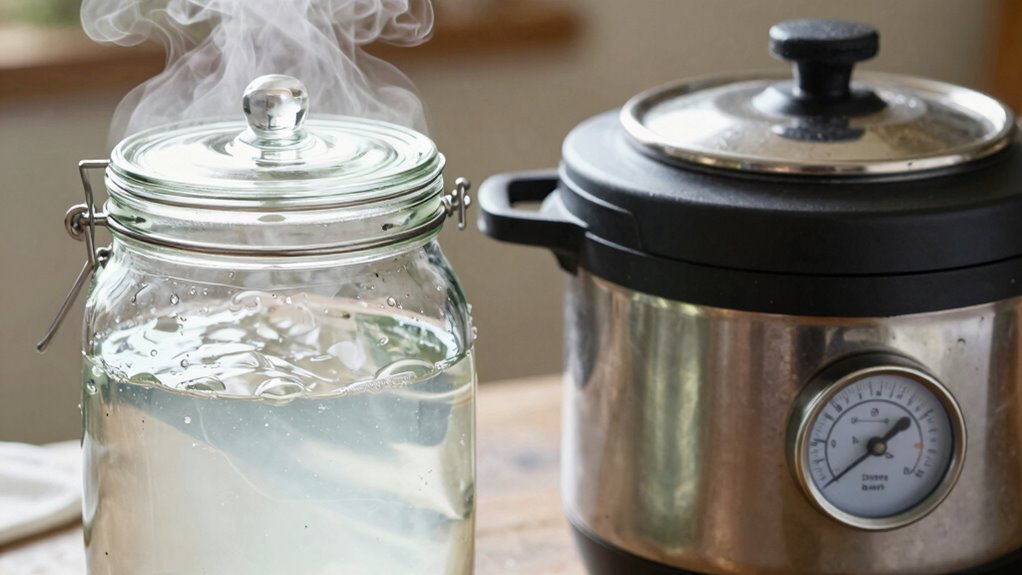
Another essential aspect is equipment sterilization. Proper sterilization of your jars, lids, and tools is non-negotiable for safe canning. Dirty or improperly sterilized equipment can introduce bacteria, molds, or yeasts that compromise your preserved foods. Whether you’re water bath canning or pressure canning, start by thoroughly washing all equipment with hot, soapy water. Then, sterilize jars and lids by boiling them in water for at least ten minutes, or use a dishwasher with a sterilization cycle. This extra step ensures that pathogens don’t sneak into your jars during the sealing process. Skimping on sterilization considerably increases the risk of spoilage and foodborne illnesses, especially when storing home-canned goods over long periods.
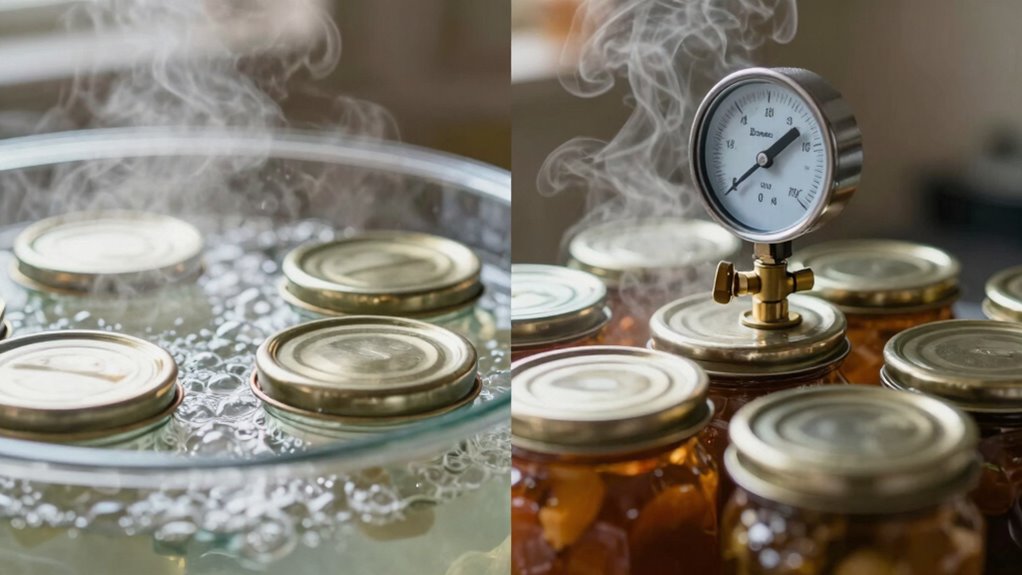
While water bath canning is simpler and requires less specialized equipment, it’s only suitable for high-acid foods. Pressure canning, on the other hand, demands a pressure canner that can reach higher temperatures safely, but it’s necessary for low-acid foods. Choosing the wrong method because of a misunderstanding of pH levels or neglecting equipment sterilization can ruin a whole batch. Spoiled jars, off-flavors, or even dangerous toxins can develop if you don’t follow proper procedures.
Additionally, understanding the role of heat in canning is crucial for ensuring all bacteria and spores are effectively destroyed.
In the end, understanding the pH level differences and prioritizing equipment sterilization are your best defenses against canning failure. These steps ensure that your preservation efforts are safe, effective, and worth the time you invest. Remember, when in doubt, consult a reliable canning guide or extension service to verify that you’re following the safest practices for your specific foods.
Frequently Asked Questions
Can I Substitute Water Bath Canning for Pressure Canning Safely?
No, you shouldn’t substitute water bath canning for pressure canning safely unless you’re preserving high-acid foods like fruits and jams. Safety considerations are vital, as pressure canning is necessary for low-acid foods to prevent botulism. Make certain you have the proper equipment requirements, including a pressure canner, to maintain safe processing temperatures. Using the wrong method can compromise safety and lead to spoilage or illness. Always follow tested recipes and guidelines.
Which Method Preserves More Nutrients in Preserved Foods?
You preserve more nutrients with water bath canning because it uses lower temperatures, which better retain food quality and nutrient retention. Pressure canning involves higher heat, which can destroy some vitamins and minerals, especially in low-acid foods. If you’re prioritizing nutrient preservation, water bath canning is ideal for high-acid foods like jams and pickles. Just guarantee you follow proper procedures to maintain both food safety and quality.
Are There Specific Foods That Require Both Methods?
Some specialty foods, like certain fruits and vegetables, do require dual method requirements to guarantee safety and quality. You’ll need to use water bath canning for high-acid items like jams and pickles, but pressure canning becomes necessary for low-acid foods such as meats, beans, and vegetables. Always check specific recipes and guidelines, because using the wrong method can compromise safety and spoil your batch.
How Does Altitude Affect Water Bath and Pressure Canning?
Did you know that boiling points decrease by about 1°F for every 500 feet of altitude? This affects water bath and pressure canning, requiring altitude adjustments to guarantee safety. For water bath canning, you need to increase the processing time. Pressure canning, however, involves adjusting the pressure level to compensate for the lower boiling point, preventing underprocessing and ensuring preserved foods are safe to consume.
What Are the Long-Term Storage Differences Between the Two Methods?
You’ll find that pressure canning generally offers better shelf stability for low-acid foods, lasting up to a year or more, while water bath methods suit high-acid foods with slightly shorter shelf lives. However, if you don’t follow proper procedures, spoilage risks increase, especially in low-acid items. Both methods can provide safe, long-term storage if you guarantee proper sealing and processing, but pressure canning is more reliable for extended storage.
Conclusion
Choosing between water bath and pressure canning is like selecting the right key for a lock—each opens a different door to safety and preservation. Rushing or taking shortcuts can shatter the delicate trust you’ve built with your jars, risking spoilage and waste. Remember, patience and proper technique are your guiding stars, ensuring your harvest’s legacy endures. When you respect the process, you safeguard not just your food, but the future it symbolizes—hope, tradition, and care.