Rose hips are a powerful natural source of vitamin C, making them perfect for boosting your immune system during the cold season. They grow on wild rose bushes and can be harvested responsibly once ripe, especially after frost. Rich in antioxidants and essential nutrients, rose hips can be used in teas, jams, or powders to support your health naturally. To discover more about how to incorporate these seasonal remedies into your routine, keep exploring their benefits.

Get garden gear delivered free with Prime
- Fast, free delivery on millions of items
- Prime Video, Amazon Music and more included
- Member-only deals all year
Key Takeaways
- Rose hips are a natural, rich source of vitamin C, especially after the first frost when berries ripen.
- Harvesting wild rose hips provides an organic, pesticide-free way to boost vitamin C intake during winter.
- The berries contain high levels of antioxidants and vitamin C, supporting immune health in cold seasons.
- They can be dried or processed into jams, teas, or powders to preserve their vitamin C benefits.
- Wild rose hips promote sustainable foraging and reconnecting with seasonal, nutrient-dense foods.
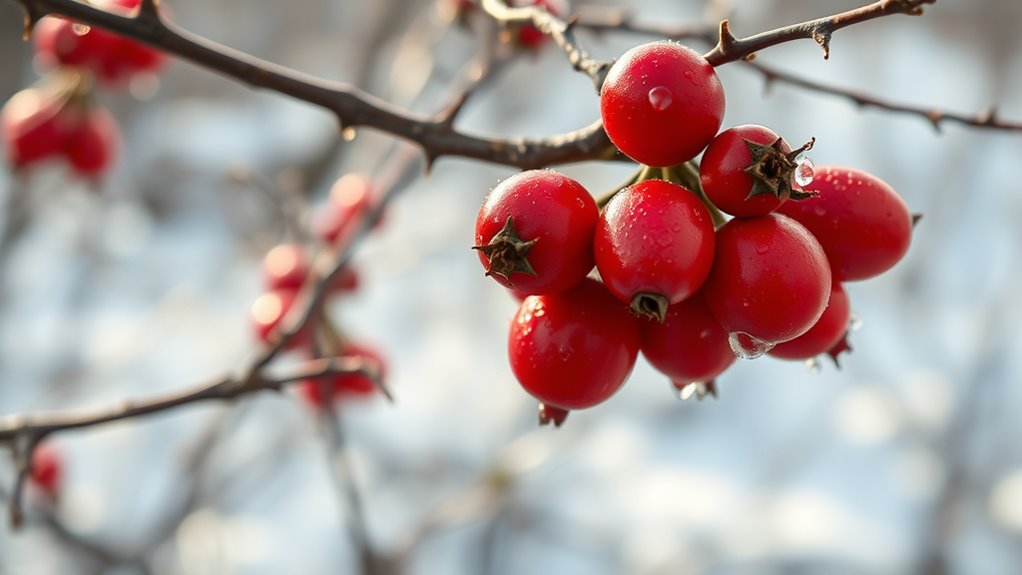
Have you ever wondered about the small, vibrant fruit that comes from wild rose bushes? That’s right—those tiny, reddish-orange berries are called rose hips, and they’re packed with more than just visual appeal. When you engage in wild harvesting, you’re tapping into a natural source of nutrition that’s been used for centuries. These berries are not only easy to identify in the wild, but they also offer a host of nutritional benefits that can boost your health, especially during the cold season when your immune system needs extra support.
Wild harvesting rose hips is a rewarding activity that connects you with nature while providing fresh, organic produce. When you pick them yourself, you’re guaranteeing the berries are free from pesticides and chemicals often found in store-bought options. Plus, harvesting wild rose hips at the right time—usually after the first frost—guarantees you get the ripest, most nutrient-dense fruits. These berries are rich in vitamin C, making them an excellent source during winter months when citrus fruits might be scarce or expensive. The high vitamin C content helps strengthen your immune system, fight off colds, and reduce inflammation. But the benefits don’t stop there; rose hips also contain vitamin A, vitamin E, antioxidants, and essential fatty acids, all of which contribute to overall health, skin vitality, and immune resilience.
Using wild-harvested rose hips in your diet is simple and versatile. You can dry them to make teas, crush them into powder for smoothies, or cook them into jams and jellies. Each method preserves the nutritional benefits, allowing you to enjoy their health-boosting properties long after the harvest. Because these berries are naturally high in antioxidants, they help combat free radicals—those unstable molecules that can damage cells and accelerate aging. Consuming rose hips regularly during cold weather can provide your body with the nutrients it needs to stay resilient against seasonal illnesses.
Incorporating wild harvesting of rose hips into your routine not only supports your health but also encourages sustainable foraging practices. Always make sure to identify the plant correctly and harvest responsibly to guarantee the plant’s continued growth. Whether you’re making a warming tea or adding a nutrient boost to your meals, these vibrant berries serve as a potent, natural remedy for boosting your immune system during the colder months. Embrace the tradition of gathering wild rose hips and enjoy their many health benefits while reconnecting with nature’s seasonal bounty.
Frequently Asked Questions
Can Rose Hips Be Used in Cooking Recipes?
Yes, you can definitely use rose hips in cooking recipes. Cooking with rose hips adds a unique flavor and boosts your dish’s nutritional value. You might make jams, jellies, or teas with them, or incorporate dried rose hips into baked goods. They’re versatile and lend a tangy, fruity taste. Experiment with rose hips culinary uses to enhance your meals, especially during the cold season when their vitamin C content is most beneficial.
Are There Any Known Allergies to Rose Hips?
You should watch out for potential allergies to rose hips, as some people may experience allergy symptoms like skin rashes or breathing issues. It’s best to get allergy testing if you suspect sensitivity. While rare, allergic reactions can catch you off guard, so stay alert. Think of it as opening a can of worms—better safe than sorry. Always consult a healthcare professional before adding new natural remedies to your routine.
How Do Rose Hips Compare to Other Vitamin C Sources?
You’ll find that rose hips have a higher nutrient comparison for vitamin C than many fruits, making them a potent natural source. Their antioxidant properties also stand out, helping your immune system and fighting free radicals. While oranges and kiwis are popular, rose hips often contain more vitamin C per serving. Incorporating them into your diet offers a powerful boost during cold seasons, thanks to their rich nutrient profile and antioxidant benefits.
What Is the Best Way to Harvest Rose Hips?
You should harvest rose hips when they’re fully ripe, usually after the first frost, which enhances their sweetness and vitamin C content. Use pruning shears or scissors to gently clip the hips from the plant, avoiding damage. Harvest timing is vital—wait until they’re bright red or orange. Handle them carefully, and remove stems before storing or using. This method guarantees you get the best quality and maximum nutrients.
Are Rose Hips Safe for Children to Consume?
Yes, rose hips can be safe for children when used appropriately. You should consider pediatric safety and follow dosage guidelines carefully, as excessive intake may cause stomach upset or allergic reactions. Always consult a healthcare professional before giving rose hips to children, especially for medicinal purposes. Stick to recommended amounts and verify the preparation is suitable for their age to avoid any adverse effects.
Conclusion
So, next time you’re freezing outside, skip the fancy supplements and reach for those wild rose hips instead. Who needs artificial vitamins when Mother Nature’s got your back with a tart, tangy burst of C? It’s like nature’s little secret, hiding in plain sight, ready to boost your immune system while you sip your tea. So go ahead, embrace the thorny little wonder—your cold-season hero in disguise. Who knew health could taste this good?
Fall yard work Picks
leaf blowers
As an affiliate, we earn on qualifying purchases.