
To prevent mold later, guarantee your dried mushrooms pass the crispy‑snap test. Gently bend a mushroom strip; it should crack or snap cleanly without bending. If it stays flexible or bends, it’s not fully dried. Proper drying stops moisture that causes mold. Using this simple test, you can confidently store your mushrooms without worry. Keep going for tips on perfect drying techniques and storage secrets to maximize shelf life.
Key Takeaways
- Fully dried mushrooms should crack or snap when bent, indicating complete moisture removal.
- The crispy‑snap test helps prevent mold by confirming mushrooms are dry enough for safe storage.
- Proper slicing and even drying ensure the mushrooms reach the right dryness for the snap test.
- Store dried mushrooms in airtight containers only after passing the crispy‑snap test.
- Residual moisture from incomplete drying can lead to mold growth and spoilage later.
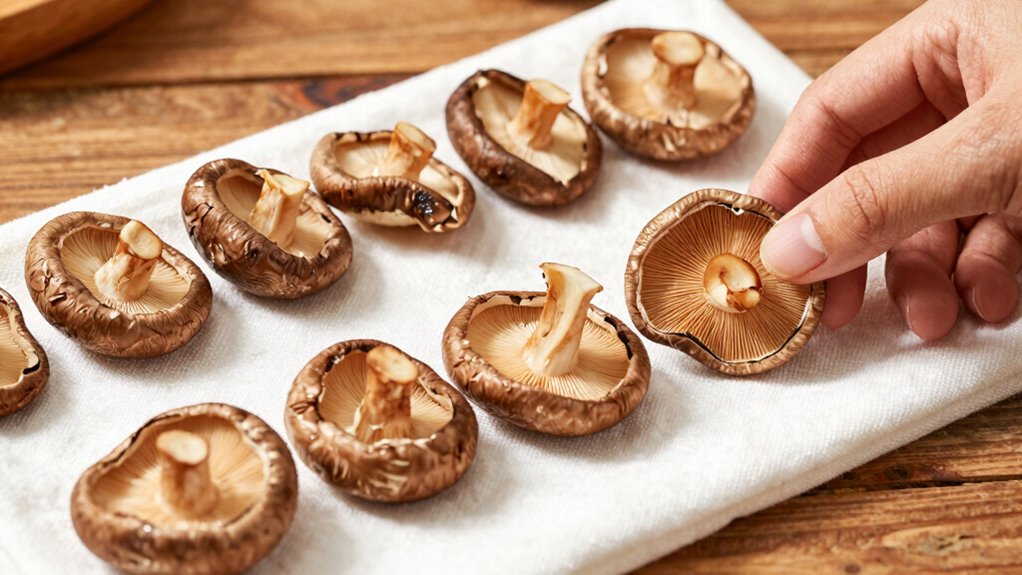
Drying mushrooms is one of the simplest and most effective ways to preserve their flavor and nutrition for long-term use. When you’re ready to dry your mushrooms, it’s vital to understand the best storage techniques and drying methods to prevent mold and spoilage down the line. Properly dried mushrooms, stored correctly, can last months or even years, making them a valuable addition to your pantry. The key lies in thorough drying and choosing the right method suited to your equipment and space.
Properly dried mushrooms preserve flavor and nutrition for long-term storage.
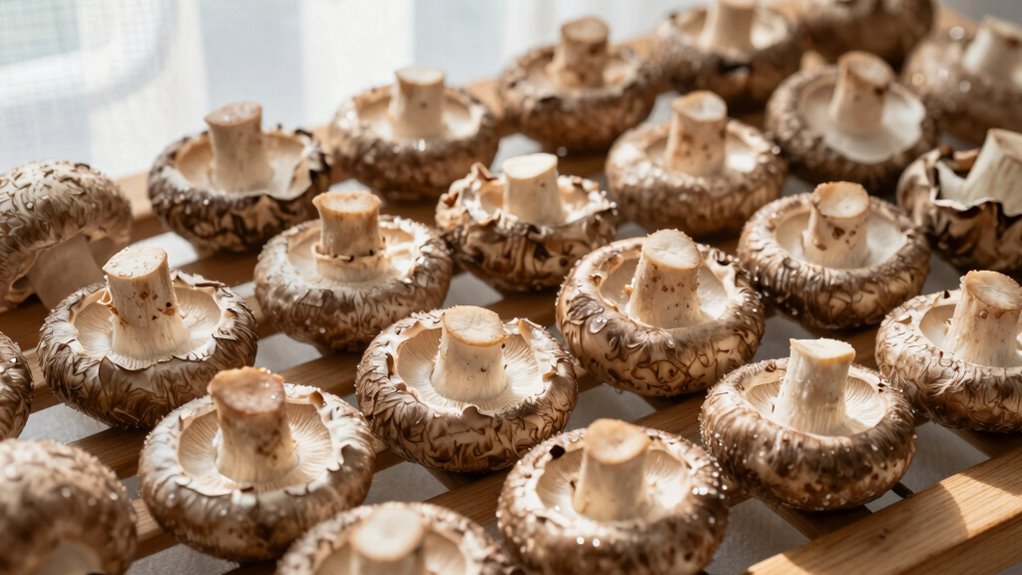
First, you’ll want to prepare your mushrooms by cleaning them gently to remove dirt and debris. Avoid soaking them, as excess moisture can interfere with the drying process. Once cleaned, slice the mushrooms evenly—about 1/8 to 1/4 inch thick—to ensure uniform drying. Thin slices dry faster and more evenly, reducing the risk of mold formation. This preparation step is essential for effective drying methods and ideal storage techniques.
There are several drying methods you can choose from, depending on what equipment you have and how much space you need. Air drying is the most traditional and requires minimal equipment; simply string up the mushroom slices in a well-ventilated, dry area away from direct sunlight. It’s effective for small batches but can take several days. Dehydrators are popular because they offer consistent heat and airflow, speeding up the process and guaranteeing thorough drying. Using a dehydrator allows you to set specific temperatures, typically around 125°F (52°C), which helps prevent mold growth. If you don’t have a dehydrator, an oven can work—set it to the lowest temperature, keep the door slightly open for air circulation, and monitor closely. For larger quantities, solar drying is an option, but it requires warm, dry, and sunny weather.
Once your mushrooms are fully dried, you need to store them correctly to avoid mold or spoilage. Use airtight containers like glass jars or vacuum-sealed bags and keep them in a cool, dark place. Proper storage techniques help maintain their flavor and prevent moisture from creeping in, which could lead to mold growth. Before sealing, check that the mushrooms are completely dry—any residual moisture can be a breeding ground for mold. Implement the crispy-snap test: when you bend a dried mushroom, it should crack or snap cleanly without bending or feeling soft. If it’s still pliable, give it more drying time. Additionally, employing the crispy-snap test is crucial for confirming that your mushrooms are properly dried and ready for storage.
Frequently Asked Questions
How Long Do Dried Mushrooms Typically Last?
Dried mushrooms typically last about 6 to 12 months if stored properly. To maximize their shelf life, keep them in an airtight container in a cool, dark, and dry place. Always check for signs of moisture or mold before use. Proper storage tips, like avoiding exposure to sunlight and humidity, help prevent spoilage and guarantee your dried mushrooms stay flavorful and safe for months to come.
Can I Use a Food Dehydrator for All Mushroom Types?
Think of your dehydrator as a versatile tool, much like a Swiss Army knife. You can use it for all mushroom types, but you must pay attention to dehydrator temperature to avoid over-drying or under-drying. Thinner, delicate mushrooms need lower temps, while thicker ones can handle higher heat. By adjusting the temperature, you guarantee the mushroom texture stays perfect, preventing mold and preserving flavor.
What Are Common Signs of Mold After Drying?
You’ll notice mold growth after drying through visible signs like fuzzy white, green, or black spots on your mushrooms. During a visual inspection, look for discoloration, unusual textures, or slimy patches, which indicate mold. If you detect any of these signs, discard the mushrooms immediately. Proper drying and storage help prevent mold, so always check your dried mushrooms carefully before using them to guarantee they’re safe and mold-free.
Is Sun-Drying Safe for All Mushroom Varieties?
Sun drying is like exposing delicate flowers to sunlight—great for some, risky for others. You should consider sun drying safety because not all mushroom varieties handle direct sunlight well. For instance, thin or fragile mushrooms may spoil or lose potency, while tougher varieties like shiitake tend to dry safely. Always check your mushroom type’s specific needs before sun drying to prevent spoilage or mold.
How Do I Store Dried Mushrooms to Maintain Quality?
You should store dried mushrooms in airtight containers to keep out moisture and prevent mold. Keep them in a cool, dark place away from direct sunlight and heat sources. Proper storage maintains their flavor, texture, and quality over time. Make sure the containers are sealed tightly after each use, and check periodically for any signs of moisture or mold. This way, your dried mushrooms stay fresh and ready for your next recipe.
Conclusion
Now that you know the crispy-snap test, you’re all set to dry your mushrooms perfectly. It’s funny how a simple touch can prevent mold and save your batch later on. Sometimes, it’s the little tricks that make all the difference—like catching that perfect snap just when you think you’re done. So, go ahead, trust your senses, and enjoy your dried mushrooms, knowing you’ve mastered this surprisingly easy way to keep them fresh and mold-free.