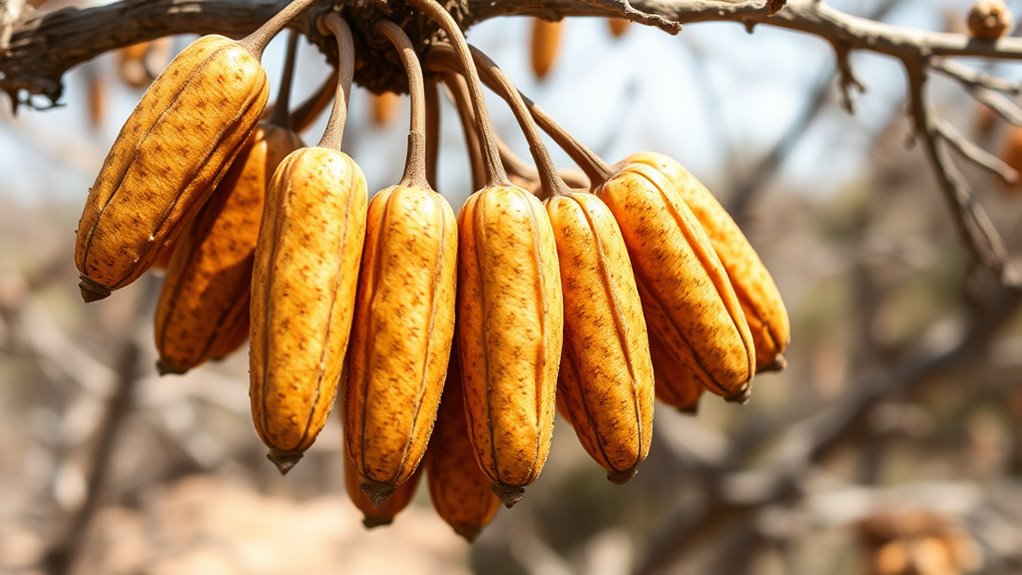

Mesquite pods are naturally sweet, nutrient-rich fruits from hardy plants thriving in dryland areas. They offer a healthy alternative to refined sugars, with a rich flavor and high dietary fiber. To harvest, look for pods that are deep brown and brittle, collecting them carefully to preserve their quality. Proper handling guarantees you get the most nutrition and flavor from these desert-grown treats. Keep exploring if you want to learn more about harvesting and using mesquite pods.
Key Takeaways
- Mesquite pods are naturally sweet and thrive in arid, dryland environments, making them a sustainable food source.
- Harvesting mesquite pods at full maturity ensures optimal sweetness and nutritional quality.
- Proper post-harvest handling preserves their natural sweetness and prevents mold or spoilage.
- Mesquite pods are rich in dietary fiber, antioxidants, and essential minerals, enhancing their health benefits.
- Their natural sweetness and adaptability make mesquite pods a versatile ingredient for healthy, dryland-based foods.
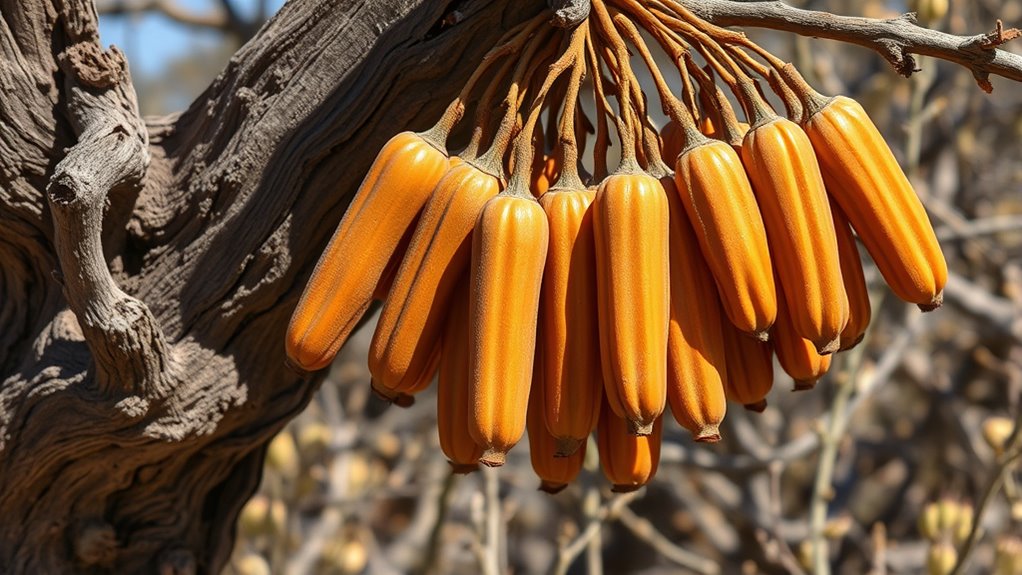
Have you ever wondered what mesquite pods are and why they’re gaining attention? These small, pod-like fruits come from the mesquite tree, a hardy plant that thrives in arid and semi-arid regions. Aside from their unique appearance, mesquite pods are packed with nutritional benefits that make them a valuable resource. They’re rich in dietary fiber, antioxidants, and essential minerals like calcium, magnesium, and potassium. Consuming mesquite pods can help stabilize blood sugar levels, promote digestion, and boost overall energy. Their natural sweetness makes them an appealing ingredient in various dishes, from smoothies to baked goods. If you’re interested in harvesting mesquite pods, understanding the proper techniques guarantees you gather the best quality while respecting the environment. Proper harvesting techniques also help preserve the nutritional integrity of the pods, which is essential if you plan to process them into flour or other products. When it comes to harvesting techniques, timing is vital. You want to pick the pods when they’re fully mature but not overly dried out. Typically, this means waiting until they turn a deep brown or tan and feel slightly brittle to the touch. Harvesting too early can mean getting unripe pods that lack flavor and nutritional value, while waiting too long might lead to pods dropping naturally or becoming moldy. To harvest, you can simply shake the branches gently or catch the pods as they fall. For larger quantities, using a ladder or picking pole can make the process easier and safer. After collecting the pods, it’s important to clean off any dirt or debris. You can do this by hand or with a gentle rinse, ensuring the pods are dry before storage. Proper harvesting techniques not only maximize yield but also preserve the nutritional integrity of the pods, which is essential if you plan to process them into flour or other products.
Frequently Asked Questions
Are Mesquite Pods Suitable for Animal Feed?
Yes, mesquite pods are suitable for animal feed. They offer high nutritional value, providing proteins, carbohydrates, and essential minerals. When harvesting, use proper techniques to collect mature pods without damage. You should also process the pods by grinding or roasting to improve digestibility for animals. Incorporating mesquite pods into their diet can boost their nutrition, especially in dryland areas where other feed options may be scarce.
How Long Do Mesquite Pods Take to Mature?
You should wait about 8 to 12 months for mesquite pods to mature, depending on your local climate and conditions. During harvest timing, watch for maturity indicators like the pods turning a deep brown or black and becoming dry and brittle. When these signs appear, it’s the right moment to harvest, ensuring the pods are fully mature and sweet, maximizing their nutritional and culinary benefits.
Can Mesquite Pods Be Used in Baking?
Yes, you can use mesquite pods in baking. They add a sweet, nutty flavor that enhances your recipes. When baking with mesquite, you might incorporate ground mesquite pod flour into cookies, bread, or muffins for a unique twist. Explore mesquite pod recipes to discover how this natural sweetener can elevate your baked goods. Just remember to grind the pods into a fine powder before mixing them into your batter or dough.
What Are the Health Benefits of Mesquite Pods?
A stitch in time saves nine, and knowing the health benefits of mesquite pods proves true. You’ll get mesquite nutrition, including fiber, protein, and essential minerals, which support your overall health. Plus, mesquite antioxidant properties help combat free radicals, protecting your cells. Incorporating mesquite pods into your diet boosts energy and immune function, making them a sweet, natural way to enhance your wellness routine.
Are Mesquite Pods Invasive in Certain Regions?
You should know mesquite pods can be invasive in certain regions, especially where they spread rapidly. Their invasive spread can substantially impact local ecosystems, outcompeting native plants and altering habitats. This regional impact may lead to reduced biodiversity and changes in soil conditions. If you’re in an area prone to mesquite invasion, it’s important to monitor and manage their growth to prevent ecological imbalance and protect native species.
Conclusion
Now that you’ve learned about mesquite pods, think of them as nature’s hidden treasure chest, offering sweet nourishment in dryland deserts. By harvesting and using these pods, you’re revealing a source of energy that’s as resilient as the desert itself. Embrace their potential, and let these pods be your key to sustainable, flavorful sustenance. Just like a desert bloom, their sweetness can flourish in the most unexpected, challenging places.