Milling your own grains unlocks the full flavor, nutrition, and freshness that store-bought flours often lack. When you grind grains at home, you control the milling process, preserve nutrients, and avoid preservatives or additives. Fresh flour boosts bread flavors, improves dough rise, and enhances overall health benefits. This simple step transforms your pantry staples into wholesome, flavorful ingredients that elevate your baking. Keep exploring to discover how different techniques and storage methods can maximize your results.
Key Takeaways
- Freshly milled flour retains more nutrients, enzymes, and antioxidants, enhancing bread flavor and nutritional value.
- Milling grains at home allows control over flour texture and fineness, improving bread quality and customization.
- Using fresh flour minimizes exposure to preservatives and additives found in commercial products.
- Home milling preserves the germ and bran, increasing fiber content and overall health benefits in baked goods.
- Fresh flour improves dough fermentation, resulting in better rise, texture, and taste in homemade bread.
Have you ever wondered how fresh, nutritious flour can transform your baking? The secret lies in how you handle grain preservation and milling techniques. When you grind your own grains at home, you’re not just making flour—you’re unlocking a wealth of flavors and nutrients that store-bought versions often lack. Grain preservation becomes vital here, as it ensures your grains stay fresh and retain their full nutritional profile until you’re ready to mill. Proper storage in airtight containers, cool, dark places, and minimal exposure to light and moisture help maintain the grain’s quality. This attention to grain preservation allows you to maximize freshness and nutritional value with each batch. This way, every batch you mill is as fresh as possible, giving your baked goods a vibrant taste and enhanced health benefits.
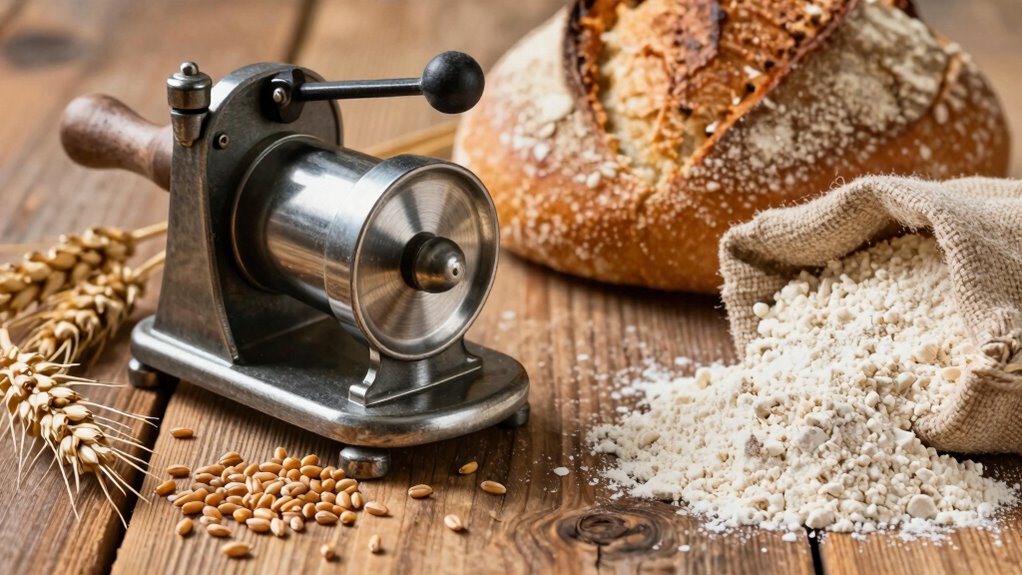
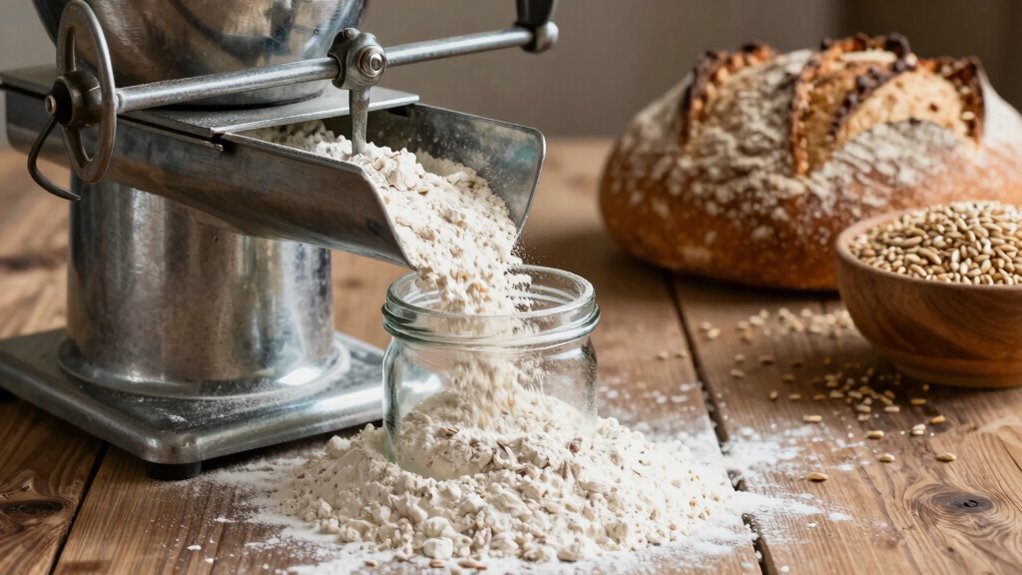
Milling techniques also play a crucial role in how your flour turns out. Traditional stone milling, for example, crushes grains slowly and gently, preserving more of the germ, bran, and endosperm, which contain essential oils, vitamins, and minerals. This process yields a coarser, more flavorful flour with a hearty texture, perfect for rustic breads and wholesome baked goods. On the other hand, modern impact or roller mills can produce finer flour quickly, but often at the expense of some nutrients and flavor. When you choose your milling method, think about what kind of bread or pastry you want to make, and select the technique that best preserves the grain’s natural qualities.
By milling at home, you gain control over every step, from selecting your grains to deciding how fine or coarse your flour should be. This control allows you to customize your baking and maximize the nutritional profile of your bread. Freshly milled flour is richer in enzymes and antioxidants, which can improve dough fermentation and give your bread a better rise and taste. Plus, you avoid the preservatives and additives that commercial flours often contain to extend shelf life. When you understand the importance of grain preservation and employ suitable milling techniques, you’re not just making flour—you’re crafting a product that elevates your baking and benefits your health.
In essence, transforming grains into fresh flour at home isn’t just about convenience; it’s about reclaiming quality and flavor in your pantry. Your bread becomes more than just a meal—it turns into a wholesome experience that starts with how you handle your grains. By paying attention to grain preservation and choosing the right milling techniques, you set the foundation for better, more nutritious baked goods. It’s a simple change that can make a significant difference in your kitchen, inspiring you to bake with purpose and enjoy the full potential of every grain you mill.
Frequently Asked Questions
How Long Does Freshly Ground Flour Stay Fresh?
Freshly ground flour typically stays fresh for about 1-2 weeks if stored properly, but it’s best to use it within a week for peak quality. To prevent spoilage, store it in an airtight container in the refrigerator or freezer. Proper storage life helps prevent rancidity and preserves nutrients, ensuring your flour remains flavorful and safe to use. Regularly check for signs of spoilage before baking.
Can I Use Home-Milled Flour for All Bread Recipes?
Yes, you can use home-milled flour for all bread recipes, but it’s important to contemplate grain storage and your milling equipment. Store your grains in a cool, dry place to keep them fresh, and use quality milling equipment to get consistent flour. Some recipes may benefit from adjusting hydration or fermentation times due to the freshness and nutritional content of home-milled flour. Experiment to find the best results for each bread type.
Is Home Milling More Cost-Effective Than Buying Pre-Ground Flour?
You’ll find that home milling can be a penny saved when you do a thorough cost analysis, but only if you’re committed long-term. While the initial equipment investment might seem steep, grinding your own flour often costs less than buying pre-ground options over time. Think of it as killing two birds with one stone—you get fresher flour and save money in the long run.
What Are the Best Types of Grains for Home Milling?
You should choose versatile grains like wheat, spelt, or rye for home milling, as they work well for bread and other baked goods. Opt for whole grains with intact germ and bran to maximize flavor and nutrition. Use proper milling techniques, such as adjusting the grind size, to achieve the desired flour consistency. Grain selection and precise milling techniques guarantee fresh, flavorful flour that elevates your baking.
Does Home Milling Impact Gluten Development in Bread?
Home milling can impact gluten development, but it’s like tuning a guitar—your dough’s elasticity depends on how you handle it. Freshly milled flour often has a stronger gluten structure because it retains more germ and bran, which can strengthen the dough. This means you might notice improved elasticity, making your bread rise better. Adjust your kneading time and hydration to harness this natural power for perfect texture every time.
Conclusion
Think of your pantry as a garden, and freshly milled flour as the seeds bursting with life. When you grind your own grains, you’re planting the foundation for vibrant, wholesome bread that nourishes more than just your body — it nurtures your soul. Embrace this simple act, and watch your baking blossom into something truly nourishing. Just as a garden flourishes with care, so will your bread, transforming your pantry into a source of endless delicious harvests.