Hedgehog mushrooms (Hydnum) are easy to identify thanks to their distinctive tooth-like spines beneath the cap, rather than gills or pores. They have a convex cap, usually 2-6 inches across, with colors ranging from tan to orange and a sturdy stem that often matches the cap. Found in mature deciduous and mixed woods in late summer to fall, they stand out against leaf litter. To guarantee a safe harvest, you’ll want to learn key ID tips, which you’ll discover when you keep exploring.
Key Takeaways
- Hedgehog mushrooms have distinctive tooth-like spines underneath the cap instead of gills or pores.
- They typically grow in moist deciduous or mixed forests, mainly from late summer to early fall.
- Confirm identification by checking that soft spines remain attached as the mushroom matures.
- Always thoroughly cook wild hedgehog mushrooms to eliminate potential toxins before consumption.
- Use reliable mushroom guides to differentiate true hedgehogs from toxic lookalikes with similar features.
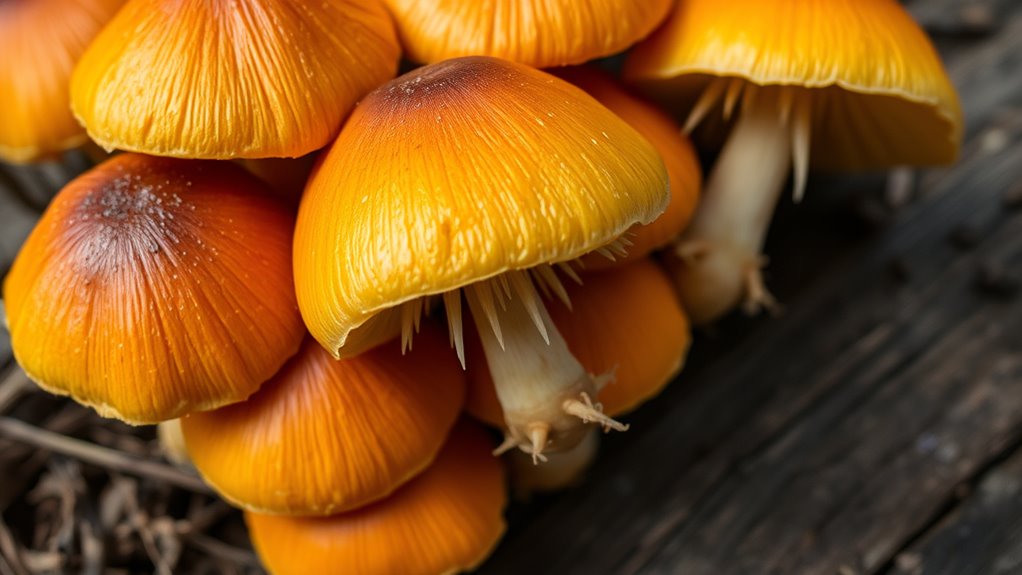
Have you ever come across a mushroom that looks like a tiny, spiky hedgehog? If so, you’ve likely encountered a hedgehog mushroom, or Hydnum. These fungi are easily recognizable by their tooth-like spines underneath the cap instead of gills or pores. When foraging for hedgehog mushrooms, you’ll want to focus on specific foraging locations such as mature forests, especially deciduous and mixed woodlands, where they tend to grow on the ground near the base of trees. They often appear in the late summer to early fall, thriving in moist, well-drained soil. Spotting them isn’t too difficult once you know what to look for; their distinctive spiky structures make them stand out against the leaf litter and forest floor.
When it comes to identifying hedgehog mushrooms, pay close attention to their physical features. The cap is usually convex and can range from 2 to 6 inches across, with a smooth or slightly uneven surface that can be tan, orange, or pale yellow. The real giveaway, however, is the underside, where you’ll find the tooth-like spines that hang downward, resembling tiny bristles or hedgehog spines—hence the name. These spines are soft to the touch and remain attached as the mushroom matures. The stem is sturdy, often the same color as the cap, and can be slightly bulbous at the base. Always double-check your identification, as some lookalikes can be toxic, but true hedgehog mushrooms are a prized find for mushroom enthusiasts. Learning about mushroom identification can help prevent misidentification and ensure safe foraging.
In culinary uses, hedgehog mushrooms are highly valued for their firm texture and mild, nutty flavor. Once harvested, you can clean them gently with a brush or damp cloth to remove any dirt. They’re incredibly versatile in the kitchen; you can sauté them with butter or olive oil, add them to soups and stews, or include them in pasta dishes. Their toothy texture provides a pleasant chew, and their flavor deepens when cooked. Because they’re delicious and easy to prepare, hedgehog mushrooms often feature in gourmet recipes, making them a favorite among foragers and chefs alike. Always confirm proper identification before consuming, and remember that wild mushrooms should be cooked thoroughly to eliminate any potential toxins.
Frequently Asked Questions
Are Hedgehog Mushrooms Safe to Eat Raw?
You shouldn’t eat hedgehog mushrooms raw because their raw consumption can cause stomach upset or allergic reactions. Cooking enhances their flavor profile, revealing a nutty, sweet taste that’s much more enjoyable. Plus, cooking breaks down any potential toxins or bacteria, making them safer to eat. So, always cook hedgehog mushrooms thoroughly to enjoy their unique texture and flavor without risking health issues.
How Can I Distinguish Edible Hedgehog Mushrooms From Toxic Look-Alikes?
To distinguish edible hedgehog mushrooms from toxic look-alikes, you should perform spore print analysis—look for white to pale pink spores. Also, observe their habitat; hedgehogs typically grow on wood in deciduous forests. Avoid mushrooms with different cap textures or colors, and always cross-check with reliable guides. When in doubt, consult an expert before consuming, as misidentification can be dangerous.
What Is the Best Season to Forage for Hedgehog Mushrooms?
Spring and fall flourish with fungi, making them the prime seasons for foraging hedgehog mushrooms. During these periods, you’ll find mushrooms at their peak of maturity, boasting the best flavor and texture. As the seasons shift, mushroom maturity develops, and spores spread, making these seasons ideal for safe, successful foraging. Keep a keen eye on weather patterns, as consistent moisture encourages abundant, beautiful hedgehogs to emerge and thrive.
Can Hedgehog Mushrooms Be Cultivated at Home?
You can cultivate hedgehog mushrooms at home with proper techniques. Focus on creating ideal growing conditions, such as maintaining cool, moist environments and using suitable substrates like hardwood sawdust or wood chips. Follow cultivation techniques like sterilizing your substrate, inoculating with healthy spawn, and keeping the environment humid. With patience and attention to detail, you’ll successfully grow these unique, toothy mushrooms in your own space.
Are There Any Health Benefits Associated With Consuming Hedgehog Mushrooms?
You’ll benefit from hedgehog mushrooms’ nutritional content, which includes vitamins D and B, minerals, and antioxidants. Consuming these mushrooms can boost your immune system and promote overall health. They’re versatile in culinary uses, adding a nutty flavor to soups, sautés, or pasta dishes. Incorporating hedgehog mushrooms into your diet helps you enjoy their health benefits while enhancing your meals with their unique texture and taste.
Conclusion
Now that you know how to spot hedgehog mushrooms, you’re ready to add this extraordinary fungus to your foraging list. Their toothy caps and unique appearance make them a true marvel of the natural world—like something out of a fairy tale. Just remember, always double-check your ID tips before harvesting, or you might end up like a lost knight in a medieval quest. Happy hunting, and may your basket be full of these charming, spiny delights!