To effectively purge shellfish and remove sand, soak them in salted water (4-6%) for 20-30 minutes, adding cornmeal or flour to help them purge naturally. Change the water once or twice during this process. After soaking, rinse thoroughly under cold running water. Use a brush to scrub shells if needed. Pay attention to their behavior; shells closing during rinsing indicate they’re detoxing. Keep going to discover more helpful tips.
Key Takeaways
- Soak shellfish in salted water (4-6%) with added cornmeal or flour for 20-30 minutes to promote natural purging.
- Change soaking water once or twice to enhance the removal of sand, grit, and impurities.
- Rinse shellfish under cold running water after purging, ensuring shells close and debris is washed away.
- Use a brush or scrubber on shells to remove stubborn dirt and residual grit before cooking.
- Discard shellfish that do not close when tapped, indicating they may be unsafe or not properly purged.
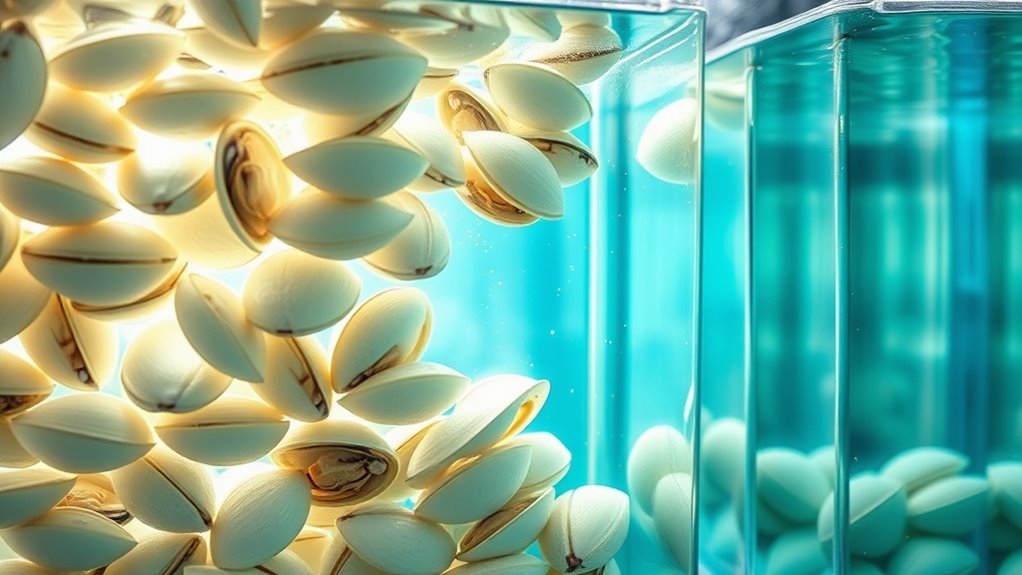
Cleaning shellfish thoroughly is essential to guarantee they are safe and enjoyable to eat, and one of the most effective ways to do this is through purging and sand removal techniques. When you’re preparing shellfish like clams, mussels, or oysters, you want to ensure they’re free of grit, sand, and any potential impurities. This process is often called shellfish detox because it encourages the shellfish to expel any sand, dirt, or debris accumulated inside their shells. Proper shellfish detox not only improves the taste and texture but also significantly reduces the risk of consuming unwanted grit or contaminants.
Thorough shellfish cleaning ensures safety, better taste, and removes grit and impurities effectively.
To start, you’ll want to focus on sand extraction methods that are simple yet effective. One common approach is to soak the shellfish in a large container of salted water, mimicking their natural environment. Use about four to six percent salt to water ratio, which matches seawater, and add a bit of cornmeal or flour if desired. The idea behind this is that the shellfish will filter the particles and sand from their systems, prompting them to purge. You should leave them in this solution for at least 20 to 30 minutes, but longer—up to a few hours—can be more thorough, especially if you’re dealing with particularly gritty shellfish.
During this purging process, it’s vital to change the water once or twice to ensure the shellfish continually expel impurities. Rinsing the shellfish under cold running water afterward is also crucial to remove any residual sand or dirt on the shells’ surfaces. As you rinse, you might notice some shellfish close their shells — this is normal and indicates they are actively filtering and detoxing. Discard any shellfish that remain open and do not close when tapped, as they may no longer be safe to eat.
Another effective sand extraction method involves using a brush or scrubber to physically remove any stubborn debris from the shells. After the purging and rinsing steps, gently scrub the shells to get rid of any remaining grit. This extra cleaning step ensures you’re not consuming any lingering sand or dirt. If you’re preparing live shellfish for immediate cooking, this thorough cleaning is crucial for both safety and culinary quality. Being aware of the shellfish’s behavior during purging can help you determine when they are ready for cooking.
Frequently Asked Questions
How Long Should Shellfish Be Purged Before Cooking?
You should purge shellfish for at least 24 hours before cooking to guarantee freshness and remove any sand or grit. Use effective purging techniques like soaking them in clean, salted water, changing the water frequently. During this time, you’ll notice the shellfish expelling impurities, which improves their flavor and texture. Proper purging enhances shellfish freshness and makes your dishes more enjoyable, so don’t skip this essential step.
Are There Natural Alternatives to Commercial Purging Methods?
Think of natural cleansers as your shellfish’s personal spa day. You can try DIY solutions like soaking shellfish in salted water or fresh lemon juice to encourage sand and impurities to exit. These natural alternatives gently cleanse without chemicals, making your seafood safer and tastier. Just remember, patience is key—allow enough time for the shellfish to naturally purge, revealing clean, fresh-tasting shellfish ready for your favorite dish.
Can Sand Removal Damage Shellfish?
Sand removal methods can potentially damage shellfish if not done carefully, affecting shellfish safety. If you use aggressive techniques, you risk harming the delicate tissues or breaking shells, which can introduce contamination. To protect shellfish, opt for gentle, proven sand removal methods that minimize stress and injury. Proper handling guarantees the shellfish remains safe for consumption and maintains its quality, making your efforts both effective and responsible.
What Are the Environmental Impacts of Sand Removal Techniques?
Sand removal techniques can cause significant environmental impacts, including sediment disruption and habitat disturbance. When you engage in sand extraction, it can stir up sediments, clouding water and affecting aquatic life. This process may also disturb habitats, harming benthic organisms and altering ecosystems. As you consider these methods, it’s vital to weigh the environmental costs and implement sustainable practices to minimize long-term damage to marine environments.
Is There a Difference in Purging Needs Between Different Shellfish Species?
Think of shellfish as unique puzzle pieces, each with its own story to tell. You’ll find that species-specific cleansing is essential because shellfish variation means some clean faster, while others cling to sand and grit longer. You can’t use a one-size-fits-all approach; understanding these differences helps you tailor purging techniques, ensuring your shellfish are safe and pristine, ready to delight your senses and honor their natural diversity.
Conclusion
By mastering shellfish purging and sand removal techniques, you unlock the secret to pristine seafood that’s as pure as a mountain spring. Think of these methods as a gentle tide washing away impurities, revealing the true flavor beneath. With patience and care, you’ll guarantee every shellfish you serve is a treasure chest of freshness. Remember, the effort you invest now turns simple shellfish into a culinary gem, sparkling like buried treasure awaiting discovery.