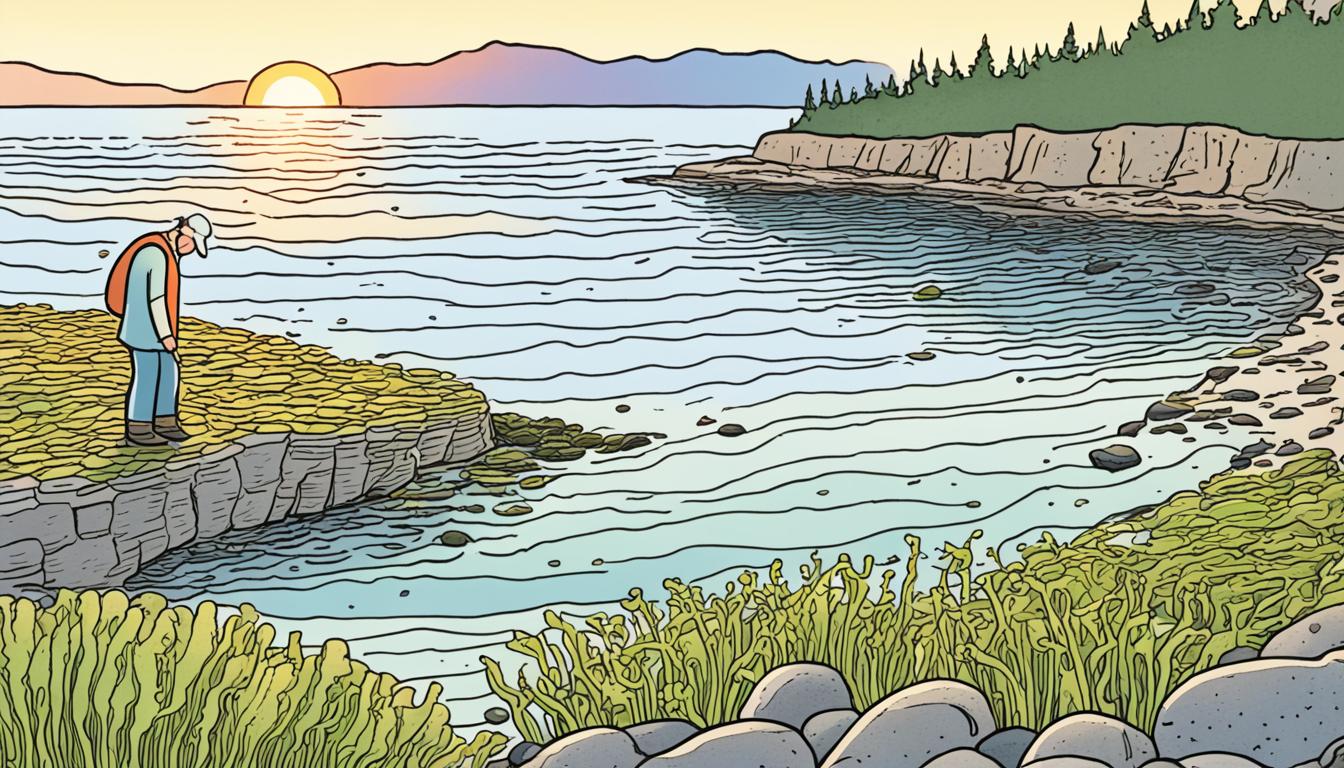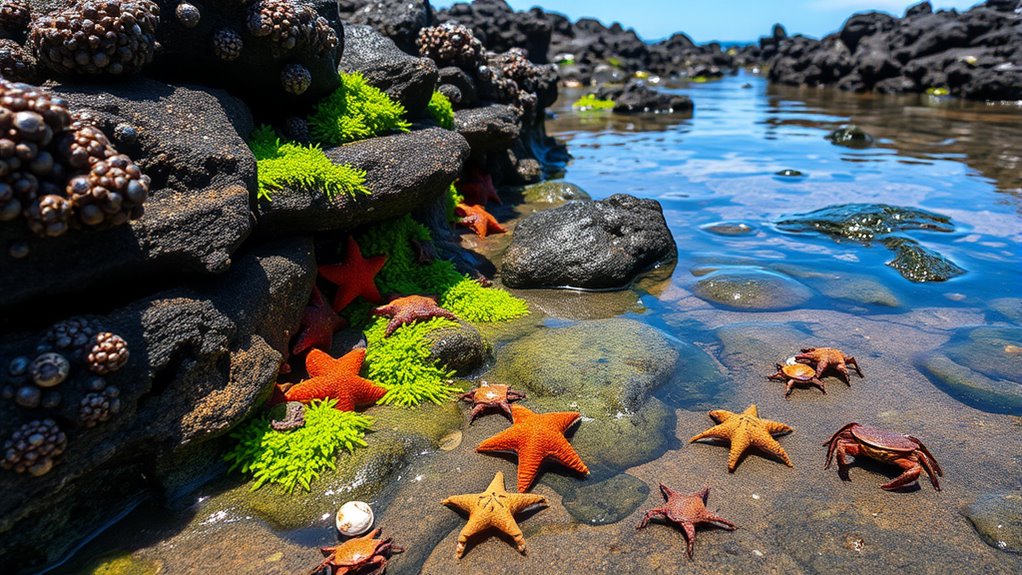

To identify intertidal zones where different species thrive, look at how much the area is submerged or exposed. The lower zone is always splashed and hosts colorful anemones, starfish, and mussels. The middle zone experiences longer exposures, with tough shells and flexible algae. The upper zone is mostly dry, home to barnacles and lichens that survive drought. Each zone’s plants and animals adapt to their unique conditions—discover more about these resilient communities as you explore further.

Get garden gear delivered free with Prime
- Fast, free delivery on millions of items
- Prime Video, Amazon Music and more included
- Member-only deals all year
Key Takeaways
- Lower intertidal zones are submerged most of the time, hosting species like anemones, starfish, and barnacles in tide pools.
- Middle intertidal zones experience longer dry periods, supporting organisms such as limpets and flexible algae that withstand temperature fluctuations.
- Upper intertidal zones are mostly exposed, inhabited by hardy species like barnacles and lichens adapted to desiccation and extreme conditions.
- Species distribution depends on shoreline exposure, with each zone hosting organisms with specialized physical and behavioral adaptations.
- Tide pool ecosystems across zones showcase diverse, resilient marine life adapted to their specific intertidal environments.

Have you ever wondered what life is like where the ocean meets the land? That’s the fascinating world of intertidal zones, the areas that are submerged at high tide and exposed at low tide. These zones host a diverse array of species that have adapted to survive in such a dynamic environment. When you explore these regions, you’ll notice how species thrive in specific sub-areas, each with its own unique conditions. The lower intertidal zone is constantly splashed and submerged, making it a bustling tide pool ecosystem filled with colorful anemones, starfish, crabs, and various mollusks. These creatures have evolved shoreline adaptations that allow them to cling tightly to rocks, resist desiccation, and filter out excess salt. For instance, barnacles develop strong shells to shield themselves from wave action and dehydration, while mussels anchor themselves with byssal threads that secure them to rocky surfaces.
The lower intertidal zone is a vibrant tide pool habitat bustling with resilient, adaptable marine life.
As you move higher up the shoreline, the intertidal zone becomes less consistently submerged. Here, shoreline adaptations become even more critical for survival. Organisms in this zone must endure longer periods out of water, exposure to the sun, and variations in temperature. You’ll find that many species here have tough, protective coverings to prevent moisture loss—think of limpets with their conical shells that help them cling tightly to rocks and resist drying out. Meanwhile, some algae have developed flexible structures that can fold or curl to minimize water loss during low tides. The organisms in this zone often hide in crevices or under rocks during harsh conditions, demonstrating remarkable behavioral adaptations.
The upper intertidal zone, just below the splash zone, is even more challenging. It’s exposed to the air most of the time, and only gets wet during the highest tides or storms. Species here are masters of shoreline adaptations, often forming tough, resilient communities. You might notice barnacles and lichens that can withstand extreme desiccation and temperature swings. These organisms have evolved to survive long dry spells by entering dormant states or developing protective coatings. Many are also specialized to take advantage of the brief periods when they’re covered with water, feeding and reproducing during those times.
Understanding these distinctions helps you recognize how life adapts to the shifting conditions of intertidal zones. Each zone supports a unique community of organisms that have evolved specific strategies to thrive where water and land meet. From tide pool ecosystems that teem with activity to the hardy shoreline adaptations of species higher up, the intertidal zone is a vivid example of resilience and adaptation in nature. As you observe these environments, you’ll appreciate the incredible ways life persists in such a challenging and ever-changing habitat.
Frequently Asked Questions
How Do Tides Influence Intertidal Zone Ecosystems?
Tides influence intertidal zone ecosystems by creating rhythmic changes through tidal cycles, exposing and submerging different areas regularly. This impacts species adapted to varying conditions. You’ll notice erosion patterns shape the shoreline as tides wash away or deposit materials, altering habitats over time. These fluctuations determine where organisms can live, feed, and reproduce, making tides a key factor in maintaining the balance and diversity of intertidal ecosystems.
What Adaptations Help Species Survive in Intertidal Zones?
You can spot how species survive in intertidal zones through their adaptation mechanisms and survival strategies. Many develop tough shells or sticky surfaces to resist desiccation and wave action, while others have specialized feeding techniques to cope with changing water levels. Some species burrow into the sand or mud for protection, and others close their shells during low tide to prevent moisture loss. These adaptations help them thrive in this dynamic environment.
Are Intertidal Zones Different in Tropical and Temperate Regions?
Imagine walking along the shoreline; in tropical regions, the intertidal zones burst with colorful corals and diverse marine life, reflecting high tropical biodiversity. In contrast, temperate zones feature more seasonal changes, with species variation adapting to cooler waters and greater temperature swings. These differences mean intertidal zones vary markedly between tropical and temperate regions, shaping the unique communities and survival strategies you’d observe in each environment.
How Do Human Activities Impact Intertidal Habitats?
You can crucially impact intertidal habitats through pollution effects like plastic waste and oil spills, which threaten marine life. Human activities such as coastal development and overfishing also harm these environments. To protect them, supporting conservation efforts is essential. These initiatives help restore habitats, reduce pollution, and preserve the diverse species that thrive in intertidal zones, ensuring they remain healthy and resilient for future generations.
Can Intertidal Zones Recover From Environmental Disturbances?
Yes, intertidal zones can recover from environmental disturbances, especially when you support restoration efforts. Your actions can boost ecological resilience by helping habitats rebuild naturally. Protecting native species and limiting human impacts allows these zones to regain their balance. Although recovery may take time, your involvement in conservation initiatives plays a crucial role in restoring the health and biodiversity of intertidal habitats.
Conclusion
As you walk along the shoreline, you become a visitor in a bustling, underwater city. Each intertidal zone is like a vibrant neighborhood, teeming with life that adapts to the shifting tides. From barnacles clinging to rocks to crabs scuttling across the sand, these zones tell a story of resilience and harmony. Embrace the wonder of this dynamic world, where every tide reveals a new chapter in nature’s endless, fascinating dance.
Halloween Picks
halloween
As an affiliate, we earn on qualifying purchases.