Many believe that harvesting edible jellyfish causes significant bycatch, harming other marine species. In reality, responsible and modern fishing methods focus on targeting jellyfish specifically, reducing unintended catches of fish and vulnerable marine life. Sustainable practices such as setting quotas and using selective gear help minimize environmental impact. If you want to learn more about how responsible harvesting balances seafood needs with ecosystem health, keep exploring these innovative approaches.
Key Takeaways
- Modern jellyfish harvesting methods minimize bycatch through targeted gear and precision techniques.
- Sustainable practices ensure jellyfish populations are maintained, reducing ecological impact and bycatch of vulnerable species.
- Myths suggest jellyfish harvesting harms ecosystems, but responsible management and advanced gear mitigate these concerns.
- Properly regulated fishing limits bycatch, supporting marine biodiversity and ecosystem health.
- Educating consumers about sustainable sources encourages responsible consumption and reduces pressure on overfished species.
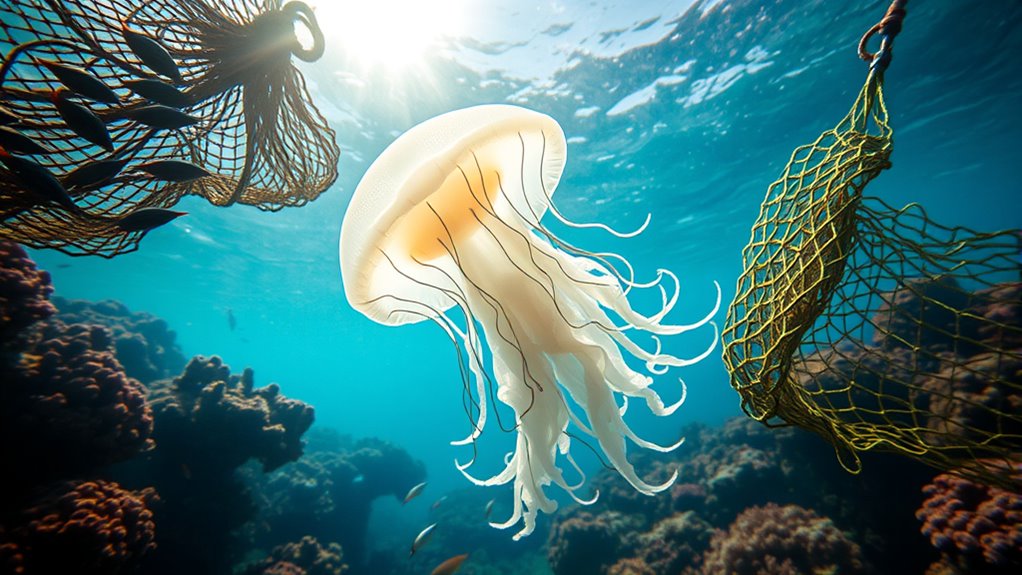
While jellyfish are often seen as a nuisance or marine hazard, they’re increasingly becoming a valuable seafood resource. As demand for alternative proteins grows, many fisheries are exploring sustainable harvesting methods to catch jellyfish without damaging marine ecosystems. Unlike some overexploited fish species, jellyfish populations tend to reproduce rapidly, making them a more sustainable option when managed responsibly. By adopting sustainable harvesting practices, you can help guarantee that jellyfish fishing doesn’t threaten marine biodiversity or disrupt the delicate balance of ocean ecosystems. Proper management involves setting quotas based on scientific assessments, avoiding overharvesting, and selecting harvesting periods that allow jellyfish populations to recover. This approach not only benefits the environment but also supports local communities that rely on jellyfish as a source of income and nutrition.
The increasing popularity of edible jellyfish has spurred innovation in fishing techniques that minimize bycatch and reduce environmental impact. Traditional fishing methods, if not carefully managed, can unintentionally catch a variety of marine species, harming marine biodiversity. However, modern techniques such as specialized nets and targeted harvesting gear help focus efforts specifically on jellyfish populations, reducing the accidental capture of non-target species. This precision assures that ecosystems remain balanced and that vulnerable species are protected from unnecessary harm. Furthermore, sustainable harvesting of jellyfish can help alleviate fishing pressure on overfished stocks of other seafood, contributing to the overall health of marine environments. Additionally, tuning techniques from the automotive industry emphasize precision and efficiency, which can be adapted to modern fishing gear to improve selectivity and reduce environmental impact.
As you consider incorporating jellyfish into your diet or supporting fisheries that do, it’s worth noting that responsible harvesting practices are vital to maintaining the ecological benefits of jellyfish populations. By choosing suppliers committed to sustainability, you’re helping promote harvesting methods that respect marine biodiversity and reduce the environmental footprint. Educating yourself about the importance of sustainable practices guarantees you’re part of a movement that values ecological balance and the preservation of ocean life. Jellyfish, once dismissed mainly as a hazard, have the potential to become a sustainable and eco-friendly seafood choice when managed carefully. Properly regulated harvesting not only provides a nutritious food source but also supports the broader goal of maintaining healthy, biodiverse marine ecosystems for future generations.
Frequently Asked Questions
Are Jellyfish Harvesting Sustainable Long-Term?
You might wonder if jellyfish harvesting is sustainable long-term. It can be, if you consider proper jellyfish population regulation and the impact of harvesting techniques. By adopting sustainable methods, like limiting catch sizes and seasons, you help prevent overfishing. Responsible harvesting minimizes ecological disruption and supports jellyfish populations, ensuring they continue to thrive and be a reliable food source for future generations.
What Are the Health Benefits of Eating Jellyfish?
Eating jellyfish offers several health benefits, thanks to its impressive nutritional value. You get high protein, low fat, and essential minerals like calcium and magnesium. Plus, jellyfish contain antioxidant properties that help combat free radicals, supporting your immune system and overall health. Incorporating it into your diet can boost your health, promote better skin, and provide a unique source of nutrition that’s both delicious and beneficial.
How Does Jellyfish Bycatch Affect Marine Ecosystems?
Like Pandora’s box, jellyfish bycatch can disrupt marine ecosystems, affecting predator-prey dynamics. When jellyfish populations increase due to bycatch, they compete with plankton for resources, often leading to a decline in plankton levels. This imbalance can ripple through the food chain, impacting fish and other marine life. Your awareness of these dynamics highlights how bycatch influences the delicate balance of oceanic life, shaping the health of our seas.
Can Jellyfish Populations Be Controlled Effectively?
You can’t control jellyfish population dynamics easily because their numbers fluctuate naturally. Overfishing consequences, like removing predators and competitors, often lead to jellyfish blooms, making population control even harder. Efforts such as reducing nutrient runoff and managing fish stocks help indirectly. However, because jellyfish reproduce rapidly and adapt well, managing their populations remains a significant challenge in marine ecosystems.
What Are the Economic Impacts of Jellyfish Fisheries?
You’ll find that jellyfish fisheries boost local economies, generating over $200 million annually in some regions. However, the economic impact depends on effective market diversification and strict fishing quota management. These strategies help sustain jellyfish populations while maximizing profits. Proper management guarantees you can enjoy the benefits of jellyfish fisheries without risking overfishing, supporting both industry growth and ecological balance.
Conclusion
Just like Icarus flew too close to the sun, myths about edible jellyfish and bycatch can mislead you. The reality is more balanced—sustainable practices exist, and jellyfish can be a valuable resource if harvested responsibly. Don’t let misconceptions steer you off course. By understanding the facts, you can appreciate these creatures without falling prey to old tales. Embrace the truth, and you’ll see jellyfish in a whole new light—wisely, and with respect.