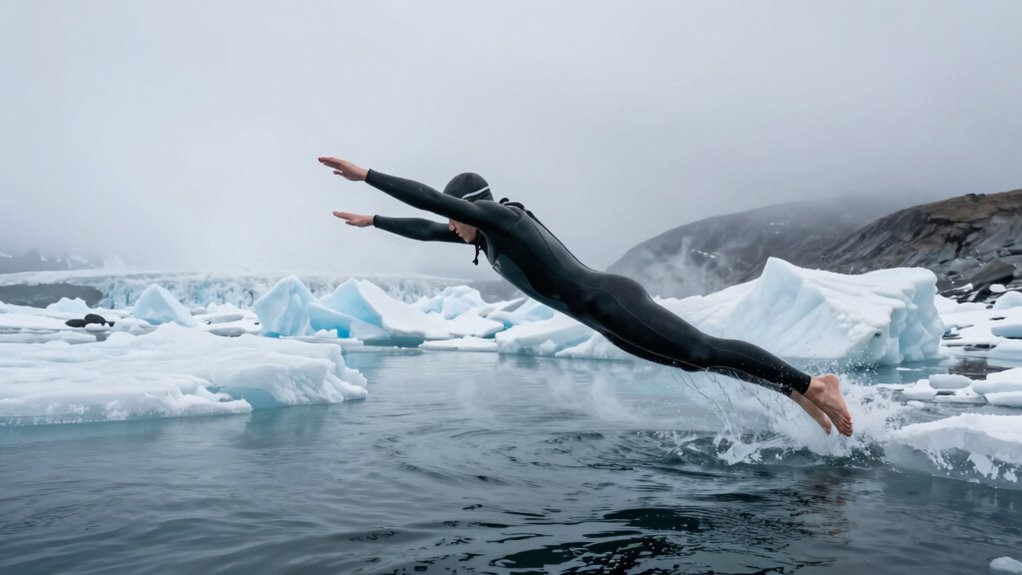

Even strong swimmers can quickly get into trouble with cold water shock because it causes involuntary gasping, rapid breathing, and a spike in heart rate within seconds. These reactions can lead to panic, disorientation, and exhaustion before you even realize what’s happening. Staying calm and controlling your breathing is essential to avoid losing energy or panicking. To learn more about staying safe and handling cold water emergencies, keep exploring these critical safety tips.
Key Takeaways
- Cold water causes involuntary gasping and rapid breathing, which can occur regardless of swimming ability.
- The initial cold shock can lead to panic and disorientation, impairing even strong swimmers’ judgment.
- Rapid heart rate and hyperventilation increase physical stress, risking exhaustion and drowning.
- Cold water impairs muscle function and coordination, making self-rescue more difficult.
- Proper safety measures and gear are essential because cold shock can incapacitate anyone suddenly.
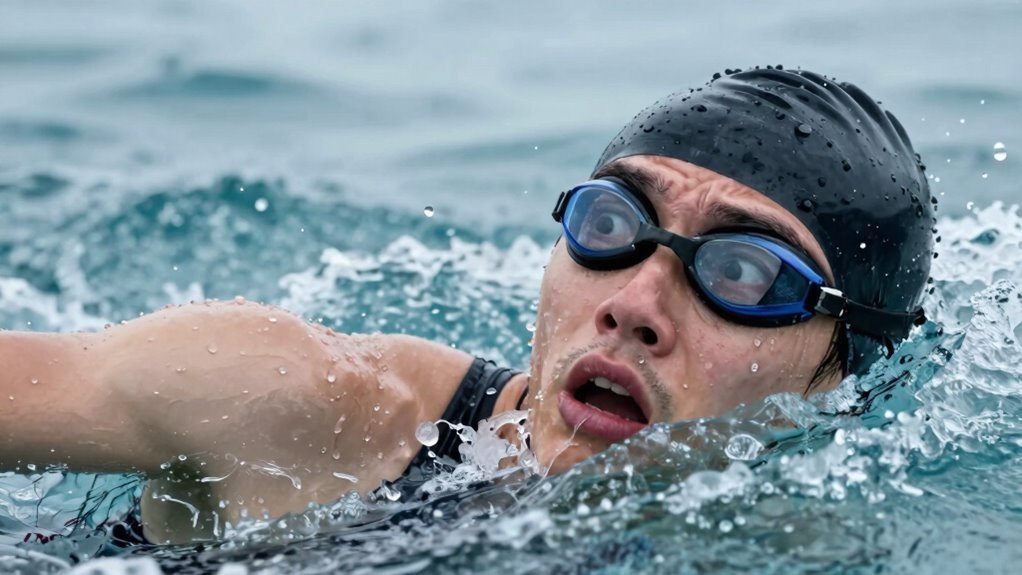
When you suddenly fall into cold water, your body reacts instinctively in a way that can be dangerous. This immediate response, known as cold water shock, can cause involuntary gasping, rapid breathing, and a spike in heart rate. Even if you’re a strong swimmer, these reactions can quickly lead to panic, disorientation, and exhaustion. That’s why understanding hypothermia prevention and aquatic safety is essential, no matter how confident you feel in the water. Cold water shock can strike within seconds, making it imperative to stay calm and avoid panicking. If you’re not prepared, even a brief immersion can turn into a life-threatening situation.
Cold water shock can cause panic and disorientation within seconds—stay calm and control your breathing to stay safe.
Your first priority should always be to control your breathing. When the shock hits, your instinct may be to gasp or hyperventilate, but fighting this urge only worsens your situation. Instead, try to stay as calm as possible and control your breathing. If you can, gently float or tread water to conserve energy while signaling for help or trying to get to safety. Wearing a life jacket or buoyancy aid can greatly improve your aquatic safety, helping to keep your head above water and reduce the risk of exhaustion. Remember, your goal is to minimize heat loss and keep your core temperature stable, so avoid thrashing or panicking.
Hypothermia prevention is essential once you’re in cold water. The initial shock is often the most dangerous phase, but prolonged exposure can lead to hypothermia, impairing your judgment, coordination, and muscle function. To prevent hypothermia, try to get out of the water as quickly as possible and get warm. If you’re unable to exit immediately, try to control your body temperature by adopting the heat escape lessening position—curling into a fetal position to preserve body heat—and keep your head out of the water. If you have access to dry clothing or blankets, use them as soon as possible. Staying dry and warm is fundamental for your survival and recovery.
Additionally, understanding the importance of proper gear and how it can mitigate cold water risks is vital for safe swimming or boating activities. No matter how experienced you are, cold water shock can incapacitate even the strongest swimmers in a flash. That’s why practicing aquatic safety measures—such as wearing appropriate gear, never swimming alone, and being aware of water conditions—is essential. Recognize the signs of hypothermia early, and always prioritize your safety. Taking these precautions can mean the difference between a close call and a tragedy, ensuring you’re prepared to handle cold water emergencies confidently.
Frequently Asked Questions
How Quickly Can Cold Water Shock Occur After Immersion?
Cold water shock can happen within seconds of immersion, often in less than 30 seconds. This sudden response can cause involuntary gasping, increasing your risk of inhaling water and drowning. Even if you’re a strong swimmer, it’s essential to understand this rapid reaction for swimming safety. To protect yourself, always wear appropriate gear and avoid swimming alone in cold water, reducing hypothermia risk and ensuring quick help if needed.
Can Cold Water Shock Happen in Shallow Water?
Think of shallow water as a trapdoor—cold water shock can strike there just as quickly as in deep water. Despite the shallowness, the shock potential remains high because your body reacts instantly to sudden cold, causing rapid breathing and loss of control. Even in shallow water, you can get into trouble fast if you’re unprepared, so always approach cold water with caution, regardless of depth.
Are There Age Groups More Susceptible to Cold Water Shock?
You’re more vulnerable to cold water shock if you’re elderly, as age increases risk factors like reduced circulation and slower body response. Children and teenagers also face higher susceptibility due to less body fat and weaker thermoregulation. This age vulnerability means even strong swimmers in these groups should exercise caution, wear proper gear, and avoid sudden immersion to prevent dangerous reactions. Stay aware of your age-related risks to stay safe around cold water.
What Immediate Actions Should Be Taken During Cold Water Shock?
When cold water shock hits, stay calm and keep your wits about you. Focus on breath control and mental focus to prevent panicking. Signal for help if possible, and try to get out of the water or find a flotation device. Remember, a quick, controlled response can be the difference between life and death. Don’t let panic take over—stay focused and keep your cool.
Does Clothing Affect the Severity of Cold Water Shock?
Clothing can substantially affect the severity of cold water shock by providing additional insulation and thermal protection. If you wear thick or wet clothing, it traps heat and slows heat loss, reducing shock symptoms. Conversely, lightweight or water-wicking gear might not offer enough insulation, increasing risk. Always choose appropriate clothing that enhances thermal protection and insulation, helping you stay warmer longer and reducing the dangers of cold water immersion.
Conclusion
Remember, even the strongest swimmer is like a ship caught in a sudden storm. Cold water shock can strike unexpectedly, pulling you into icy depths before you realize. Stay alert, respect the water’s power, and never underestimate its silent strength. Like a lighthouse guiding a vessel through darkness, awareness keeps you afloat. Embrace caution as your shield, and let vigilance be your steady anchor in unpredictable waters. Stay safe, and trust your instincts.