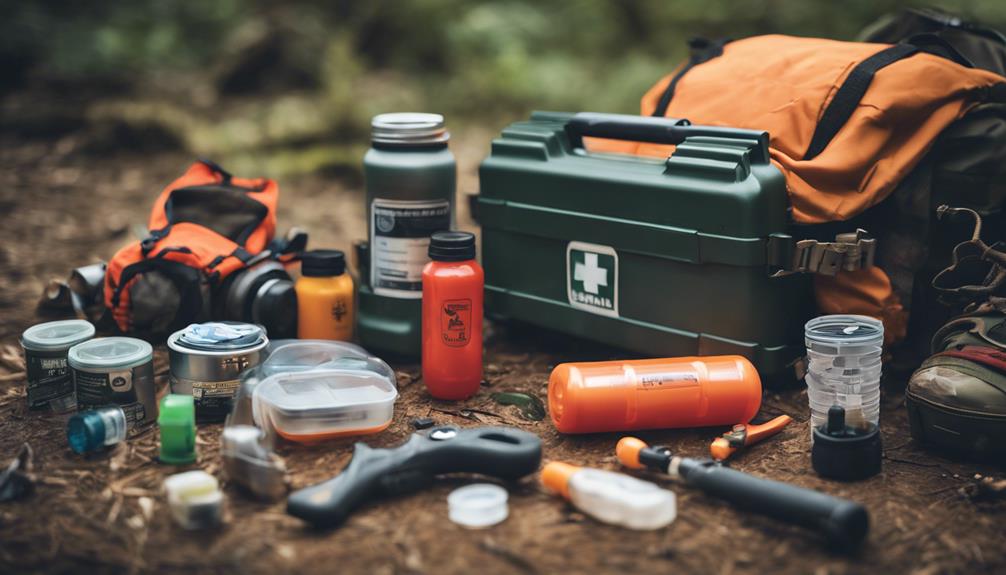
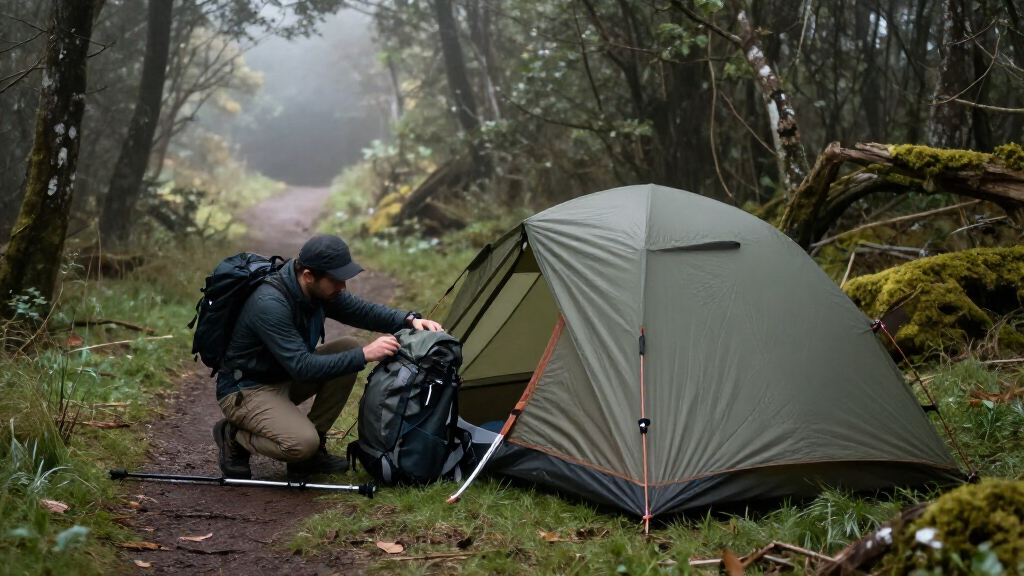
The best ultralight backpacking gear balances pack weight with warmth, comfort, and reliability—not just the smallest number on a spec sheet. For an all-around sleep setup, the Gear Doctors Ether sleeping pad stands out for hikers who want a compact inflatable option, while the MSR PocketRocket 2 is a focused choice for fast, simple cooking and the TOAKS 750 ml titanium pot keeps cookware pared back. The tradeoff is that lighter, simpler gear can offer less cushioning, fewer conveniences, or a narrower range of conditions than heavier alternatives. This roundup compares sleep systems, camp tools, lighting, and storage by the job each does and the compromises it brings. Read on for the full breakdown and help matching individual pieces to your route and priorities.

Get garden gear delivered free with Prime
- Fast, free delivery on millions of items
- Prime Video, Amazon Music and more included
- Member-only deals all year
Complete the kit


Key Takeaways
- Sleep-system choices reveal the biggest comfort tradeoff: the Ether favors a compact inflatable setup, while the four-inch TREKOLOGY UL R7 emphasizes cushioning and insulation at the cost of more bulk.
- The stove-and-pot pairing stays deliberately simple: the MSR PocketRocket 2 and TOAKS 750 ml pot suit solo meals, but hikers cooking for groups or preparing elaborate food may need more capacity.
- Separate pieces can be lighter and more adaptable than bundled conveniences: a standalone sleeping pad and pillow let hikers tune their kit, while the FUN PAC pad’s built-in pillow and foot pump reduce setup steps.
- Comfort add-ons need a clear purpose: the Naturehike chair’s anti-sink feet address soft ground, while the folding ONETIGRIS chair is another camp-comfort option that may be harder to justify on weight-sensitive trips.
- Small accessories can solve specific problems without replacing core planning: the dry-bag set helps organize gear and the PLACHIDAY trowel supports campsite hygiene, but neither removes the need to pack according to conditions and regulations.




| ultralight backpacking gear | Weight |
|---|---|
| Lightweight Compact Adult Slee | 1.5 lb |
| FUN PAC Ultralight Inflatable | — |
| Hikenture Ultralight Inflatabl | 5.6 oz |
| TOAKS Titanium 750 ml Camping | 3 oz (86 g); 3.6 oz (103 g) with lid |
| FLEXTAILGEAR Zero Portable LED | 1.6 oz |
| Nitecore NU20 Classic Ultralig | 1.34 oz |
| Naturehike YL08 Ultralight Cam | 2.12 lb chair alone; 2.43 lb with anti-sink feet |
| Gear Doctors Ether Ultralight | 17.5 oz |
| PLACHIDAY 3-in-1 Ultralight Ba | 1.6 oz |
| TiTo Titanium Long-Handle Camp | 16 g (0.57 oz) |
| ECOOPRO Warm Weather Sleeping | — |
| TREKOLOGY UL R7 Insulated Camp | — |
| ONETIGRIS Tigerblade Folding C | — |
| MSR PocketRocket 2 Ultralight | — |
| Frelaxy Ultralight Waterproof | — |
More Details on Our Top Picks
Lightweight Compact Adult Sleeping Bag for Backpacking, Camping, and Hiking
At 1.5 pounds and a packed size of 4.7 × 7.9 inches, this envelope bag suits trips where a small sleep kit matters more than cold-weather coverage. Its 50–80°F comfort range makes it a warmer-weather choice; compared with the longer ECOOPRO Warm Weather Sleeping Bag, this model is shorter at 79 inches but still lists room for users up to 6 ft 7 in. The nylon liner and machine-washable polyester fill make routine care straightforward, while the dual-side auto-lock zipper offers flexible access. The tradeoff is limited versatility: below 50°F, you’ll need added layers, and the recommended user weight under 165 lb narrows the fit. The fabric may also catch in the zipper, so careful operation matters.
Pros:- Low 1.5 lb weight and compact packed dimensions help keep a warm-weather pack light.
- 79-inch length is listed for users up to 6 ft 7 in.
- Machine-washable fill simplifies cleaning after trips.
- Dual-side auto-lock zipper can be opened from inside or outside.
Cons:- 50°F comfort-range floor limits use in cool conditions without extra insulation.
- Recommended user weight under 165 lb may exclude some sleepers.
- Shell fabric can catch in the zipper if it is closed too quickly.
Best for: Solo backpackers who prioritize a compact sleep system for warm nights and weigh under 165 lb.
Not ideal for: Cold-season hikers or broader-bodied sleepers who need a lower temperature rating or more generous fit.
- Weight:1.5 lb
- Packed size:4.7 × 7.9 in
- Dimensions:79 × 30 in
- Comfort temperature:50–80°F
- Shape:Envelope
- Shell and liner:100% polyester microfiber shell; 100% nylon liner
- Fill:100% polyester microfiber, 100 gsm
- Care:Machine washable
Our verdict“Choose this bag for compact summer trips if its warm-weather range and narrower recommended fit match your needs.”
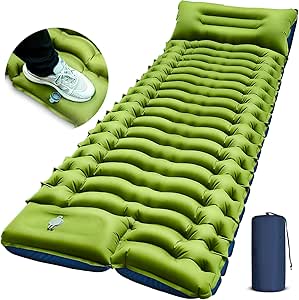
FUN PAC Ultralight Inflatable Camping Sleeping Pad with Built-In Pillow and Foot Pump, Single, Green
The FUN PAC pairs a built-in pillow with a foot pump, reducing the number of separate sleep items to pack. At 78 × 27 inches and 3 inches thick when inflated, it gives solo sleepers a broad rectangular surface; side buttons also let two pads connect, a useful option the standalone Hikenture Ultralight Inflatable Camping Pillow cannot provide. The 40D nylon and TPU construction is aimed at repeat outdoor use, and the stated 30–60-second inflation avoids blowing air into the pad by mouth. That convenience has a weight and bulk tradeoff not quantified in the provided specs, so weight-conscious buyers should compare packed carry details before choosing it. It is also a one-person pad unless paired with another compatible unit.
Pros:- Built-in pillow combines two sleep-system functions in one pad.
- Foot pump avoids mouth inflation and takes a stated 30–60 seconds.
- 40D nylon and TPU construction is described as hard-wearing and easy to clean.
- Side buttons allow connection to another pad for a wider sleeping area.
Cons:- Inflation can take up to 60 seconds, adding setup time at camp.
- Single configuration gives one sleeper a pad unless a second unit is attached.
- The provided specifications do not state the pad’s weight or packed dimensions.
Best for: Solo backpackers who want an integrated pillow and foot-operated inflation rather than carrying a separate pillow or pump.
Not ideal for: Hikers counting every ounce who need verified low packed weight, or couples wanting a shared pad without connecting two units.
- Inflated dimensions:78 × 27 × 3 in
- Material:40D nylon and TPU
- Configuration:Single
- Inflation:Built-in foot pump; 30–60 seconds
- Deflation:Approximately 1 second
- Shape:Rectangular
- Color:Green
- Warranty:1 year
Our verdict“Pick this pad if integrated comfort and hands-free inflation matter more to you than having a confirmed weight specification.”
Hikenture Ultralight Inflatable Camping Pillow with Removable Cover
At 5.6 ounces, this pillow adds adjustable head support without the bulk of a conventional camp pillow. Its 4.7-inch thickness and curved shape provide more structure than relying on a stuff sack, while the air bladder lets each sleeper adjust firmness. Compared with the FUN PAC pad’s built-in pillow, the Hikenture is a separate item to pack, but it can be positioned independently and has a removable, washable cover with a cotton surface. The one-click valve makes inflation and deflation simpler, though inflation still requires your breath. The cover is hand-wash only, and the pillow’s 12.2 × 17.3-inch dimensions may feel small for sleepers who move around or prefer a broad, flat surface.
Pros:- 5.6 oz weight keeps a dedicated pillow relatively light.
- Adjustable air firmness and ergonomic curve support personalized positioning.
- Removable cover has a breathable cotton surface and polyester lining.
- One-click valve and detachable strap simplify setup and placement.
Cons:- Requires mouth inflation rather than a separate pump.
- Removable cover is hand-wash only.
- Compact 12.2 × 17.3-inch surface may not suit restless sleepers.
Best for: Backpackers who want a dedicated, adjustable pillow with a washable cover and can spare a few ounces.
Not ideal for: Ultralight hikers who are comfortable using clothing as a pillow, or sleepers who want machine-washable care and a larger surface.
- Weight:5.6 oz
- Dimensions:12.2 × 17.3 in
- Thickness:4.7 in
- Bladder material:Thickened TPU
- Cover material:Cotton surface with woven polyester lining
- Shape:Ergonomic curve
- Valve:One-click inflation and deflation
- Care:Hand wash only
Our verdict“Choose the Hikenture if adjustable support and a removable cover justify carrying a separate 5.6-ounce pillow.”
TOAKS Titanium 750 ml Camping Pot
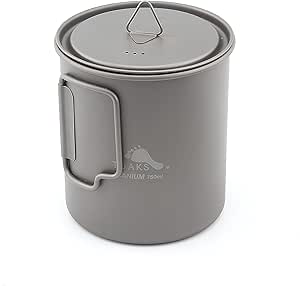
The TOAKS pot keeps a solo cook kit focused on low weight and useful nesting: it weighs 3 ounces without the lid and 3.6 ounces with it, while its 750 ml usable capacity covers compact meals and hot drinks. Compared with the MSR PocketRocket 2, which is a stove rather than cookware, this pot supplies the vessel a minimalist burner needs without adding much mass. Internal measurement marks help portion water without a separate measuring cup, and the foldable handles and fitted lid make it practical to pack and handle. It can nest a 110 g fuel canister, a TOAKS 450 ml cup, or a 32 oz Nalgene bottle. Its small capacity is a real limit for group cooking, and uncoated titanium offers no coating to ease food release.
Pros:- Pot weighs 3 oz, or 3.6 oz with the lid.
- Nests a 110 g fuel canister, TOAKS 450 ml cup, or 32 oz Nalgene bottle.
- Internal volume marks support measured water use without extra gear.
- Foldable handles and fitted lid suit compact packing and camp cooking.
Cons:- 750 ml usable capacity is limited to solo or very compact cooking.
- Uncoated titanium does not provide a nonstick surface.
- Titanium cookware can require careful heat management to avoid uneven cooking.
Best for: Solo backpackers who want a very light pot for boiling water and preparing compact meals.
Not ideal for: Groups or cooks who need room for larger meals, or anyone seeking a nonstick cooking surface.
- Usable capacity:750 ml
- Weight:3 oz (86 g); 3.6 oz (103 g) with lid
- Dimensions:3 3/4 in diameter × 4 3/8 in height
- Material:Uncoated titanium
- Features:Internal ml and oz marks; foldable handles; fitted lid
- Included:Lid and mesh storage sack
- Model:POT-750
- Color:Silver grey
Our verdict“Choose this pot for a light, nestable solo kitchen, but look elsewhere if you regularly cook for more than one.”
FLEXTAILGEAR Zero Portable LED Camping Lantern
At just 1.6 ounces, the FLEXTAILGEAR combines a lantern and spotlight in a compact body, giving backpackers camp-area lighting and a more focused beam without carrying two lights. Its stepless dimmer makes it easier to use only as much brightness as a task needs, while the folding hook helps suspend it in a shelter. Compared with the Nitecore NU20 Classic Ultralight Headlamp, this lantern is better for hands-free area lighting when hung, but it is not a headlamp and its stated maximum of 300 lumens is lower than the headlamp’s 360 lumens. The listed 3–35-hour runtime varies by output. One specification conflict deserves attention: the description says rechargeable 1100mAh USB-C battery, while product information also says an AA battery is required.
Pros:- 1.6 oz body combines camp and spotlight modes.
- Stepless dimming and four brightness levels allow output adjustment.
- Folding hook supports hanging the light inside a shelter.
- IPX5 water resistance and a stated 3–35-hour runtime suit varied camp use.
Cons:- The stated 300-lumen maximum is below the 360-lumen Nitecore NU20 Classic headlamp.
- Battery information conflicts between a rechargeable 1100mAh battery and an AA requirement.
- A lantern does not provide the head-worn lighting needed for hands-free travel.
Best for: Backpackers who want a very light lantern for shelter lighting and occasional focused use, and who can verify the battery configuration before departure.
Not ideal for: Hikers who need a dependable headlamp for moving after dark or who do not want ambiguity about battery compatibility.
- Weight:1.6 oz
- Maximum output:300 lumens
- Light modes:Camp (3000K) and spot (9000K)
- Brightness:4 levels per mode, 10–300 lumens; stepless rotary dimmer
- Battery:1100mAh rechargeable battery listed; product information also states AA required
- Charging:USB-C; approximately 2.5 hours
- Runtime:3–35 hours
- Water resistance:IPX5
- Dimensions:32 × 69 mm; listed as 1 × 1 × 2.9 in
Our verdict“Pick this as a lightweight shelter lantern if you confirm its battery setup and carry a separate headlamp for hiking after dark.”
Nitecore NU20 Classic Ultralight Headlamp, 360 Lumens
At 1.34 oz, the Nitecore NU20 Classic adds little weight while covering more than basic camp lighting: it has three white-light levels, red and reading lights, plus SOS and Beacon modes. Its USB-C charging and stated 97-hour low-mode runtime suit hikers who want one rechargeable light for camp and emergencies. Compared with the FLEXTAILGEAR Zero lantern elsewhere in this roundup, the NU20 is the better choice when hands-free, directed light matters; a lantern is better for lighting a shared area. The tradeoff is its 360-lumen maximum, which may fall short for hikers who need a particularly powerful beam, and the red light runs for only two hours. Its IP66 water resistance and 1-meter impact resistance add useful protection without changing its compact role.
Pros:- Low 1.34 oz listed weight helps limit pack load.
- White, red, and reading lights cover different camp tasks.
- USB-C charging and up to 97 hours on low reduce charging frequency.
- IP66 water resistance and 1-meter impact resistance suit outdoor use.
Cons:- 360-lumen maximum is less suited to buyers seeking a higher-powered beam.
- Red-light runtime is limited to two hours.
Best for: Ultralight hikers who want a rechargeable headlamp with red-light and emergency modes for camp tasks and trail use.
Not ideal for: Hikers who prioritize very high peak brightness or need extended red-light runtime.
- Maximum brightness:360 lumens
- Beam distance:119 yards
- Weight:1.34 oz
- Maximum battery life:97 hours on low
- Charging:USB-C
- Water resistance:IP66
- Impact resistance:1 meter
- Red light runtime:2 hours
Our verdict“Choose the NU20 Classic if low weight, USB-C charging, and multiple lighting modes matter more than maximum beam power.”
Naturehike YL08 Ultralight Camping Chair with Anti-Sink Feet
The YL08 earns its place for hikers who want a camp chair that can handle softer ground: its detachable anti-sink feet spread support, while the 7075 aluminum frame keeps the chair’s listed weight at 2.12 lb without the feet. Add them for more stability and the weight rises to 2.43 lb, a meaningful choice for anyone tracking every ounce. Compared with the ONETIGRIS Tigerblade Folding Camping Chair in this roundup, the YL08’s defining case is its removable feet for yielding surfaces, rather than simply being a packable seat. It sets up in under 15 seconds and packs to 14.6 × 3.6 in, but a chair remains a substantial luxury beside lighter sleep or cooking gear. The 265 lb capacity also makes it a poor fit for users who need a higher-rated chair.
Pros:- Detachable anti-sink feet help stabilize the chair on soft ground.
- 7075 aluminum frame and compact packed form suit camp transport.
- Internal bungee cord supports quick frame assembly.
- Side mesh panels and breathable fabric aid airflow.
Cons:- Chair weighs 2.12 lb, increasing to 2.43 lb with anti-sink feet.
- Listed 265 lb capacity may not suit every user.
- A camp chair adds substantial weight compared with core backpacking equipment.
Best for: Campers who want a quick-assembling chair and regularly sit on sand, soft soil, or other yielding ground.
Not ideal for: Strict ultralight hikers counting every ounce, or users whose weight exceeds the listed 265 lb capacity.
- Weight:2.12 lb chair alone; 2.43 lb with anti-sink feet
- Frame material:7075 aluminum alloy
- Seat material:600D Oxford fabric with side mesh panels
- Weight capacity:265 lb
- Packed size:14.6 × 3.6 in
- Setup time:Under 15 seconds
- Anti-sink feet:4 detachable feet
Our verdict“Pick the YL08 if a stable seat on soft campsites is worth carrying more than two pounds.”
Gear Doctors Ether Ultralight Camping Sleeping Pad
The Ether balances a 17.5 oz weight with a roomy 76 × 25 in sleep surface, making it a comfort-oriented option for spring and summer trips. Its R-value of 2 signals the main boundary: this pad is aimed at milder conditions, not cold-ground insulation. The detachable foot pump lets hikers inflate it without blowing into the valve, while the anti-leak valve and included repair kit support use away from home. Compared with the TREKOLOGY UL R7 in this roundup, the Ether is the lighter, lower-insulation choice; the R7 is the more relevant comparison for hikers prioritizing warmth. The Ether’s 3.35-inch edges and 2.36-inch center create a contoured profile rather than uniform thickness, which may not suit every sleeper. Its compact 8.6 × 3.1 in packed size helps preserve pack space.
Pros:- Listed weight of 17.5 oz and compact packed size support lightweight packing.
- 76 × 25 in dimensions provide a broad sleep surface.
- Detachable foot pump avoids lung inflation.
- Repair kit and anti-leak valve are practical for remote trips.
Cons:- R-value of 2 limits its suitability to milder conditions.
- Thickness varies between the edges and center.
- Inflatable construction requires care and repair if punctured.
Best for: Spring and summer backpackers who want a wide inflatable pad, a compact packed size, and inflation without using their breath.
Not ideal for: Cold-weather campers or anyone who needs a higher-insulation pad for cold ground.
- Weight:17.5 oz
- Packed size:8.6 × 3.1 in
- Inflated dimensions:76 × 25 in
- Thickness:3.35 in at edges; 2.36 in at center
- Insulation value:R-value 2
- Maximum capacity:440 lb
- Material:20D nylon with water-resistant TPU coating
- Included components:Carry pouch, detachable pump, repair kit, user guide
Our verdict“Choose the Ether for warm-weather trips where a wide, light pad and pump-assisted inflation outweigh the need for cold-weather insulation.”
PLACHIDAY 3-in-1 Ultralight Backpacking Trowel, Orange
At a listed 1.6 oz, this trowel keeps a necessary backcountry tool light and simple to pack. Its rubber handle is described as ergonomic and non-slip, while the aluminum-alloy body is intended to resist rust and corrosion. The 3-in-1 positioning covers digging, waste disposal, and light excavation, but the description does not establish how well it handles hard or rocky ground. Compared with broader camp items such as the Gear Doctors Ether sleeping pad, this is a tiny, purpose-specific addition rather than a comfort upgrade; it makes sense for hikers who want to keep waste-management gear compact. One concern is that the listed 0.1 × 0.1 × 1 in dimensions appear incomplete or inaccurate, leaving the actual packed size unclear. Buyers should also treat it as a light-duty tool, not a heavy-digging implement.
Pros:- Listed weight of 1.6 oz keeps the tool light.
- Rubber ergonomic grip is designed for a secure hold.
- Aluminum-alloy body is described as rust- and corrosion-resistant.
- Intended for digging, waste disposal, and light excavation.
Cons:- Listed dimensions of 0.1 × 0.1 × 1 in may be incomplete or inaccurate.
- Described for light excavation, so heavy digging may exceed its intended use.
Best for: Backpackers who want a low-weight trowel for routine waste disposal and light digging on established trips.
Not ideal for: Hikers expecting to dig in hard, rocky ground or buyers who need reliable dimensions before packing.
- Tool type:3-in-1 backpacking trowel
- Weight:1.6 oz
- Body material:Aluminum alloy
- Blade material:High-carbon steel
- Handle material:Rubber
- Grip:Ergonomic
- Listed dimensions:0.1 × 0.1 × 1 in
- Color:Orange
Our verdict“Choose this trowel for a lightweight, light-duty waste tool, but skip it if you need verified dimensions or a heavy-duty digger.”
TiTo Titanium Long-Handle Camping Spork
The TiTo spork solves a small but familiar trail-cooking problem: its 8.66-inch handle reaches into deep pots and meal bags without making a short utensil do extra work. At 16 g, it remains a modest addition to an ultralight kit, and the 99.5% food-grade titanium construction is reusable and rust-resistant. Compared with the TOAKS Titanium 750 ml Camping Pot in this roundup, the TiTo is a lightweight eating tool rather than cookware; it pairs naturally with a pot but does not replace one. Its long reach is useful for bagged meals and deep containers, though that same length is less compact than standard flatware. The package includes only one spork, so it is designed for an individual rather than a group. A quick-drying storage bag helps keep it separate from other packed gear.
Pros:- 16 g weight adds little to a backpacking kit.
- Long handle reaches into meal bags and deep pots.
- Titanium construction is reusable and rust-resistant.
- Includes a quick-drying carrying bag and is dishwasher safe.
Cons:- Only one utensil is included.
- Long handle is less compact than standard flatware.
Best for: Solo backpackers who eat from deep meal bags or pots and want one lightweight, reusable utensil.
Not ideal for: Groups needing multiple utensils or hikers who prefer the smallest possible flatware for compact storage.
- Material:99.5% food-grade titanium
- Weight:16 g (0.57 oz)
- Dimensions:8.66 × 1.6 × 1.6 in (220 × 40 × 40 mm)
- Pieces:1
- Included accessory:Quick-drying carrying bag
- Care:Dishwasher safe
- Finish:Sandblasted
Our verdict“Pick the TiTo if you regularly eat from deep bags or pots; choose shorter flatware if packability is your priority.”
ECOOPRO Warm Weather Sleeping Bag, 83 x 30 Inches
At 1.5 pounds, the ECOOPRO is a lighter sleep-system choice than the TREKOLOGY UL R7 sleeping pad, but it only handles a narrow, warm-night range. Its listed 55–60°F comfort range makes it a sensible option for summer trips where carrying a colder-weather bag would be unnecessary weight—not a reliable pick for chilly nights or shoulder-season uncertainty. The envelope shape and 83-inch length offer room to move, and the nylon shell, polyester lining, and compression sack suit straightforward packing. It can also open into a comforter, adding flexibility at camp. The tradeoff is limited insulation: unlike a four-season pad, this bag cannot make up for a cold forecast. Choose it for warm conditions and a light load; skip it if overnight temperatures may fall below its stated range.
Pros:- At 1.5 pounds, keeps sleeping-bag weight modest for warm-weather trips.
- Compression sack helps reduce bulk in a backpack.
- Waterproof nylon shell offers some protection from damp conditions.
- Can be opened and used as a camping comforter.
Cons:- Its 55–60°F comfort range limits use to warm nights.
- Envelope shape is less tailored than a close-fitting sleeping bag.
- Designed for one person, with no shared-sleeping configuration.
Best for: Summer backpackers who expect nights to stay around 55–60°F and want a light, packable sleeping bag that can also serve as a camp comforter.
Not ideal for: Shoulder-season hikers or cold sleepers who need dependable warmth below the stated 55–60°F comfort range.
Our verdict“Pick the ECOOPRO for warm summer overnights when low bag weight matters more than cold-weather coverage.”
TREKOLOGY UL R7 Insulated Camping Sleeping Pad, 4-Inch, Blue
The 7.2 R-value is the standout here: it prioritizes insulation from the ground, making this pad a more cold-weather-oriented sleep-system component than the warm-night ECOOPRO sleeping bag. Its four-inch thickness and 24-inch width also give sleepers more cushion and room than a thin, narrow mat, while the 330-pound capacity suits a broad range of users. That comfort comes with a real ultralight tradeoff: at 2 pounds, it is heavier than a minimalist pad, even though it packs down to about a water-bottle size. Inflation takes mouth effort unless you bring a separate pump bag, which is not included. The listed length is best matched to sleepers up to 5 feet 11 inches, so taller hikers should check fit before choosing it.
Pros:- 7.2 R-value provides substantial insulation from cold ground.
- Four-inch thickness and 24-inch width add cushioning and sleeping room.
- Packs compactly despite its insulated construction.
- Water-resistant 40D ripstop nylon with TPU coating.
Cons:- Two-pound weight is a notable load for an ultralight kit.
- No built-in pump, and the separate pump bag is not included.
- Recommended for sleepers up to 5 feet 11 inches, limiting fit for taller users.
Best for: Backpackers who camp in cold conditions and value a thick, insulated sleeping surface over the lowest possible pad weight.
Not ideal for: Taller-than-5-foot-11 sleepers or strict weight-cutters who prefer a lighter, simpler sleeping pad and do not need a 7.2 R-value.
Our verdict“Choose the UL R7 when cold-ground insulation and cushioning matter more to you than shaving every ounce.”
ONETIGRIS Tigerblade Folding Camping Chair
The Tigerblade is a comfort-oriented extra, not a core ultralight item: at 2.9 pounds, it asks you to carry more than the MSR PocketRocket 2 stove while providing a place to sit rather than cooking function. Its strongest case is a sturdy 7075 aluminum frame paired with 600D polyester fabric and a stated 330.6-pound capacity. It folds to roughly 13 inches long, making it easier to stow than a full-size chair, though compactness does not erase the weight penalty on long routes. The armless design and 12.99-inch seat depth may also feel restrictive for hikers who want roomy lounging. I’d choose it for shorter backpacking trips or camps where a stable seat is worth carrying; gram-counters should leave it behind.
Pros:- 7075 aluminum alloy frame balances portability with a sturdy structure.
- Supports a stated maximum weight of 330.6 pounds.
- Folds to 5.9 × 5.1 × 13 inches for easier packing.
- 600D polyester fabric is described as dirt-, water-, and scratch-resistant.
Cons:- At 2.9 pounds, it adds substantial weight for a nonessential comfort item.
- Armless design offers less support than chairs with armrests.
- 12.99-inch seat depth may feel short for some users.
Best for: Backpackers on shorter routes who want a compact folding chair and prioritize a sturdy frame and high stated capacity over minimum pack weight.
Not ideal for: Long-distance ultralight hikers who count every ounce or campers who need armrests and a deeper seat.
Our verdict“Bring the Tigerblade when camp seating is worth nearly three pounds, but skip it for weight-focused long-distance trips.”
MSR PocketRocket 2 Ultralight Camping Stove
At 2.6 ounces without its case, the PocketRocket 2 is the most directly weight-efficient utility pick in this group: unlike the optional comfort of the ONETIGRIS Tigerblade chair, it earns its pack space by preparing meals and boiling water. The stove brings water to a boil in about 3.5 minutes per liter, and its adjustable flame supports simmering as well as fast boiling. Folding serrated pot supports accommodate different cookware, while the hard case protects the burner in transit. The main compromise is fuel-system dependence: it needs a compatible isobutane-propane canister, which is sold separately, so it is not a complete cooking setup on its own. For hikers who want a compact, straightforward canister stove, its low weight and simple operation make a stronger case than carrying more elaborate cooking equipment.
Pros:- Stove weighs 2.6 ounces before adding the protective case.
- Boils one liter of water in about 3.5 minutes.
- Adjustable flame supports both boiling and simmering.
- Folding serrated supports fit a range of cookware.
Cons:- Isobutane-propane fuel canister is not included.
- Requires a compatible canister, limiting fuel flexibility.
- The case increases packed weight to 4.2 ounces.
Best for: Solo or small-group backpackers who want a light, compact canister stove for boiling water and occasional simmering.
Not ideal for: Hikers who do not want to carry compatible canister fuel or need a stove that works with a different fuel system.
Our verdict“Choose the PocketRocket 2 if you want a very light canister stove and are comfortable carrying its compatible fuel.”
Frelaxy Ultralight Waterproof Dry Bags, 5-Pack
The Frelaxy set is an organization system as much as rain protection: five color-coded sizes let you separate clothing, food, and small essentials more easily than relying on a single sack. At 9.6 ounces for the set, it adds some weight, but the range from 3 to 20 liters makes it possible to bring only the bags a trip needs. Taped seams and roll-top closures help keep contents dry in wet weather, while the rectangular bases support efficient packing. These are not meant for full submersion, so they should not replace a submersible dry case for water crossings. Compared with the ECOOPRO sleeping bag’s compression sack, the Frelaxy bags offer more sizes and sorting options, but are a separate piece of kit that may be unnecessary if your backpack already has dependable waterproof storage.
Pros:- Five capacities from 3 to 20 liters support flexible gear organization.
- Color coding makes separate contents easier to identify.
- Taped seams and roll-top closures help protect contents from rain and splashes.
- Rectangular bases make the bags easier to pack efficiently.
Cons:- The full set weighs 9.6 ounces, which may be more than a minimalist needs.
- Not suitable for full submersion.
- Buying or carrying all five bags can add unnecessary gear when only a few sizes are useful.
Best for: Backpackers who want to sort clothing, food, and small gear by category and add rain protection inside a pack.
Not ideal for: Minimalists whose pack already has effective waterproof compartments, or paddlers who need protection during full submersion.
Our verdict“Choose the Frelaxy set if you want multiple lightweight bags for organized, rain-conscious packing, but not for submersion protection.”
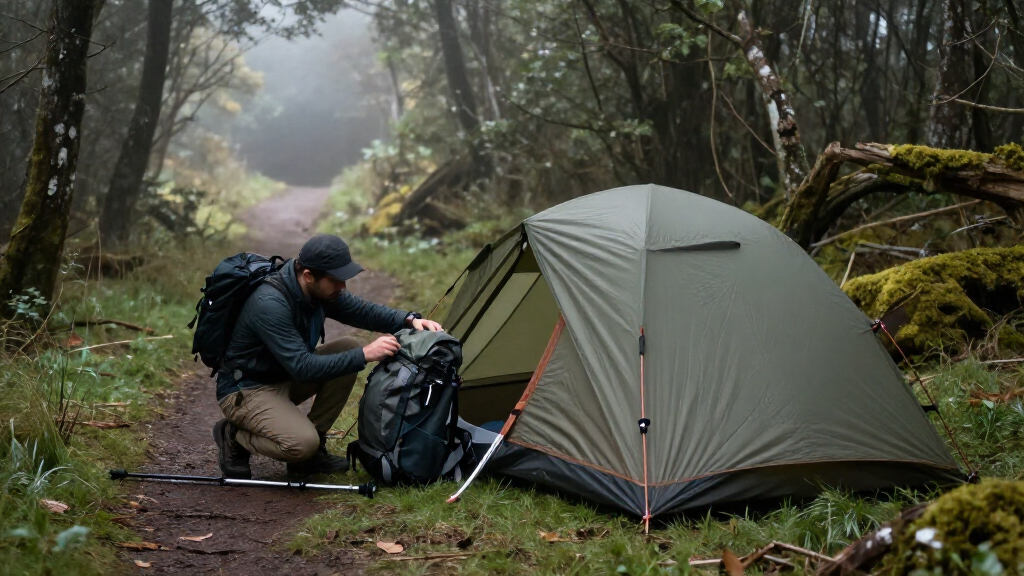
How We Picked
I compared these 15 items by their usefulness in a lightweight backpacking kit, looking beyond names that include “ultralight.” I considered whether each product has a clear backcountry role, how its design affects packed bulk and setup, and what a buyer gives up in comfort, capacity, durability, or versatility. Sleep gear received attention for comfort and weather suitability; cookware and lighting for straightforward field use; and accessories for whether their function justifies carrying them.
The ranking favors gear with a distinct job and a practical balance of weight-conscious design and usability. A focused item such as the MSR PocketRocket 2 ranks well for hikers who want a simple cooking system, while a comfort-forward choice such as the TREKOLOGY UL R7 serves a different priority. Products that add convenience, like built-in pillows or camp chairs, are not automatic winners: their usefulness depends on trip length, terrain, and how much comfort a hiker is willing to carry. Because this list spans different gear categories, the order reflects overall usefulness for a lightweight kit rather than a direct one-to-one contest.
Factors to Consider When Choosing Best Ultralight Backpacking Gear
Building a lighter pack is a system decision: saving weight in one place can lead to extra gear elsewhere if the replacement does not suit the trip. I would start with the conditions and activities the kit must cover, then weigh comfort and simplicity against packed weight. These broader checks can help prevent buying a collection of individually light items that do not work well together.
Set a Weight Budget by Function, Not by Item
Start by dividing your kit into sleep, shelter, cooking, clothing, and safety rather than judging each purchase on its own. A very light item may create a need for another layer, repair part, or comfort accessory, reducing the savings across the full pack. Compare packed weight and packed size for the whole system, including anything required to use the item. Keep a margin for conditions that can change, especially cold nights or wet weather. A spreadsheet or gear list can reveal where the heaviest categories sit before you spend money chasing small reductions.
Match Sleep Gear to the Coldest Likely Night
A sleeping bag’s warmth cannot be judged separately from the pad beneath it, because ground insulation affects how warm the system feels. Check the bag’s temperature information and the pad’s insulation details, then compare them with the lowest temperatures expected on your route. A lighter warm-weather bag may work for summer trips but become a poor choice when nights dip lower than expected. Roomier or more cushioned pads can improve rest, though they often take more space in the pack. If you sleep cold, prioritize a compatible sleep system over shaving a small amount from one component.
Choose Cooking Gear Around Your Actual Meals
A compact stove and small pot make sense for solo trips built around hot drinks or simple meals, but they can slow down cooking for two or make food preparation awkward. Think through the largest meal you plan to cook and whether you need to boil water only or simmer ingredients. Check fuel compatibility and cooking-pot capacity before committing to a stove setup. Titanium cookware can keep a kit light, but thin-walled pots call for care when heating food directly. For longer trips, ease of fuel planning and the ability to clean the pot may matter more than a minimal cookware list.
Treat Comfort Extras as Trip-Specific Gear
Chairs, separate pillows, and built-in setup features can make camp more pleasant, but their value changes with trip length and terrain. On a short approach or a basecamp trip, a chair may earn its place; on a long route with sustained climbs, the same weight may feel less worthwhile. Decide whether an accessory replaces something you already carry or simply adds another item. For camp furniture, check packed dimensions and how it handles the ground where you expect to sit. A comfort item is a sensible choice when it improves recovery or enjoyment enough to justify carrying it.
Check Fit, Setup, and Repair Before Leaving Home
Compact gear can be harder to handle with cold hands, low light, or limited campsite space, so practice setup before a trip. Check whether inflation methods, valves, straps, and folding parts feel manageable for the person using them. Look for repair options and learn how to handle a puncture or damaged component away from home. Dry bags also need careful sizing: a set of small sacks may help organize clothing but may not replace a correctly sized waterproof pack liner. A short home setup test can catch fit or compatibility issues before they become trail problems.
Let Route Rules and Weather Shape the Final Kit
Gear that works on one trail may be unsuitable on another because of fire restrictions, water availability, terrain, or local waste rules. Check stove regulations and campsite requirements before choosing a cooking plan, and carry the sanitation tools required by the area. Waterproof storage can protect sensitive items, but it does not make a pack waterproof or remove the need to manage wet clothing. For exposed or cold routes, favor dependable warmth and weather protection over a lighter setup that leaves little margin. The right ultralight kit is the lightest one that still fits the route’s real demands.
Frequently Asked Questions
Should I buy a sleeping pad with a built-in pillow or keep those items separate?
A built-in pillow can simplify packing and setup, which may suit short trips or hikers who prefer fewer loose items. A separate pillow gives you more freedom to adjust its position or leave it behind if you use spare clothing instead. Consider whether the pad’s pillow shape fits the way you sleep, since an integrated design is less adaptable. Also compare the full packed size and weight of the pad-and-pillow setup, not just the pad alone. Choose the combined option for convenience and the separate route for flexibility.
Is a four-inch sleeping pad worth carrying if I want a lightweight kit?
Extra thickness can help side sleepers and people who feel pressure on uneven ground, but it may add packed bulk and weight. Thickness alone does not tell you how warm a pad will be, so check insulation information as well as dimensions. If your trips include cold ground, warmth may matter more than added cushioning. For short summer routes or hikers who sleep comfortably on thinner pads, a thicker model may be more than the trip requires. Test your sleep position at home before deciding that extra loft is worth its place in the pack.
Can a small titanium pot and compact stove handle meals for two?
They can work for simple meals if you are willing to cook in batches, but a small pot limits how much you can boil or prepare at once. Think about whether both hikers eat the same meal and whether you need hot drinks at the same time. A larger shared pot may add some weight while reducing cooking time and making cleanup easier. Check that the stove and pot sit securely together, particularly on uneven ground. For a two-person kit, compare the weight of one shared setup with the weight of separate cookware before choosing.
Do ultralight backpacking chairs make sense on long-distance hikes?
They make the most sense when camp comfort is a high priority, the route has frequent rest stops, or the chair replaces another item you would otherwise carry. On a demanding long-distance hike, repeated carrying can outweigh the comfort benefit for some hikers. Packed size and suitability for soft or uneven ground matter as much as the chair’s stated weight. Consider how often you expect to sit in camp and whether a groundsheet or sitting pad already covers that need. If you are unsure, try a short overnight trip before taking a chair on a longer route.
Are a set of dry bags enough to keep everything in my backpack dry?
Dry bags can protect selected items, such as sleep clothes or electronics, but a multi-piece set may not fit every pack or item equally well. They also do not protect gear that is left outside them, and closures need to be rolled or fastened correctly. In persistent rain, some hikers use a pack liner as a broader layer of protection and reserve smaller bags for organization. Check bag sizes against your actual gear rather than assuming a set covers the whole load. Keep critical items protected even when the forecast looks clear.
Conclusion
For the best all-around starting point in this lineup, I would choose the Gear Doctors Ether sleeping pad for a compact inflatable sleep option, then build the rest of the kit around the route. The best value approach is to buy only the pieces that solve a real need, using the TOAKS pot or Frelaxy dry bags where their simple functions fit your routine. For a premium-minded setup focused on streamlined cooking, the MSR PocketRocket 2 is the standout specialized pick; beginners may prefer the FUN PAC pad’s combined pillow and foot pump for a less fiddly setup, while recognizing its fit may not suit every sleeper. Choose the TREKOLOGY UL R7 if cushioning and insulation take priority, the Naturehike chair if soft-ground seating matters, or the PLACHIDAY trowel for a specific sanitation need. The right choice is the kit that meets your trip’s conditions without carrying comfort features you will not use.