
TL;DR

Get garden gear delivered free with Prime
- Fast, free delivery on millions of items
- Prime Video, Amazon Music and more included
- Member-only deals all year
Gardening Know How published nine do-it-yourself design ideas for making shady, north-facing gardens feel brighter and more inviting. The recommendations include pale paving, layered shade-tolerant plants and white flowers; the source does not provide evidence that the approaches were independently tested or guarantee particular results.
Gardening Know How has published a guide to nine do-it-yourself ways of making a shady, north-facing garden feel brighter, focusing on reflective hardscaping, foliage and plants suited to low-light conditions. The advice addresses a common design challenge: limited direct sun can constrain plant choices and leave outdoor areas looking dim, particularly where buildings or trees block additional light.
The article recommends choosing pale-colored paving for paths and patios to reflect available daylight. Suggested materials include porcelain or limestone pavers and light-toned pebbles or river stones in shades such as soft gray, sand and buff. The guide also says lighter surfaces can make a small garden appear larger. Its suggestion that existing pavers may be replaced without a major expense depends on keeping the paved area’s dimensions and using tiles of the same size; actual costs will vary.
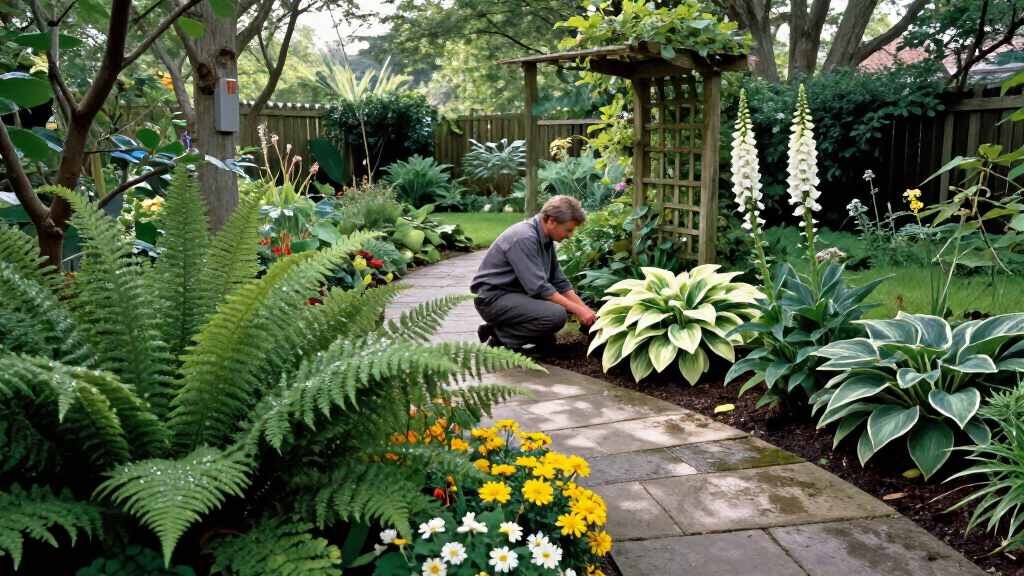
For planting, the report advises building a layered base of foliage-first plants and adding flowering varieties. It names ferns, Fatsia japonica and hostas as options for shaded areas, noting that green or variegated leaves can help brighten darker borders. Examples in the article include hayscented fern, the white-leaved hosta ‘White Feather’ and the Carex variety ‘Evercolor Everest’. The piece describes the sedge as suited to full shade and wet soil, and gives its growing range as zones 5–8.
The other recommendations include adding white-flowering plants, repeating a small set of plants in groups to create visual continuity, and choosing plants for different light conditions across the garden. The supplied source material ends partway through its fourth tip and does not include the complete list of nine. It also does not provide named designer interviews, research findings or quoted statements from experts, so the recommendations should be understood as editorial gardening advice.
Design Options for Low-Light Yards
The advice matters to people who have limited direct sunlight but want to make their garden more usable and visually varied. Rather than treating a north-facing aspect only as a constraint, the article suggests working with it through surface color, foliage contrast and shade-suited plants. Those choices can help readers plan a garden before buying plants or changing paving.
The suggestions are not a substitute for checking a site’s conditions. Shade can differ across a single yard, and soil moisture, local climate, the height of nearby buildings and seasonal sun angles can affect which plants thrive. The report offers a starting point, not a guarantee that every named plant will perform well in every garden.
Popular right now

Shark Rotator Lift-Away Vacuum with DuoClean PowerFins (LA555) – Dark Grey

Shark Rocket Corded Stick Vacuum (HV301) – Gray/Orange

Shark Rocket Pet Plus Corded Stick Vacuum, Lightweight, Bordeaux, HV322
As an affiliate, we earn on qualifying purchases.
Why North-Facing Gardens Get Less Sun
A north-facing garden generally receives less direct sunlight than a south-facing one in the Northern Hemisphere, though the amount varies with location and surrounding obstacles. The Gardening Know How report points to trees and tall buildings as factors that can deepen shade, and says the issue can become more pronounced in winter when the sun is lower in the sky.
That limited light affects both how a space looks and what can grow there. The article’s design approach pairs reflective, pale materials with plants chosen for shade tolerance, rather than relying on flowers that need full sun. It also proposes using repeated plant groupings to connect areas with different light levels.
Limits of the Available Advice
The provided source material does not include all nine tips: it stops during the explanation of the fourth. The remaining recommendations cannot be confirmed from the supplied text. The material also gives no publication date, location-specific trial results or cost comparisons, and contains no direct quotations from landscape designers.
It is also unclear how well each plant will suit a particular reader’s soil, climate and shade. For example, the source gives a hardiness-zone range for ‘Evercolor Everest’ but does not provide equivalent growing details for every plant it names. Readers should check local growing guidance before making purchases or changes.
Check Your Garden Before Planting
The next step for readers is to observe how sunlight moves across the garden and identify areas of partial and deep shade. They can then compare the report’s suggestions with local growing conditions, including soil and moisture, before selecting plants. Anyone considering new paving can measure the existing area and compare material costs; the article’s lower-cost suggestion applies only if the layout and paver size remain suitable.
Gardening Know How’s supplied report does not set out a follow-up date or further confirmed developments. The full nine-tip list and any additional expert advice would be needed to assess recommendations beyond those included in the available material.
Key Questions
What is the report about?
Gardening Know How published a guide with do-it-yourself ideas for making a shady, north-facing garden feel brighter, using design choices and shade-tolerant plants.
Which paving does the article recommend?
It suggests light-toned options such as porcelain or limestone pavers, plus pale pebbles or river stones, to reflect available light. The report does not compare their prices or performance.
Which plants does the supplied material name?
Examples include ferns, Fatsia japonica, hostas, hydrangeas and Carex. The source names ‘White Feather’ hosta and ‘Evercolor Everest’ sedge, among other varieties, but suitability depends on local conditions.
Does the available report include all nine ideas?
No. The supplied source text ends partway through the fourth recommendation, so the remaining tips are not confirmed in the material available here.
Source: rss