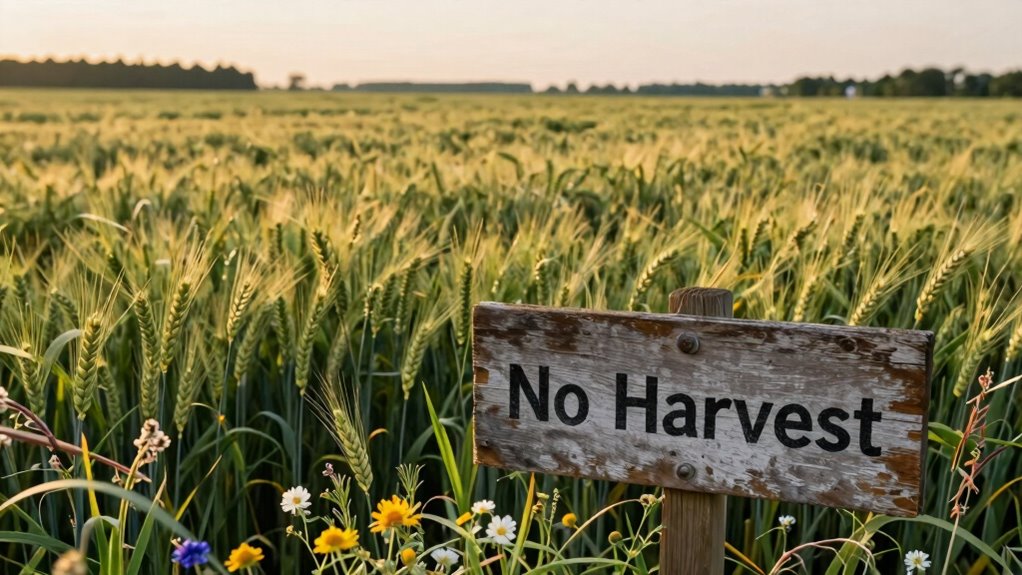

When you’re unsure about the right harvest time, the best “no harvest” rule is to wait for clear signs of crop maturity and favorable environmental conditions. Check visual cues like color, size, and firmness, and consider weather factors such as dry, sunny days. Avoid rushing, and seek advice from experienced growers or trusted guides. If you’re patient and attentive, you’ll avoid premature harvests and guarantee a high-quality yield. For more tips, keep exploring these essential strategies.
Key Takeaways
- Wait for clear visual and environmental cues indicating crop maturity before harvesting.
- Consult crop-specific guides or experienced growers to confirm readiness.
- Avoid rushing; prioritize patience to prevent compromising quality or storage life.
- Postpone harvest during unfavorable weather conditions to protect crop integrity.
- Trust natural signals and the “No Harvest” rule to ensure crops reach full potential.

When you’re unsure whether to harvest a crop or leave it be, the best rule to follow is simple: if you’re uncertain, don’t harvest. This approach helps you avoid rushing into decisions that could compromise your crop’s quality or yield. Harvest timing is crucial, and rushing can lead to picking too early or too late, which might reduce flavor, nutrition, or storage life. If you’re unsure whether your crop is ready, it’s better to wait a little longer or gather more information before making a move. This patience can pay off by ensuring you get the best possible harvest.
The key to effective crop selection lies in observing your plants carefully and understanding their signs of readiness. When in doubt, check for visual cues such as color, size, and firmness, and consider the stage of growth specific to each crop. For example, fruits like tomatoes should be fully colored and slightly soft, while grains may need to reach a certain moisture level. If you’re still unsure, it’s wise to delay harvesting until you’re confident. Rushing prematurely can lead to crops that aren’t fully mature, which impacts flavor, nutrition, and shelf life. Additionally, understanding harvest timing and crop maturity can help prevent losses and improve overall yield quality.
Timing your harvest correctly involves more than just the crop’s appearance. Environmental factors like weather conditions, temperature, and humidity also influence the optimal harvest window. If you’re uncertain, it’s often better to wait for a clear, dry day to avoid issues like mold or spoilage. This extra caution can save you from losing your crop or having to deal with post-harvest problems. Remember, crop selection isn’t just about picking when it looks ripe; it’s about understanding the plant’s signals and the context of your growing season.
When you’re in doubt, it’s useful to consult resources specific to each crop or seek advice from experienced growers. Sometimes, a quick comparison with trusted guides or a conversation with a fellow farmer can clarify whether it’s better to wait or proceed. Being patient and attentive during the harvest process allows you to refine your judgment over time, making you more confident with each season. Ultimately, the “no harvest” rule isn’t just about avoiding mistakes; it’s about respecting the natural cues of your crops and giving them the best chance to reach their full potential. That way, you’ll enjoy a harvest that’s flavorful, nutritious, and worth the wait.

YAMRON 4-in-1 Soil Moisture Meter Digital Plant Temperature/Soil Moisture/pH Meter/Sunlight Intensity Backlight LCD Display Soil Test Meter for Gardening, Farming and Outdoor Plants
- 4-in-1 Soil Testing: Measures moisture, pH, temperature, sunlight
- Large Backlit LCD: Clear readings day and night
- Fast Accurate Results: Latest probe technology for precision
As an affiliate, we earn on qualifying purchases.
As an affiliate, we earn on qualifying purchases.
Frequently Asked Questions
How Do I Recognize When to Apply the “No Harvest” Rule?
You should apply the “no harvest” rule when crop maturity isn’t reached or timing considerations suggest it’s too early. Keep an eye on indicators like size, color, and firmness to assess maturity. If these signs aren’t clear or the crop isn’t ripe, it’s best to delay. Recognizing when to hold off helps ensure quality, avoiding premature harvests that can compromise flavor and yield.
Can the “No Harvest” Rule Be Overridden in Emergencies?
When facing an emergency, you can override the “no harvest” rule, but only if safety or urgent needs demand it. In such moments, trust your judgment about harvest timing and crop maturity, even if it means bending the rules. Think of it as walking a tightrope—balancing risk and necessity. Always consider the long-term impact, but prioritize safety when life or health is at stake.
Is the “No Harvest” Rule Applicable to All Types of Crops?
The “no harvest” rule generally applies to all crop types to guarantee crop maturity and quality. You should avoid harvesting early, as it can affect pest prevention and crop yield. However, in some cases, specific crops may have exceptions based on maturity or pest risks. Always monitor crop maturity closely, and if pests threaten, prioritize safety while respecting the rule to maintain healthy, high-quality produce.
How Does Weather Affect the Decision to Harvest or Not?
Think of weather as the weather as a weather vane guiding your harvest. Rain delays can cause crops to rot or become moldy, so you might hold off. Sun exposure is essential; waiting for ideal sunlight can boost flavor and ripeness. If the forecast predicts heavy rain or prolonged sun, it’s best to delay harvesting, ensuring your crops reach peak quality and avoid weather-related damage.
What Are the Long-Term Benefits of Following the “No Harvest” Rule?
Following the “no harvest” rule offers long-term benefits by promoting sustainable practices and crop preservation. You help guarantee soil health remains intact and reduce overharvesting, which can deplete resources. This approach encourages the growth of resilient crops and maintains ecological balance. Ultimately, practicing restraint benefits your farm’s productivity and sustainability, fostering a healthier environment for future harvests while supporting responsible farming methods.

Week-by-Week Vegetable Gardener's Handbook: Perfectly Timed Gardening for Your Most Bountiful Harvest Ever
- Publisher: Storey Publishing
- Language: English
- Book Title: Week-by-Week Vegetable Gardener's Handbook
As an affiliate, we earn on qualifying purchases.
As an affiliate, we earn on qualifying purchases.
Conclusion
Remember, even the wisest among us have moments of doubt—like Icarus soaring too close to the sun. When you’re unsure about whether to harvest, choose the “no harvest” rule. It’s a simple act of patience that can save your crop and your peace of mind. Trust your instincts, and let nature’s rhythm guide you. Sometimes, the best move is to wait, just as the moon waxes and wanes, revealing what’s truly worth gathering.

SONKIR Soil pH Meter, MS02 3-in-1 Soil Moisture/Light/pH Tester Gardening Tool Kits for Plant Care, Great for Garden, Lawn, Farm, Indoor & Outdoor Use (Green)
- Multi-function Soil Tester: Measures moisture, pH, and sunlight
- No Batteries Required: Operates without batteries for convenience
- Note for Use: Cannot test liquids; water dry soil before testing
As an affiliate, we earn on qualifying purchases.
As an affiliate, we earn on qualifying purchases.
As an affiliate, we earn on qualifying purchases.