
To better predict plant growth, you need to understand how your garden’s sunlight, climate, and soil work together. Notice how much direct sun your space gets and consider local climate patterns—hot, dry summers or overcast days make a difference. Also, check your soil type, as it affects heat and moisture retention. Combining these factors helps you choose plants that will thrive. Keep exploring, and you’ll discover even more ways to optimize your garden’s success.
Key Takeaways
- Observe the duration and intensity of sunlight in different garden areas throughout the day.
- Assess local climate patterns to determine typical sunlight conditions and seasonal variations.
- Analyze soil type to understand heat retention and moisture availability affecting sun exposure.
- Consider the interplay between climate, soil, and sun exposure to predict plant performance.
- Use combined insights to select plants suited to specific sunlight, climate, and soil conditions for optimal growth.
Have you ever wondered how understanding sun exposure can improve your plant predictions? Recognizing how sunlight interacts with your garden is key to selecting the right plants and ensuring they thrive. Sun exposure influences plant growth directly, but it’s also shaped by broader factors like climate patterns and soil composition. When you pay attention to these elements, you gain a clearer picture of what your plants need and how they’ll perform over time.
Understanding sun exposure helps you choose plants that will thrive in your garden’s unique climate and soil conditions.
Climate patterns play a significant role in sun exposure. Some regions experience intense, direct sunlight most of the year, while others have more overcast days or seasonal variations. For example, if you live in an area with hot, dry summers, plants that tolerate full sun and drought conditions will likely do better. Conversely, in cooler or cloudier climates, partial shade-loving plants might flourish. By observing local climate trends—such as the duration and intensity of sunlight during different seasons—you can predict how your plants will respond and choose species accordingly. Monitoring these patterns helps you plan planting schedules and select varieties that are naturally suited to your environment, reducing the risk of overexposure or insufficient light. Understanding local climate patterns is essential for making accurate predictions about your garden’s needs.
Soil composition further influences how sun exposure impacts your garden. Different soil types absorb and retain heat differently, affecting how much sunlight reaches the roots and the overall microclimate around your plants. For instance, sandy soils drain quickly and heat up fast, which can stress moisture-loving plants under intense sun. Clay soils, on the other hand, retain more moisture and heat, creating a different set of conditions. When you understand your soil’s composition, you can better interpret how sun exposure will affect your plants’ growth. You might decide to amend your soil or adjust planting locations to optimize sunlight exposure, ensuring plants receive the right balance of light, heat, and moisture.
In essence, reading sun exposure isn’t just about noting how much sunlight hits your garden; it’s about understanding the interplay between climate patterns and soil composition. This knowledge allows you to predict plant performance more accurately, select appropriate species, and create a healthier, more productive garden. When you combine these insights, you’re better equipped to adapt to changing conditions and foster a thriving garden that responds well to its environment. Recognizing these factors turns your garden into a well-informed, resilient space, where plants grow stronger and flourish naturally.

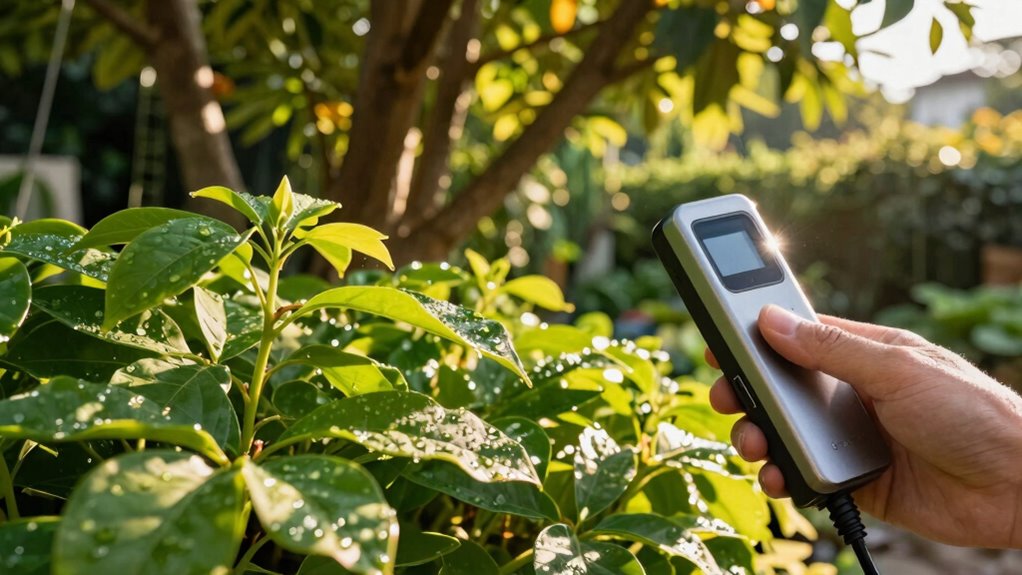
EVO-20 DLI Light Meter – Smart Sunlight Classifier for Garden & Landscape Use | Identifies Full Sun, Partial Sun, Partial Shade & Shade Based on Daily Light Integral, 10 Days of DLI History
- Sunlight Classification: Identifies sun exposure types based on DLI
- Digital Light Display: Shows daily light in mol/m²/day clearly
- 10-Day DLI Storage: Records and reviews up to 10 days of sunlight data
As an affiliate, we earn on qualifying purchases.
As an affiliate, we earn on qualifying purchases.
Frequently Asked Questions
How Does Cloud Cover Affect Sun Exposure Readings?
Cloud cover effects considerably impact sun exposure readings, causing variability that can make it tricky to predict plant growth accurately. When clouds block sunlight, your readings will show lower sun exposure, even if the sun is shining behind them. This sun exposure variability means you need to take into account cloud cover when monitoring sunlight, as it influences how much energy your plants receive, affecting their health and development.
Can Artificial Light Sources Influence Sun Exposure Measurements?
Yes, artificial illumination can influence sun exposure measurements, like a false dawn distorting your morning sky. When you use artificial light sources, their light spectrum can mimic or mask natural sunlight, tricking your sensors into reading more or less exposure than reality. This interference can lead to inaccurate predictions for your plants, making it seem like they bask in sunlight when they’re actually under artificial glow, affecting growth and health.
What Tools Are Most Accurate for Measuring Sunlight Intensity?
You should use a quantum sensor or a pyranometer for the most accurate sunlight intensity measurements. These tools provide high precision and are ideal for sunlight calibration, ensuring measurement consistency over time. A quantum sensor, in particular, measures photosynthetically active radiation directly, giving you reliable data. Regular calibration and proper placement of your device will help maintain accuracy, ensuring your readings truly reflect the sunlight exposure your plants receive.
How Often Should Sun Exposure Readings Be Taken for Reliable Predictions?
You should take sun exposure readings regularly, ideally once a week, to guarantee measurement frequency aligns with sun exposure consistency. This helps you capture any seasonal or weather-related changes affecting sunlight. Consistent measurements allow for more reliable plant predictions, as you’ll notice patterns and adjust your care accordingly. By maintaining a steady measurement routine, you’ll better understand your plants’ needs and optimize their growth conditions effectively.
Do Seasonal Changes Significantly Impact Sun Exposure Data Accuracy?
Yes, seasonal changes considerably impact sun exposure data accuracy due to sunlight variability and seasonal shading. As seasons change, sun angles shift, and shading from trees or structures varies, affecting the sunlight your plants receive. To get accurate predictions, you should account for these seasonal variations, regularly update your readings, and consider adjustments for seasonal shading effects. This approach guarantees your plant predictions remain reliable throughout the year.

YAMRON 4-in-1 Soil Moisture Meter Digital Plant Temperature/Soil Moisture/pH Meter/Sunlight Intensity Backlight LCD Display Soil Test Meter for Gardening, Farming and Outdoor Plants
- 4-in-1 Soil Testing: Measures moisture, pH, temperature, sunlight
- Large Backlit LCD: Clear readings day and night
- Fast Accurate Results: Latest probe technology for precision
As an affiliate, we earn on qualifying purchases.
As an affiliate, we earn on qualifying purchases.
Conclusion
So, next time you’re obsessing over those sun charts, remember: plants are basically sun addicts, and you’re just trying to be their shady therapist. With a little reading and a lot of sun exposure, you’ll become the plant whisperer who finally understands their fiery cravings. Who knew that predicting plant behavior might require a crash course in sunlight? Just don’t forget—your green friends are counting on you to keep their sunbathing habits in check!
EVO-20 DLI Light Meter – Smart Sunlight Classifier for Garden & Landscape Use | Identifies Full Sun, Partial Sun, Partial Shade & Shade Based on Daily Light Integral, 10 Days of DLI History
- Sunlight Classification: Identifies sun exposure types based on DLI
- Digital Light Display: Shows daily light in mol/m²/day clearly
- 10-Day DLI Storage: Records and reviews up to 10 days of sunlight data
As an affiliate, we earn on qualifying purchases.
As an affiliate, we earn on qualifying purchases.

SONKIR Soil pH Meter, MS02 3-in-1 Soil Moisture/Light/pH Tester Gardening Tool Kits for Plant Care, Great for Garden, Lawn, Farm, Indoor & Outdoor Use (Green)
- Multi-function Soil Tester: Measures moisture, pH, and sunlight
- No Batteries Required: Operates without batteries for convenience
- Note for Use: Cannot test liquids; water dry soil before testing
As an affiliate, we earn on qualifying purchases.
As an affiliate, we earn on qualifying purchases.