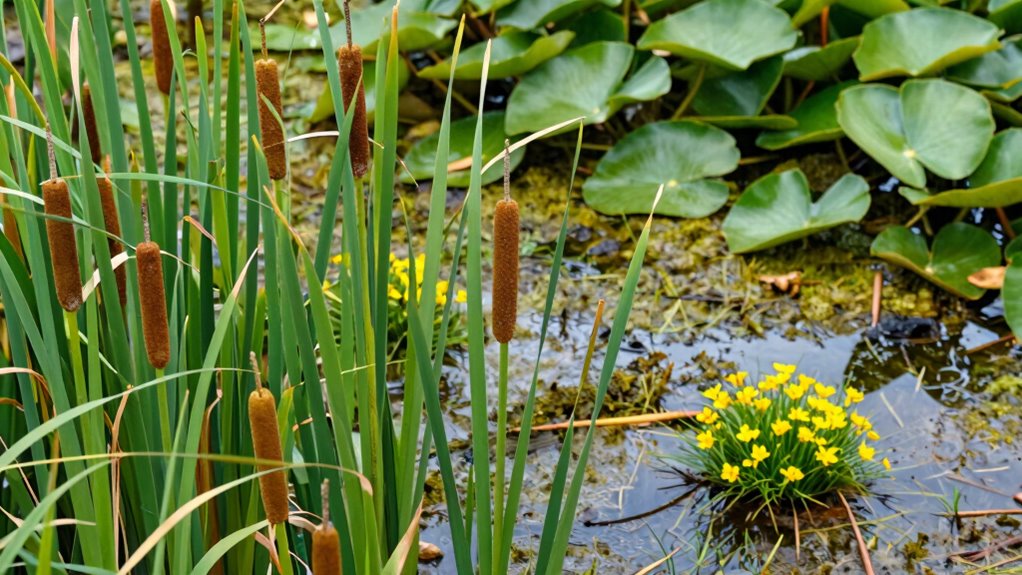

Wetland plants are uniquely adapted to survive in waterlogged soils, with features like specialized roots called pneumatophores for air access and flexible stems to handle moving sediments. They thrive in fluctuating water levels and high salinity, helping stabilize soil and filter pollutants. These plants create diverse habitats that support various wildlife, making marsh areas distinct and essential ecosystems. To understand how these adaptations work and contribute to wetland health, keep exploring further.

Get garden gear delivered free with Prime
- Fast, free delivery on millions of items
- Prime Video, Amazon Music and more included
- Member-only deals all year
Key Takeaways
- Wetland plants are specially adapted to waterlogged, low-oxygen, and sometimes salty conditions in marsh areas.
- They include emergent, submerged, and floating types, each playing a vital role in ecosystem functions.
- These plants filter pollutants, stabilize soil, and support diverse wildlife, maintaining marsh ecosystem health.
- Their adaptations enable marsh plants to survive fluctuating water levels and sediment movement.
- Wetland plants enhance biodiversity and resilience, making marsh areas unique and vital for environmental stability.
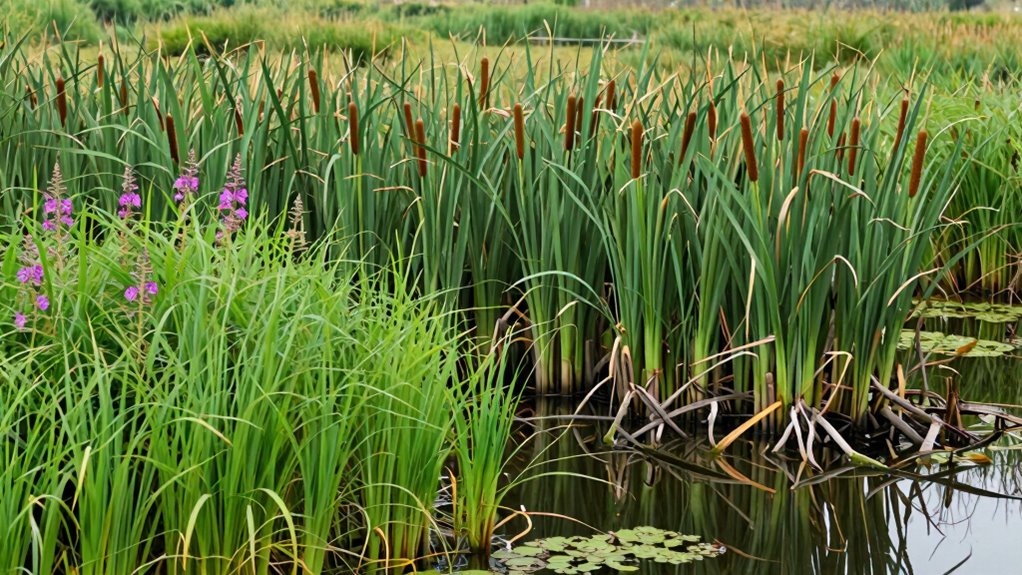
Wetland plants play an essential role in maintaining the health and stability of wetland ecosystems. These plants are specially adapted to thrive in challenging conditions like waterlogged soils, fluctuating water levels, and low oxygen availability. Their unique adaptations, known as plant adaptation, allow them to survive and even flourish where many other plants would struggle. For instance, you’ll notice many wetland plants have specialized roots, like pneumatophores, that help them access oxygen directly from the air. Others have flexible stems and leaves that can withstand water movement and sediment shifts. These adaptations are fundamental for their survival and contribute markedly to the overall functioning of wetlands. Additionally, some wetland plants can survive in areas with high salinity, showcasing their remarkable salt tolerance and adaptability. This resilience enhances the diversity of wetland plant communities, supporting a wide range of species.
Wetland plants adapt to waterlogged soils, fluctuating water levels, and low oxygen, ensuring their survival and ecosystem stability.
As you observe wetlands, you’ll see that these plants provide essential ecosystem services that support both the environment and local communities. They filter pollutants from water, trapping sediments and nutrients that might otherwise cause harm downstream. This natural filtration helps improve water quality, making wetlands critical for maintaining clean water sources. Additionally, wetland plants stabilize soil and reduce erosion, protecting coastlines and riverbanks from the erosive forces of water. They also serve as nurseries for fish and habitat for countless wildlife species, supporting biodiversity at multiple levels. Their presence is vital for maintaining the ecological balance of wetland habitats. In fact, the presence of diverse wetland plant species directly correlates with the overall health of the ecosystem, highlighting the importance of their plant adaptation.
The diversity of wetland plants also contributes to their ability to offer multiple ecosystem services. Emergent plants like cattails and bulrushes grow in shallow water and help trap sediments, enhancing the wetland’s capacity to filter and purify water. Submerged plants such as pondweed and water milfoil oxygenate the water and provide food for aquatic animals. Floating plants like duckweed and water lilies offer shade and habitat, helping regulate temperature and light penetration. The variety of plant types and their adaptations create a balanced environment where different species coexist and thrive, reinforcing the wetland’s resilience. This variety also contributes to the overall biodiversity of wetland ecosystems, making them more adaptable to environmental changes. Recognizing the importance of wetland plant adaptation can help inform conservation efforts and protect these vital habitats for future generations.
wetland plants for pond or marsh
As an affiliate, we earn on qualifying purchases.
As an affiliate, we earn on qualifying purchases.
Frequently Asked Questions
How Do Wetlands Support Local Wildlife Populations?
You support local wildlife populations by maintaining wetlands, which serve as crucial bird habitats and foster insect diversity. These areas provide food, shelter, and breeding grounds for many species. By protecting marshes, you guarantee that birds have safe nesting spots and insects thrive, which in turn sustains the entire ecosystem. Your efforts help preserve the rich biodiversity that makes wetlands indispensable for healthy, resilient environments.
What Are the Main Threats to Wetland Plant Diversity?
You might not realize it, but wetlands are among the most threatened ecosystems, with over 50% lost globally. The main threats to wetland plant diversity are habitat loss from urban development and agriculture, and invasive species that outcompete native plants. These threats reduce plant variety, disrupt ecosystems, and threaten wildlife. Protecting wetlands requires controlling invasive species and conserving remaining habitats to maintain their rich biodiversity.
Can Wetland Plants Be Used for Medicinal Purposes?
Yes, wetland plants can be used for medicinal purposes. You might find that many have notable medicinal properties, making them valuable for traditional plant remedies. For instance, some marsh plants are used to treat ailments like inflammation or infections. By exploring these plants, you can discover natural remedies rooted in nature, harnessing their medicinal properties to support health and well-being.
How Do Wetlands Filter Pollutants From Water?
Sure, wetlands are basically nature’s version of a pollution vacuum. You absorb pollutants with wetland plants, which act like tiny water purifiers, removing harmful substances through pollutant absorption. These plants, along with the soil and microorganisms, work tirelessly to break down and filter contaminants, ensuring water purification. So, when you think wetlands, think of them as the planet’s natural, eco-friendly water treatment plants doing all the dirty work for us.
Are Wetlands Important for Climate Change Mitigation?
Yes, wetlands are essential for climate change mitigation. You benefit from their natural wetland carbon sequestration, which traps carbon dioxide and reduces greenhouse gases in the atmosphere. Supporting peatland restoration efforts enhances this process further. By protecting and restoring wetland areas, you help store carbon, slow climate change, and preserve critical ecosystems. Your actions can make a significant difference in maintaining the planet’s health for future generations.
aquatic plants for water filtration
As an affiliate, we earn on qualifying purchases.
As an affiliate, we earn on qualifying purchases.
Conclusion
Now that you’ve seen what makes marsh plants unique, it’s clear they’re the backbone of these vibrant wetlands. Their resilience and adaptability keep the ecosystem thriving, proving that a little water goes a long way. Remember, every plant plays its part in the grand scheme, and together, they hold the wetlands together. So, don’t overlook these green giants—they’re more than just plants; they’re nature’s unsung heroes, proving that sometimes, it’s the quiet ones that make the biggest difference.
emergent aquatic plants for wetlands
As an affiliate, we earn on qualifying purchases.
As an affiliate, we earn on qualifying purchases.
floating aquatic plants for ponds
As an affiliate, we earn on qualifying purchases.
As an affiliate, we earn on qualifying purchases.
Fall Picks
fall essentials
As an affiliate, we earn on qualifying purchases.