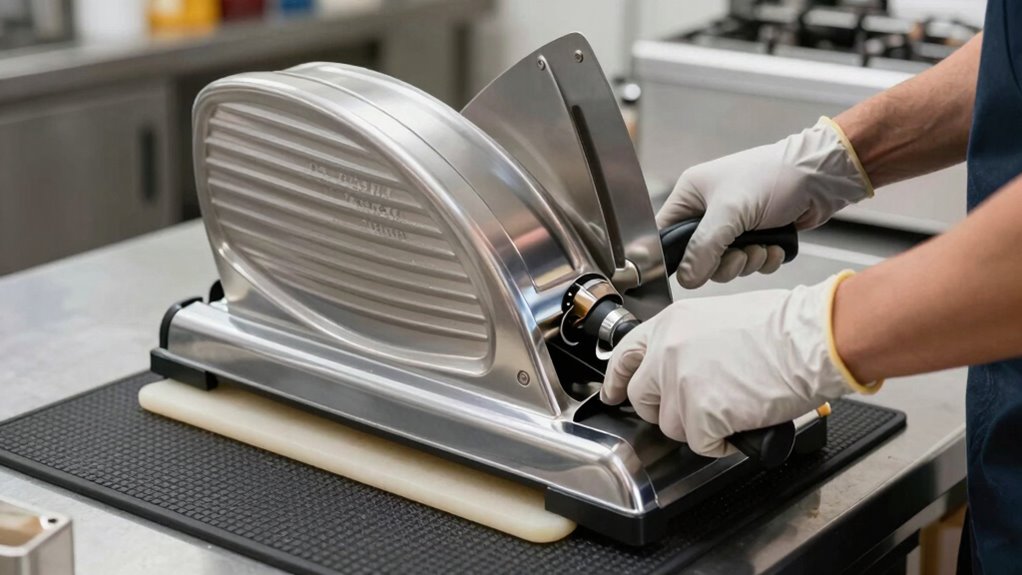

To prevent most injuries when operating a meat slicer, always handle the equipment carefully and use the food pusher or guard to hold meat in place. Keep your hands clear of the blade’s path and turn off the slicer before cleaning or adjusting. Regularly inspect and sharpen blades, and ensure thorough cleaning. Practice safe habits consistently, and you’ll reduce risks considerably. Stick around to learn more essential safety tips for confident, injury-free slicing.
Key Takeaways
- Always use the food pusher or guard to keep hands away from the blade during operation.
- Turn off and unplug the slicer before cleaning or making adjustments.
- Regularly inspect and maintain the slicer, including sharpening and aligning blades.
- Wash hands thoroughly before handling the slicer and clean work surfaces thoroughly.
- Receive proper training and follow safety protocols consistently to foster a safety-first culture.
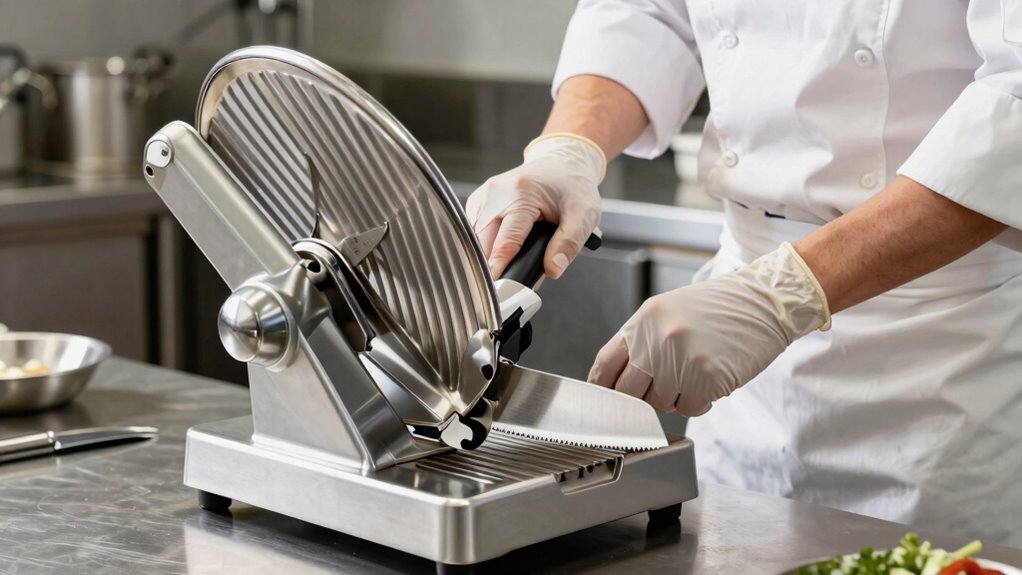
Using a meat slicer safely is fundamental to prevent injuries and guarantee efficient operation. When you handle this equipment properly, you protect yourself from cuts and accidents, while also maintaining the quality of the food you prepare. A key part of safe operation is understanding the importance of food hygiene. Always assure that the meat and other ingredients you’re slicing are fresh and stored correctly. Cleanliness is crucial because bacteria can transfer from raw meat to the slicer, contaminating other foods and risking foodborne illnesses. Before starting, wash your hands thoroughly and make certain your work surface and tools are sanitized. Wearing cut-resistant gloves can add an extra layer of protection, but never rely solely on them; always handle the slicer with care. Proper equipment maintenance plays a significant role in safety. Regularly inspect the slicer for any signs of wear or damage. A dull blade, for example, can cause uneven slices and increase the risk of slips or cuts because you’ll need to apply more force. Keep the blade sharp and properly aligned, and replace it when necessary. Lubricate moving parts according to the manufacturer’s instructions to prevent malfunction or sudden stops during operation. Consistent maintenance not only extends the life of the equipment but also assures it operates smoothly and safely. Always unplug the slicer before cleaning or adjusting any parts to avoid accidental activation. Proper technique is another habit you should develop. Always use the food pusher or guard to hold the meat in place, never your fingers. Keep your hands clear of the blade’s cutting path and use slow, deliberate movements. Avoid rushing through slices, as haste increases the likelihood of slips or accidental contact with the blade. Developing safe handling habits can significantly reduce the risk of injury over time. When finished, turn off and unplug the machine before cleaning. Use a brush or cloth to remove leftover debris and food particles, making sure the equipment is thoroughly cleaned to uphold food hygiene standards. Regular cleaning procedures are essential for maintaining both safety and hygiene. Do not submerge the entire slicer in water; instead, carefully clean parts that come into contact with food, following manufacturer instructions. Implementing proper cleaning protocols ensures that bacteria and residues are effectively removed without damaging the equipment. Finally, establish a routine of regular training and review safety protocols. Stay updated on best practices, and always encourage a safety-first mindset. By integrating good habits—such as maintaining equipment properly, adhering to food hygiene standards, and practicing safe handling—you minimize the risk of injury and keep your work environment safe and efficient.
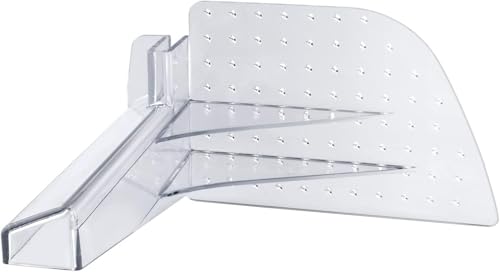
Meat slicer food pusher, TOKASS food-grade high-density material, universally applicable to SL series models, one pack
- Product Type: Electric Meat Slicer
- Power: 200W
- Model Compatibility: SL Series Models
As an affiliate, we earn on qualifying purchases.
As an affiliate, we earn on qualifying purchases.
Frequently Asked Questions
What Type of Protective Gear Is Recommended When Using a Meat Slicer?
When using a meat slicer, you should wear protective gloves to prevent cuts and safety goggles to shield your eyes from splashes or debris. These protective gear items help minimize injury risks during slicing. Always guarantee gloves fit snugly and goggles are securely in place. Combining these safety measures with proper handling techniques keeps you protected and prevents most common injuries associated with meat slicer use.
How Often Should Meat Slicers Be Cleaned and Sanitized?
Think of your meat slicer as a trusted ally that needs regular care. You should follow a strict cleaning schedule, ideally after each use, to prevent bacteria buildup. The sanitization frequency should be daily or whenever the slicer has been used with raw meat. By consistently cleaning and sanitizing, you protect yourself and your customers, ensuring safe, hygienic slices every time.
Can Children Safely Operate a Meat Slicer?
Children should not operate a meat slicer due to safety concerns. For child safety, you need to guarantee strict supervision requirements are met, as meat slicers are powerful and dangerous machines. Even with supervision, kids lack the experience and judgment needed, so it’s best to keep them away from these devices. Prioritize safety by teaching children about hazards, and always keep slicers out of their reach.
What Are Common Signs of Meat Slicer Malfunction?
When your meat slicer starts acting up, it’s like a warning siren blaring. You’ll notice uneven slices, strange noises, or the blade not turning smoothly—signs of machine calibration gone awry. Electrical issues might cause it to stop unexpectedly or flicker. These signals tell you it’s time to inspect and service your slicer promptly, ensuring safety and efficiency. Ignoring these signs risks injury and damage, so stay vigilant.
How Do I Properly Store a Meat Slicer After Use?
After using a meat slicer, you should follow proper storage guidelines by cleaning and sanitizing it thoroughly. Make certain the blade is covered with a protective cover or guard to prevent accidental cuts. Store the slicer in a dry, secure location away from moisture and clutter. Always remove or secure any protective equipment used during operation. This helps maintain safety, prolongs the slicer’s lifespan, and prevents injuries when it’s not in use.

NoCry Premium Cut Resistant Gloves Food Grade — 100% Food Safe — Level 5 Meat Cutting Glove for Chefs & Butchers — Perfect Mandoline Glove or Oyster Shucking Gloves with Superior Comfort & Dexterity
- Enhanced Cut Resistance: 4X more cut-resistant than leather
- Food Safe Material: 100% food grade with superior grip
- Ambidextrous Design: Fits either hand for versatility
As an affiliate, we earn on qualifying purchases.
As an affiliate, we earn on qualifying purchases.
Conclusion
By following these meat slicer safety rules, you create a secure workspace where injuries become unlikely shadows. Picture yourself confidently gliding the blade, the sharp edge slicing through meat like a gentle breeze through tall grass. With each careful step, you build a fortress of habits that protect your hands and fingers. Stay alert, keep safety front and center, and turn every slicing session into a smooth, worry-free experience—your fingers will thank you for the care you give.

Meat Slicer Sharpener for Bizerba SE12, SE12D, GSP, GSPH Slicer – Complete Sharpener Assembly with Stones Replaces 60370800100, Build to Last
- Wide Compatibility: Fits Bizerba SE12, SE12D, GSP, GSPH, VS12, VS12F
- Complete Sharpener Assembly: Includes replaceable whetstones for precise sharpening
- OEM Replacement Parts: Uses original part numbers for compatibility
As an affiliate, we earn on qualifying purchases.
As an affiliate, we earn on qualifying purchases.
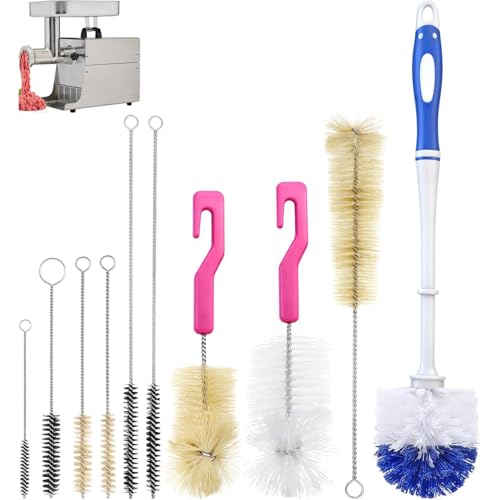
10 Meat Grinder Cleaning Brush Kit for Grinding Plates & Stuffing Tubes
- Complete Cleaning Kit: Includes brushes for plates and tubes
- Multi-Size Brushes: Fits various grinding plate hole sizes
- Flexible Tube Brushes: Cleans stuffing tubes of different lengths
As an affiliate, we earn on qualifying purchases.
As an affiliate, we earn on qualifying purchases.