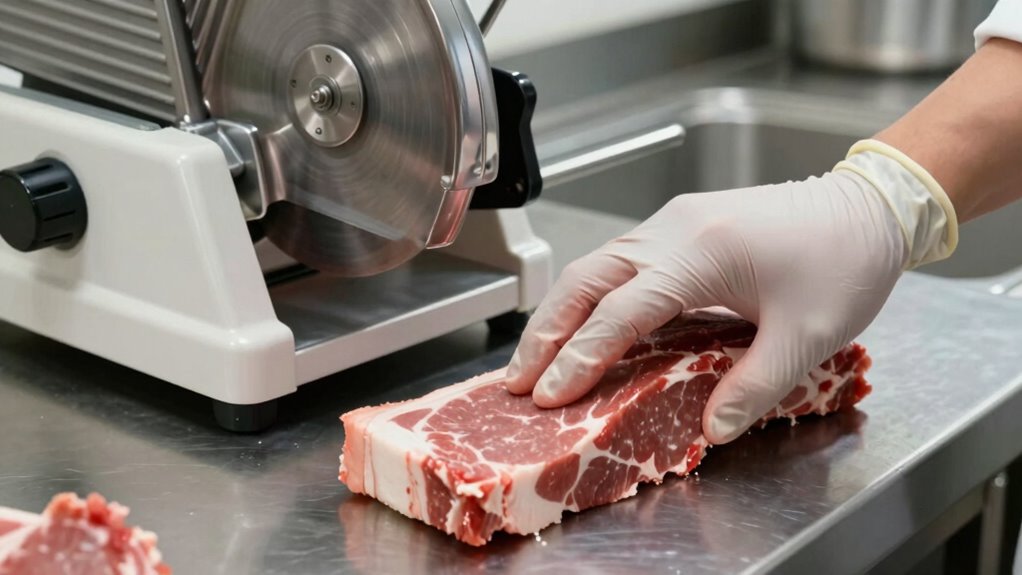

Keeping one hand on the food and the other on the slicer’s handle, known as the “one‑hand habit,” greatly raises your risk of finger injuries. This practice puts your fingers too close to the sharp blade, increasing the chance of cuts or amputations. To stay safe, focus on maintaining proper hand placement and use safety guards or push sticks. If you’d like to learn more about avoiding accidents, keep exploring safer practices.
Key Takeaways
- The “One‑Hand Habit” involves holding food with one hand while operating the slicer with the other, increasing finger injury risk.
- Keeping one hand close to the blade during operation significantly raises the chance of cuts and accidents.
- Maintaining proper hand placement and using safety tools like push sticks reduces injury likelihood.
- Avoiding the “One‑Hand Habit” is essential for safer slicing and injury prevention.
- Regular training and awareness reinforce safe techniques, minimizing the risk of slicer-related injuries.
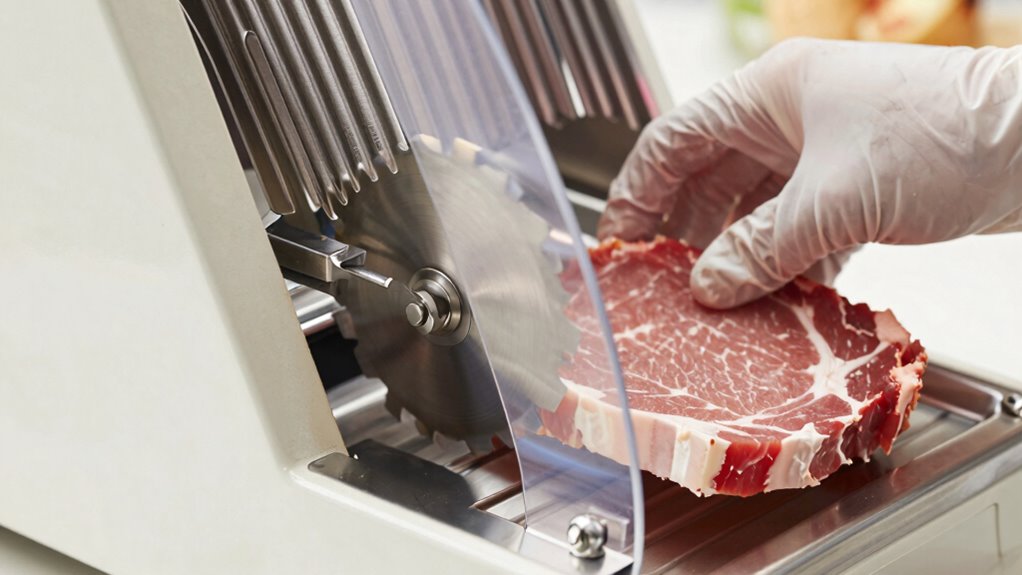
Using a meat slicer safely is essential to prevent injuries and guarantee efficient operation. One of the most common causes of accidents involves the “one‑hand habit,” where you keep one hand on the food and the other on the machine’s handle, often risking your fingers getting too close to the sharp blade. To avoid this, you need to be vigilant about your technique and focus on proper safety protocols. Regular knife maintenance is *vital*, ensuring that blades stay sharp and free of nicks. A dull blade requires more force to cut, increasing the likelihood of slips or loss of control. Keeping your slicer’s blade well-maintained not only improves precision but also minimizes the risk of accidents. Always inspect the blade before use and follow the manufacturer’s instructions for sharpening and cleaning. Proper knife maintenance also involves handling blades with care during cleaning—never use your bare hands to remove or handle a sharp blade, and always use tools or gloves designed for safety. Additionally, using safety guards and push sticks can further reduce the risk of injury by keeping your hands at a safe distance from the blade. Understanding and practicing emergency procedures is equally important. In case of an injury, immediately turn off the machine and apply first aid—stop the bleeding with pressure and seek medical attention if necessary. Having a clear plan for emergencies helps you respond quickly and effectively, reducing the severity of injuries. Make sure your workspace is equipped with a first aid kit and that everyone knows how to use it. Additionally, familiarize yourself with the location of emergency shut-off switches and how to operate them swiftly. This knowledge can be lifesaving if something goes wrong during operation.

OSTBA Food Pusher Replacement for SL-517 Series Meat Slicer, Food-Grade Plastic with Finger Protection
- Compatibility: Designed for OSTBA SL-517 series
- Material: Food-grade high-density plastic
- Stability: Secures food for precise slicing
As an affiliate, we earn on qualifying purchases.
As an affiliate, we earn on qualifying purchases.
Frequently Asked Questions
What Should I Do if I Injure Myself on a Meat Slicer?
If you injure yourself on a meat slicer, stop using it immediately and apply first aid by cleaning the wound with water, then disinfecting and covering it with a sterile bandage. Seek medical attention if the cut is deep or bleeding doesn’t stop. To prevent future injuries, always follow safety guidelines and practice injury prevention techniques, like the “one-hand habit” to keep your fingers safe during operation.
How Often Should I Inspect My Meat Slicer for Safety?
Think of your meat slicer as a trusted partner that needs regular checkups to stay safe. You should inspect it before each shift and perform thorough safety inspections weekly to catch wear and tear early. Regular maintenance keeps everything running smoothly and prevents accidents. Staying vigilant with these safety checks guarantees you avoid injuries and keep your workspace secure, just like caring for a valuable tool or friend.
Are There Specific Gloves Recommended for Meat Slicer Operation?
You should wear cut resistant gloves designed for food handling, which offer food grade protection. Look for gloves made from materials like Kevlar or rubber that provide a high level of cut resistance. These gloves help protect your hands while operating the meat slicer, especially if you’re using one hand or handling sharp blades. Always make certain the gloves fit well and are clean to maintain safety and hygiene during slicing.
Can Children Be Safely Around Meat Slicers?
You should never let children be around meat slicers without strict supervision. Keep the slicer out of their reach and make certain it’s placed securely on a stable surface. Constant child supervision is vital to prevent accidents, as even momentary distractions can lead to injuries. Educate children about the dangers and always supervise closely when they’re nearby to avoid any risky behaviors around the slicer.
What Are the Legal Safety Standards for Commercial Meat Slicers?
You need to follow legal safety standards for commercial meat slicers by ensuring proper safety training and hazard signage are in place. These standards typically require operators to be trained on safe handling and the use of safety devices, including the “one‑hand habit” safety rule. Regularly updating training and clearly posting hazard signage help prevent injuries, keeping everyone safe while complying with workplace safety regulations.
OSTBA Food Pusher Replacement for SL-517 Series Meat Slicer, Food-Grade Plastic with Finger Protection
- Compatibility: Designed for OSTBA SL-517 series
- Material: Food-grade high-density plastic
- Stability: Secures food for precise slicing
As an affiliate, we earn on qualifying purchases.
As an affiliate, we earn on qualifying purchases.
Conclusion
Remember, the one‑hand habit is like playing with fire—easy to get burned. Think of your hands as the steering wheel of your safety journey; keep both firmly on the wheel, not just one. By maintaining this simple habit, you’re steering clear of injuries and keeping your hands safe, like a lighthouse guiding a ship through dark waters. Stay vigilant and protect what matters most—your well-being. Safety isn’t just a rule; it’s your guiding light.

National Band Saw – Meat Slicer Sharpener Assembly – OEM 38010263001
- Versatile Compatibility: Fits multiple Bizerba models and OEM parts
- Precise & Sharp Cutting: Ensures clean, consistent slices every time
- Heavy Duty & Durable: Built for daily use and long-lasting performance
As an affiliate, we earn on qualifying purchases.
As an affiliate, we earn on qualifying purchases.

First Aid Only 91248 OSHA-Compliant First Aid Kit, All-Purpose 50-Person Emergency First Aid Kit for Business, Worksite, Home, and Car, 260 Pieces
- OSHA-Compliant First Aid Supplies: Includes bandages, gauze, ointments, gloves, and tools
- Durable Plastic Case: Easy-slide latches for secure storage
- Organized and Accessible: Clear cover and compartments for quick access
As an affiliate, we earn on qualifying purchases.
As an affiliate, we earn on qualifying purchases.