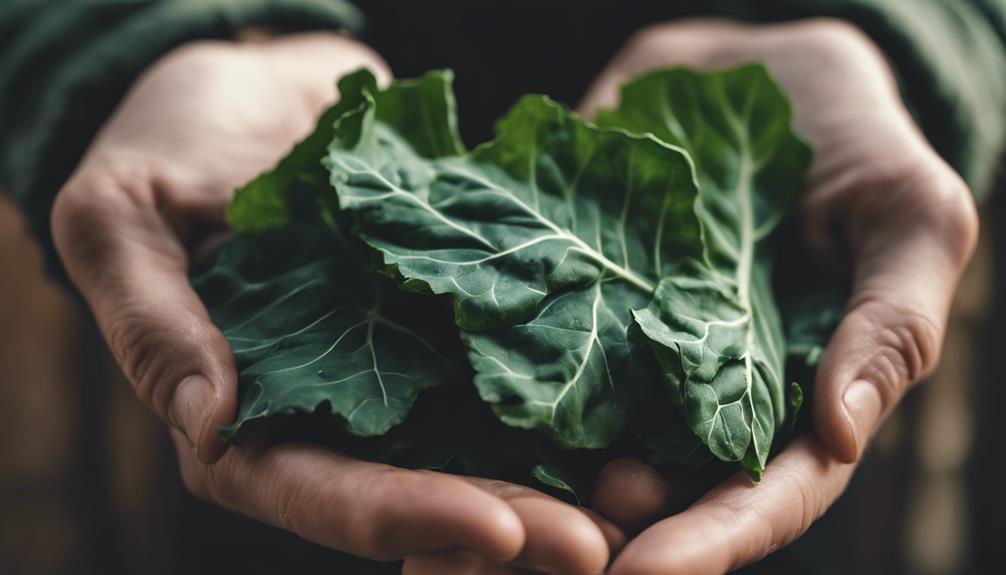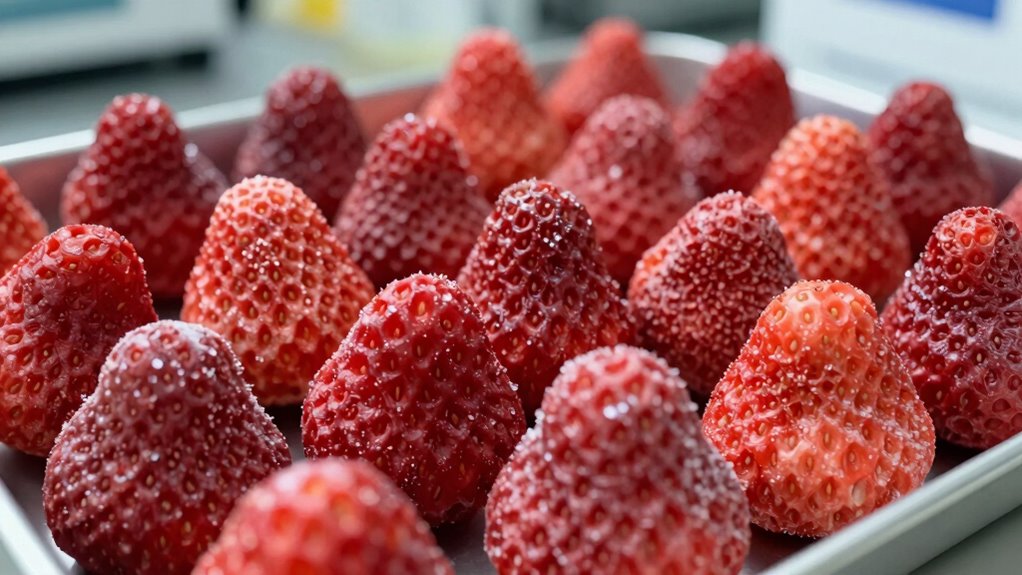

If your freeze-dried food turns out chewy or rubbery, uneven residual moisture is likely the cause. This happens when the moisture isn’t fully removed during drying, leaving too much behind and creating a dense, tough texture. To fix this, try increasing the drying time slightly or raising the temperature a bit during the process. Proper prep, slicing, and cycle control are key—keep exploring for more tips to perfect your freeze-dried foods.

Get garden gear delivered free — and shop member deals
- Fast, free delivery on millions of items
- Access to Prime Big Deal Days deals on October 6–7
- Prime Video, Amazon Music and more included
Key Takeaways
- Residual moisture after drying causes a chewy or rubbery texture in freeze-dried foods.
- Incomplete or uneven sublimation during the freeze drying cycle leaves moisture behind.
- Properly controlling drying temperature and extending the process can help remove excess moisture.
- Preparing and slicing foods evenly before freeze drying improves moisture removal and final texture.
- Storing freeze-dried foods in airtight, cool environments preserves crispness and prevents chewiness over time.
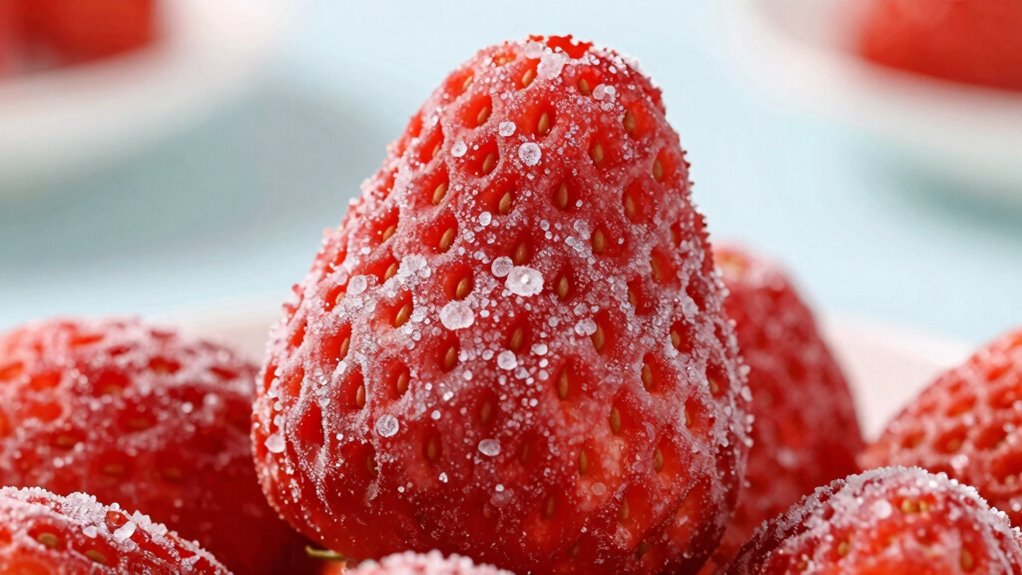
Have you ever wondered how certain foods and medicines can be preserved for long periods without spoiling? The secret lies in processes like freeze drying, which considerably extend shelf life and maintain the integrity of the original product. When done correctly, freeze drying allows you to store items for months or even years, making it a popular choice for backpackers, emergency preparedness, and food manufacturers. But if you’ve noticed that your freeze-dried foods come out chewy or rubbery rather than crisp and light, understanding the basics of the process can help you fix it.
The core reason behind the chewy texture in freeze-dried foods is often linked to the way moisture is removed during the process. Freeze drying involves freezing the product first, then reducing pressure and gently sublimating the ice directly into vapor. This gentle removal of water helps preserve the product’s structure and flavor better than traditional dehydration methods. However, if the process isn’t carefully controlled, residual moisture can remain, leading to a denser, chewier texture. Properly managing the freeze-drying cycle guarantees ideal texture preservation, giving you a final product that’s crisp and tender rather than tough and chewy.
Residual moisture during freeze drying can cause a chewy, dense texture in the final product.
Another factor impacting texture is the initial quality and preparation of the food. If the product isn’t frozen quickly enough or if it’s cut unevenly, it can lead to inconsistent drying and texture issues. Ensuring uniform freezing and preparation helps the sublimation process proceed evenly, which is essential for consistent results. Additionally, the thickness of the slices or pieces influences how well moisture is removed. Thin, evenly cut items dry faster and more evenly, resulting in a better texture.
To fix chewy outcomes, you might consider adjusting your freeze drying parameters. Increasing the primary drying temperature slightly or extending the drying time can help remove more residual moisture. Sometimes, a quick rehydration or brief additional drying cycle can improve the texture. Proper storage also plays a role; keeping your freeze-dried foods in airtight containers and in a cool, dry environment helps maintain their crispness over time.
Ultimately, understanding the importance of controlling the freeze drying process is key to achieving the perfect balance between shelf life extension and texture preservation. When you pay close attention to every step—from freezing to packaging—you can produce freeze-dried foods that are not only long-lasting but also delightfully light, crisp, and enjoyable to eat.
Frequently Asked Questions
How Does Moisture Content Affect Freeze-Dried Food Texture?
Moisture levels directly impact freeze-dried food texture, making it either crisp or chewy. If moisture content is too high, the food retains more water, leading to a chewy or soggy texture. To guarantee texture consistency, you need to carefully control drying parameters to remove enough moisture without over-drying. Proper moisture management guarantees your freeze-dried foods stay crisp and enjoy the desired texture every time.
Can Freeze Drying Cause Nutrient Loss in Food?
Yes, freeze drying can cause some nutrient degradation, especially for sensitive vitamins like C and B. However, it’s one of the best preservation techniques because it retains most nutrients compared to other methods. To minimize nutrient loss, you should control processing conditions carefully and store the freeze-dried food in airtight, cool environments. This way, you preserve maximum nutrition while enjoying the benefits of freeze drying.
What Are the Best Storage Methods for Freeze-Dried Items?
You should store freeze-dried items in airtight containers to prevent moisture from re-entering. Adding desiccant packs helps absorb any residual humidity, keeping your food dry and crispy. Keep these containers in a cool, dark place away from sunlight and heat sources, which can degrade quality. Proper storage guarantees your freeze-dried foods stay fresh, nutritious, and ready for use whenever you need them.
How Does the Size of Food Pieces Influence Drying Quality?
Larger food pieces can hinder drying quality because they affect particle size and drying uniformity. Smaller pieces allow heat and sublimation to penetrate evenly, reducing moisture retention and preventing chewy textures. When you cut food into uniform, smaller sizes, you improve particle size consistency, which promotes uniform drying. This results in better texture, flavor preservation, and prevents uneven moisture removal, ensuring your freeze-dried foods come out crisp and evenly dried.
Is There a Way to Rehydrate Freeze-Dried Chewy Foods Properly?
Rehydrating chewy freeze-dried foods is like reviving a dried-out sponge. To restore their texture, use gentle rehydration techniques—soak them slowly in warm water or broth until they regain moisture. Avoid hot water, which can make them tough. Pat them dry afterward for even better texture restoration. This careful approach guarantees your food becomes tender and enjoyable again, saving you from a chewy disappointment.
Conclusion
Now that you know the secrets behind freeze drying, you hold the key to transforming chewy mishaps into perfect bites. Think of your food as a canvas—you just need the right brushstrokes to bring out its best. With a little tweak here and there, you’ll turn stubborn textures into airy, delightful treats. So go ahead, master the art of freeze drying, and watch your snacks spring to life like a phoenix rising—light, crisp, and irresistibly delicious.
Fall yard work Picks
leaf blowers
As an affiliate, we earn on qualifying purchases.