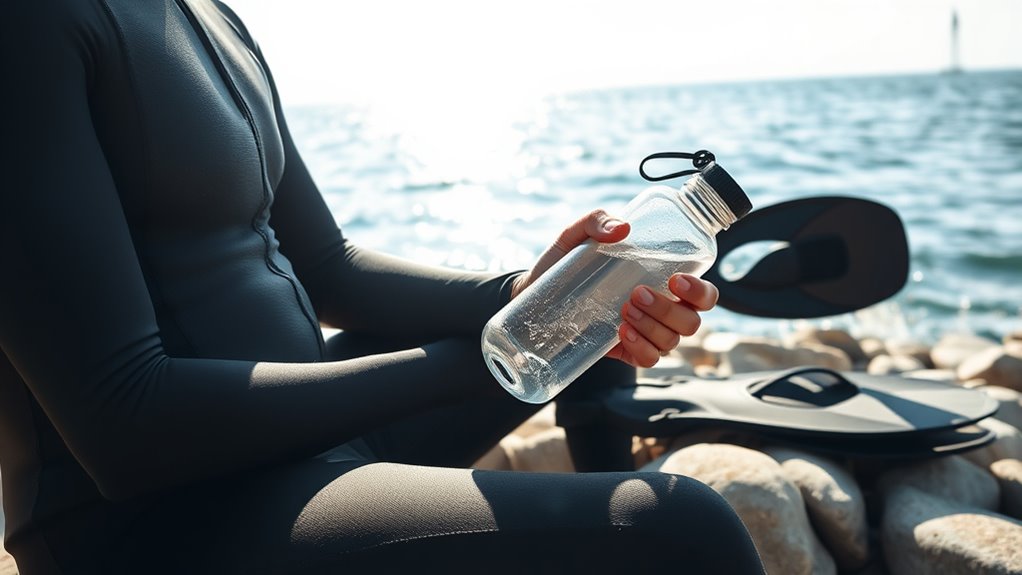

After a dive, focus on rehydrating with plenty of water or electrolyte drinks to support nitrogen elimination and tissue repair. Avoid alcohol and caffeine, which can dehydrate you further. Eating nutrient-rich foods like fruits and lean proteins helps your body recover faster. Proper hydration and nutrition reduce symptoms like fatigue, dizziness, and joint pain, lowering the risk of decompression issues. Keep your recovery routine in check—your next steps could make a difference.
Key Takeaways
- Drink plenty of water or electrolyte-rich beverages immediately after diving to promote nitrogen elimination and hydration.
- Avoid alcohol and caffeine post-dive, as they can cause dehydration and impair recovery.
- Consume nutrient-dense foods like fruits, vegetables, and lean proteins to support tissue repair and immune function.
- Plan dives with proper load management and avoid overexertion to reduce nitrogen buildup and support safer recovery.
- Monitor for symptoms like joint pain or dizziness; seek medical help promptly if signs of decompression sickness appear.
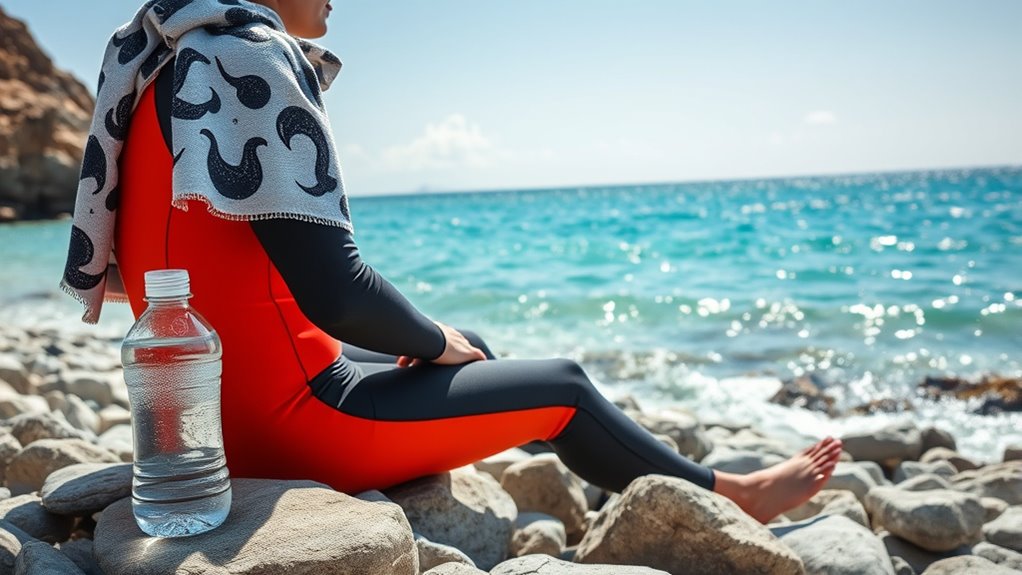
After a dive, proper recovery and hydration are indispensable to help your body rest, repair, and prevent potential health issues like decompression sickness. Diving causes nitrogen to dissolve into your tissues, and if you ascend too quickly or don’t follow safe procedures, nitrogen bubbles can form in your bloodstream, leading to decompression sickness. To minimize this risk, implementing effective hydration strategies is essential. Staying well-hydrated helps your body eliminate excess nitrogen more efficiently and reduces the likelihood of bubble formation. It’s important to start hydrating immediately after your dive, but you should also continue throughout the day to replenish lost fluids from sweating and exertion.
Your hydration plan should include drinking plenty of water or electrolyte-rich beverages. Electrolytes help maintain your body’s fluid balance and support cellular functions, which are critical during recovery. Avoid alcohol and caffeinated drinks in the hours after diving, as they can dehydrate you further and impede your body’s ability to recover. Water is your best choice; however, if you’ve been diving for an extended period or in hot conditions, adding electrolyte solutions can be especially beneficial. These strategies work together to promote circulation, support tissue repair, and help eliminate dissolved gases like nitrogen. Proper hydration also reduces the chances of dehydration-related symptoms such as headaches, fatigue, and dizziness, which can be mistaken for or mask signs of decompression sickness.
Additionally, understanding your sizing and load planning can help prevent overexertion during your dive, reducing the overall nitrogen load and supporting a safer recovery process. In addition to drinking fluids, focus on eating nutrient-dense foods rich in vitamins and minerals to support your body’s repair processes. Fresh fruits, vegetables, and lean proteins provide the essential nutrients needed for tissue healing and immune function. Rest is equally important, so make sure you’re allowing yourself enough time to recover before engaging in strenuous activities or diving again. If you experience any symptoms like joint pain, dizziness, or tingling, don’t ignore them. Seek immediate medical attention, as these could be signs of decompression sickness requiring prompt treatment.

Ninja Air Fryer XL with MaxCrisp, 6.5 Qt, 6-in-1, Grey, AF181
- Max Crisp Technology: Up to 450°F for crispy results
- 6-in-1 Cooking Functions: Multiple cooking modes including bake and dehydrate
- XL Capacity: 6.5-quart basket for large meals
As an affiliate, we earn on qualifying purchases.
Frequently Asked Questions
How Long Should I Wait Before Flying After Diving?
You should wait at least 18-24 hours before flying after plunging in. Altitude effects can worsen if you fly too soon, increasing the risk of decompression sickness. Proper dive planning includes allowing your body time to off-gas safely. By waiting this period, you reduce the risk of complications, ensuring a safer flight and better recovery. Always follow your dive instructor’s or dive computer’s recommendations for safe post-dive practices.
Are There Specific Hydration Drinks Recommended for Divers?
Hydration helps and hydrates, so you should choose drinks that balance electrolytes like sodium, potassium, and magnesium. Opt for specially formulated sports drinks or electrolyte-enhanced waters to promote proper electrolyte balance. Remember, hydration timing matters—drink before, during, and after your dive to stay well-hydrated. Avoid sugary sodas and alcohol, which can dehydrate you. Prioritize replenishing fluids promptly to keep your body balanced and ready for your next adventure.
Can I Exercise Immediately After a Dive?
You shouldn’t exercise immediately after a dive. Instead, focus on post-dive stretching to relax your muscles and prevent stiffness. Wait at least a few hours before engaging in strenuous activity. During this time, perform dive gear maintenance to ensure everything stays in good condition. Proper recovery helps your body process nitrogen and reduces the risk of decompression sickness, making your next dive safer and more enjoyable.
What Are the Signs of Dehydration After Diving?
Dehydration symptoms after diving include dry mouth, dizziness, fatigue, dark urine, and headache. You might also notice muscle cramps or feeling unusually thirsty. To prevent this, follow effective hydration strategies like drinking plenty of water before and after your dive, and consuming electrolyte-rich beverages. Pay attention to your body’s signals, and if you experience symptoms, hydrate promptly to support recovery and avoid complications.
How Does Alcohol Consumption Affect Post-Dive Recovery?
Ever wondered how alcohol affects your recovery? Drinking alcohol post-dive can hinder your healing process because alcohol effects hydration levels, interfering with proper rehydration. It dehydrates your body further and impairs blood circulation, slowing down the recovery of tissues and eliminating toxins. Do you really want to compromise your health and dive safety? Opt for water or electrolyte drinks instead, ensuring your body recovers swiftly and safely after diving.
Conclusion
Remember, proper recovery and hydration are key to enjoying diving safely. Some might think skipping these steps won’t affect them, but dehydration and fatigue can lead to serious health issues. By prioritizing rehydration and rest after each dive, you help your body recover faster and reduce risks. It only takes a few minutes to hydrate and relax—so don’t overlook these simple steps. Your body will thank you, and your next dive will be even better.