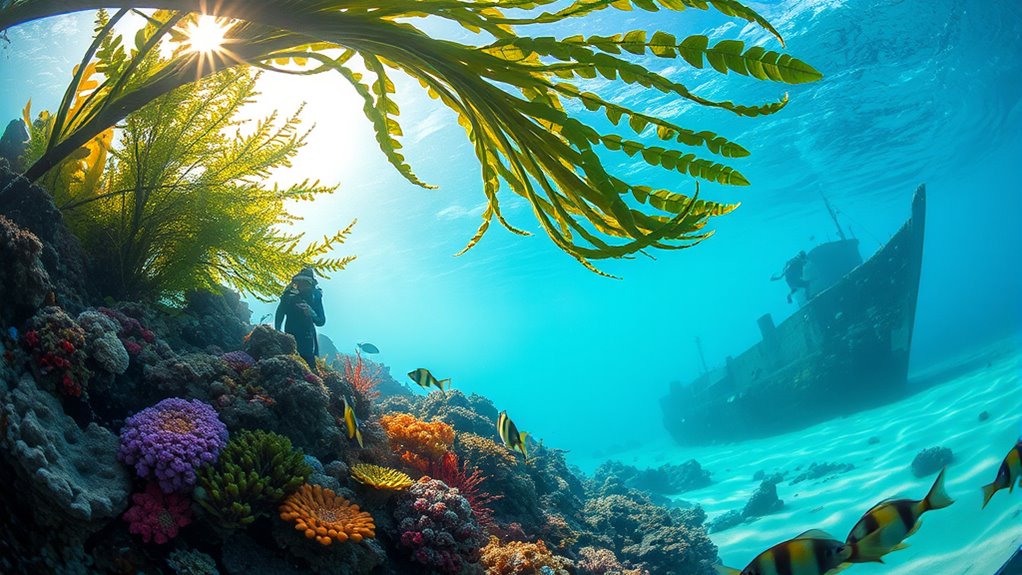
Choosing the best spearfishing spots involves understanding the unique features of reefs, kelp forests, and wrecks. Reefs offer complex structures that shelter fish like snapper and grouper, while kelp forests provide cover and attract species such as rockfish and halibut. Wrecks create intricate environments for ambush predators like amberjack and snappers. Your success depends on observing how fish behave around these terrains. Keep exploring to discover the key details that will improve your targeting tactics.
Key Takeaways
- Assess the terrain features like crevices, overhangs, or kelp density to locate fish hiding spots.
- Observe fish behavior and movement near structures to identify active feeding or shelter areas.
- Consider water clarity and current flow to determine how fish interact with reef, kelp, or wreck environments.
- Target species that favor specific terrains, such as snapper around reefs or halibut in kelp forests.
- Prioritize areas with abundant cover and structure complexity for increased chances of successful spearfishing.

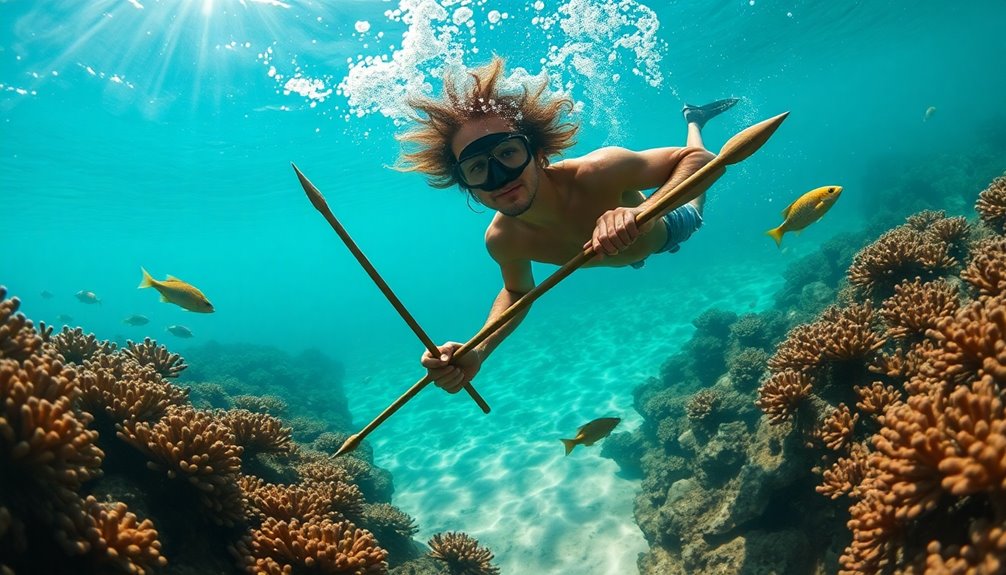
Choosing the right spearfishing spot is essential for a successful and enjoyable dive. Your success largely depends on understanding the underwater terrain and how fish behave in different environments. When you select a reef, you’re choosing a landscape rich with crevices, overhangs, and coral formations. These features create shelter and hiding spots for fish, making reefs prime locations for targeting species like snapper, grouper, and yellowtail. As you explore, pay close attention to the contours of the terrain—fish tend to gather near structures that offer protection or feeding opportunities. The way the terrain varies influences how fish behave; some will stay close to the reef’s edges, while others venture into open water but return for safety or food sources. Observing these patterns helps you anticipate where your target species might be hiding or feeding.
Kelp forests offer a different experience. The underwater terrain here consists of dense, towering kelp stalks that sway with the current. Fish in kelp beds often exhibit distinct behavior—hiding within the foliage or darting in and out of the swaying fronds. These environments attract species like calico bass, halibut, and rockfish, which use the kelp for cover and ambush points. When you’re diving in kelp, focus on how the fish interact with the terrain; they tend to move along the kelp edges or congregate near the base where food is abundant. The movement of kelp itself influences fish behavior, making it vital to stay alert to the subtle shifts in activity—like sudden darting or clustering—that signal the presence of prey or predators. Knowing where fish tend to hide or feed within kelp forests allows you to position yourself better for a shot.
Wrecks present a unique underwater terrain that often attracts a variety of marine life. These man-made structures create complex environments with nooks, tunnels, and debris that fish find appealing for shelter and hunting. Fish behavior around wrecks varies based on the species; some prefer to stay within the structure for safety, while others patrol around it for food. As you approach a wreck, observe the movement patterns of fish—notice where they congregate or retreat to. Wrecks often host species like amberjack, snappers, and sometimes even larger pelagic fish. The terrain of a wreck provides opportunities for ambush and stalking, but it also demands respect—be cautious of entanglements and swift currents that can influence fish movement. Recognizing how fish behave around these structures helps you plan your approach, position yourself strategically, and increase your chances of a successful shot.
In all cases, understanding the underwater terrain and fish behavior is key. It guides you to the best spots, helps you read the environment, and ultimately makes your spearfishing more effective and enjoyable.
Frequently Asked Questions
What Gear Is Best for Different Spearfishing Environments?
For different spearfishing environments, you should choose gear types suited to each setting. Use a sturdy, corrosion-resistant spear gun for reefs, lightweight gear for kelp forests, and a robust setup for wrecks. Always prioritize equipment maintenance to guarantee reliability. Adjust your wetsuit thickness, fins, and masks according to water conditions. Properly maintained gear boosts your safety and success, making every dive more effective and enjoyable.
How Do Weather Conditions Affect Spot Selection?
Weather conditions can make or break your spearfishing plans. Clear, calm weather with stable weather patterns boosts visibility and safety, while storms or strong winds hinder your spot choice. Tide influence becomes essential; high tides can bring fish closer to reefs and wrecks, making them easier targets. Always check weather forecasts and tide charts before heading out, ensuring your spot aligns with safe, productive conditions.
Are There Legal Restrictions for Spearfishing at Wreck Sites?
Yes, there are legal restrictions for spearfishing at wreck sites. You need to check local regulations and adhere to wreck site regulations, which often include restrictions on access, fishing methods, and protected areas. Some wrecks may be off-limits entirely, especially if they’re designated historic sites or pose safety risks. Always verify with local authorities or dive shops to guarantee you’re compliant, avoiding fines or penalties.
How Can I Identify the Most Productive Reefs?
Think of reefs as underwater treasure chests waiting to be opened. To find the most productive reefs, you’ll want to study marine biodiversity and reef topography. Look for vibrant, thriving ecosystems teeming with fish, corals, and marine life. Use your observations of fish movements and reef structures to guide you. A reef rich in diverse species and complex topography is your best bet for a rewarding spearfishing adventure.
What Safety Precautions Are Essential in Kelp Forests?
You should always carry a dive knife for kelp forest navigation and to free yourself if tangled. Stay aware of kelp forest wildlife, like sea lions or jellyfish, and maintain a safe distance. Use a buoy or float to mark your position and avoid disorientation. Keep a close eye on your depth and air supply, and never dive alone. These precautions keep you safe amid the dense kelp and active marine life.
Conclusion
Now that you know how to choose between reefs, kelp beds, and wrecks, you’re ready to conquer the underwater world. Each spot offers unique challenges and rewards, so trust your instincts and adapt your approach. With the right spot, you’ll feel like a spear-wielding superhero, effortlessly gliding through the water. Remember, the perfect spot is waiting—dive in and make every shot count. Your next great catch is just a dive away!