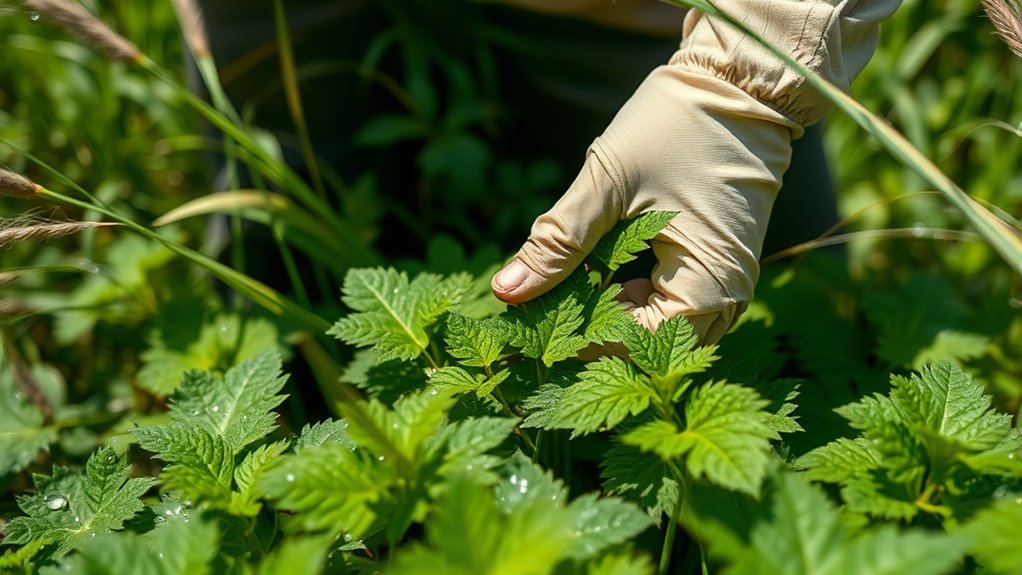

To harvest stinging nettle without getting stung, wear gloves and long sleeves to protect your skin. Use scissors or garden shears to snip young, tender leaves, preferably in early spring or summer. Immediately blanch the leaves in boiling water for 1-2 minutes to neutralize the tiny, hair-like structures that cause irritation. Proper handling makes it safe to enjoy its nutritional benefits, and there’s more to discover about this fascinating plant.
Key Takeaways
- Wear gloves and long sleeves when harvesting to prevent skin irritation from contact with stinging hairs.
- Harvest young, tender leaves early in the season for easier handling and reduced sting risk.
- Blanch leaves in boiling water for 1-2 minutes to neutralize the sting before handling or consumption.
- Use clean scissors or garden shears to snip leaves carefully, minimizing contact with the plant’s hairs.
- Handle and process nettles promptly to maintain safety and preserve their nutritional benefits.
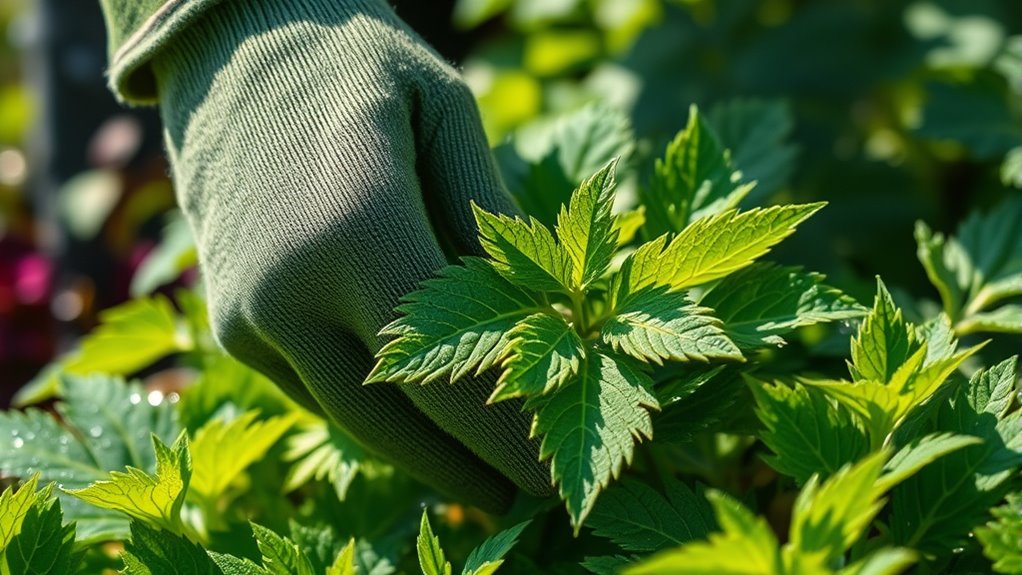
Have you ever brushed against a stinging nettle and felt an immediate, burning sensation? That prickly feeling is caused by tiny, hair-like structures that inject irritating compounds into your skin. But don’t let that scare you away from this remarkable plant. When handled properly, stinging nettle offers impressive nutritional benefits and can be a valuable addition to your garden or kitchen. Understanding how to harvest and prepare it safely is key to enjoying its benefits without the sting.
Brushing against stinging nettle causes a burning sensation, but proper handling unlocks its nutritional benefits safely.
Nutritionally, stinging nettle is a powerhouse. It’s rich in vitamins A, C, and K, along with minerals like iron, calcium, magnesium, and potassium. These nutrients contribute to overall health, supporting immune function, bone health, and energy levels. The plant also contains antioxidants and anti-inflammatory compounds, making it a natural remedy for joint pain and allergies. Because it’s so nutrient-dense, incorporating young, tender nettle leaves into soups, stews, or teas can boost your diet in a simple and natural way. Many people use it as a greens substitute, appreciating its nutritional profile just as much as its flavor.
Growing tips are straightforward if you follow a few simple guidelines. Stinging nettle prefers moist, fertile soil with plenty of organic matter. It thrives in partial to full sun but can adapt to shadier spots. When planting, space the crowns about 12 to 18 inches apart to give each plant room to grow. Keep the area weed-free and water regularly, especially during dry spells, to promote healthy, vigorous growth. Though nettle can spread rapidly through its root system, you can control it by planting in containers or using root barriers. Always wear gloves when handling the plants to avoid getting stung, especially when they’re mature and more likely to cause irritation.
To harvest safely, wait until the leaves are young and tender—usually in spring or early summer. Use scissors or garden shears to snip the top growth, and immediately wear gloves and long sleeves to prevent skin contact. Once harvested, you can blanch or dry the leaves to neutralize their sting and preserve their nutrients. Blanching for a minute or two in boiling water, then rinsing in cold water, makes the leaves safe to handle and cook with. Drying your nettles in a well-ventilated space keeps the leaves usable for teas and powders long after the growing season ends. By following these growing tips and harvesting carefully, you’ll be able to enjoy the many nutritional benefits of stinging nettle without the pain.
Additionally, understanding the plant’s history can deepen your appreciation and help you identify the best harvesting times.
Frequently Asked Questions
Can Stinging Nettle Be Safely Ingested Raw?
Yes, you can safely ingest raw stinging nettle if you follow proper safety precautions. Always wear gloves when harvesting to avoid getting stung, and wash the leaves thoroughly to remove dirt and potential contaminants. Keep in mind that raw nettle can cause a stinging sensation, so consider blanching or cooking it briefly to neutralize the stinging hairs. With these precautions, raw consumption is safe and nutritious.
What Are the Best Times to Harvest Nettles?
Did you know that harvesting nettles at the right time can boost their nutrient content by up to 30%? The best harvesting times are in early spring and late summer, when the plants are young and tender. Seasonal considerations matter—avoid late fall, as plants become woody and less nutritious. Pick the top few inches of new growth, ideally on a clear, dry day for the freshest, safest harvest.
Are There Any Plants Similar to Stinging Nettle?
You’ll find plant lookalikes and stinging nettle alternatives like deadnettles, which have similar jagged leaves but lack the sting. Clear identification is key, so check for the tiny hairs that cause the sting—these are absent in lookalikes. Other options include false nettles and some mint varieties, which can be used as substitutes in recipes or herbal remedies. Always verify plant identities before harvesting to avoid confusing stinging nettles with safe lookalikes.
How Long Does It Take for Nettle Stings to Heal?
Imagine the stinging sensation as a temporary storm—usually, it passes quickly. Your skin typically heals from nettle stings within 15 minutes to a few hours, but sometimes it takes up to 24 hours depending on your sensitivity. During this healing process, you might experience redness, itching, or swelling. Applying cold packs or soothing remedies can speed up recovery, ensuring you’re back to feeling comfortable sooner rather than later.
Can Nettle Be Used for Medicinal Purposes?
Yes, you can use nettle for medicinal purposes because it offers many medicinal benefits. You might incorporate it into herbal remedies to treat conditions like allergies, arthritis, or anemia. When prepared correctly—such as in teas, tinctures, or cooked dishes—its nutrients help boost your immune system and reduce inflammation. Always harvest carefully to avoid stings, and consider consulting a healthcare professional before adding nettle to your herbal remedy routine.
Conclusion
Now that you know the secrets to harvesting stinging nettle without the sting, you hold a wild treasure in your hands. Think of it as revealing a hidden garden, where danger and delight dance together beneath the surface. With gentle care and respect, you become a gardener of nature’s whispers, turning prickly leaves into nourishing magic. Embrace the journey—you’re not just harvesting nettle; you’re forging a bond with the wild, ancient heart of the earth.