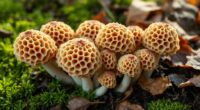
To safely forage chanterelles, focus on their bright golden color, funnel-shaped caps, wavy surfaces, and forked ridges that run down the stem, which are lighter than the cap. Be aware of lookalikes like false chanterelles and the toxic jack-o’-lantern mushroom, which have forked gills or orange hues. Carefully examine each mushroom, use reliable guides, and harvest sustainably to protect the environment. Keep exploring to learn more about staying safe and successful in your foraging adventures.

Get garden gear delivered free — and shop member deals
- Fast, free delivery on millions of items
- Access to Prime Big Deal Days deals on October 6–7
- Prime Video, Amazon Music and more included
Key Takeaways
- Identify chanterelles by their bright yellow color, funnel shape, wavy cap, and forked ridges that run down the stem.
- Differentiate true chanterelles from lookalikes like false chanterelles and jack-o’-lanterns by examining gill structure and color.
- Avoid harvesting ambiguous mushrooms; verify features with a reliable field guide or mobile app before collecting.
- Practice sustainable harvesting by pinching or cutting stems at ground level and leaving some mature specimens intact.
- Educate yourself on toxic lookalikes and always prioritize safety to prevent health risks from misidentification.

If you’re interested in wild mushrooms, foraging for chanterelles is a rewarding experience you can enjoy with the right knowledge. These mushrooms are prized for their flavor and versatility, but identifying them correctly is essential to guarantee toxin prevention and sustainable harvesting. Chanterelles typically have a bright golden-yellow color, with a funnel-shaped cap that ranges from 2 to 8 inches across. The cap’s surface is often wavy or irregular, and underneath, you’ll find gill-like ridges that run down the stem, rather than true gills. These ridges are often forked and can be slightly lighter in color than the cap, which helps distinguish them from lookalikes. The stems are usually solid, firm, and have a matching color to the cap, sometimes with a slightly paler hue at the base. When foraging, look for these distinctive features to confirm you’re collecting chanterelles and not a toxic mimic.
One of the most critical aspects of foraging for chanterelles is toxin prevention. Several lookalikes, such as the deadly jack-o’-lantern mushroom or the false chanterelle, can be dangerous if mistaken for the real deal. False chanterelles often have forked gills rather than ridges, a more orange or reddish hue, and a softer, less firm texture. Jack-o’-lanterns, on the other hand, glow faintly in the dark and contain toxins that can cause severe gastrointestinal distress. To prevent accidental ingestion, educate yourself thoroughly about these differences and examine each mushroom carefully before harvesting. Using a reliable field guide or app can help you verify your finds.
Sustainable harvesting is equally important to maintain healthy mushroom populations and their surrounding ecosystems. When collecting chanterelles, pinch or cut the stem at the base rather than pulling the entire mushroom out of the ground. This practice encourages regrowth and minimizes soil disturbance. Avoid over-harvesting in a single area; instead, select a few mature specimens and leave some behind to spore and propagate future growth. Be mindful of your environment—avoid trampling other plants or disrupting wildlife habitats. By respecting these principles, you guarantee that future foragers can enjoy the thrill of finding fresh chanterelles while preserving the natural balance of the area.
Top picks for "forag chanterell lookalik"
As an affiliate, we earn on qualifying purchases.
Frequently Asked Questions
When Is the Best Time of Year to Forage for Chanterelles?
You should forage for chanterelles during late summer to early fall, when seasonal foraging is at its peak. This period aligns with mushroom maturation, ensuring the fungi are ripe for harvest. Keep an eye on weather conditions, as warm, moist environments promote growth. Typically, after periods of rain, you’ll find the best chanterelles, making this the ideal time to hunt for these delicious mushrooms.
Can Chanterelles Be Eaten Raw or Should They Always Be Cooked?
You should always cook chanterelles before eating them; raw consumption isn’t recommended. Cooking methods like sautéing, frying, or boiling help break down toxins and improve flavor. Raw chanterelles can cause stomach upset or allergic reactions, so it’s safer to cook them thoroughly. By doing so, you open their best taste and guarantee you enjoy them safely, making cooking an essential step in your foraging process.
Are There Any Health Risks Associated With Consuming Wild Chanterelles?
You should know that less than 1% of wild chanterelles cause serious toxicity concerns, but some people might experience allergic reactions. Always cook chanterelles thoroughly, as raw consumption can increase health risks. While generally safe for most, if you have allergies or sensitivities, start with small amounts and watch for symptoms. Proper identification and preparation help make sure you enjoy their delicious flavor safely.
How Should I Store Freshly Foraged Chanterelles to Keep Them Fresh?
To keep your freshly foraged chanterelles fresh, store them in a paper bag or a breathable container to preserve their freshness and prevent moisture buildup. Avoid plastic bags, as they trap humidity and cause spoilage. Keep them in the refrigerator, ideally in the crisper drawer, and use them within a few days. Proper storage tips help maintain their flavor and texture, ensuring your chanterelles stay delicious longer.
Can Chanterelles Be Cultivated Commercially or Are They Only Wild-Harvested?
Chanterelles are like elusive treasures, mainly wild-harvested rather than commercially cultivated. You won’t find many farms growing them, as they rely on specific symbiotic relationships with trees that are tough to replicate. While researchers explore commercial cultivation, most chanterelles you see in markets still come from wild harvesting. So, if you’re after fresh ones, your best bet is to head into the woods and forage responsibly.
Conclusion
As you venture into the woods, remember that every foraged treasure holds a quiet story, waiting to be discovered with patience and respect. Trust your instincts, but stay vigilant for subtle differences. The joy of gathering chanterelles is a gentle dance between curiosity and caution. With mindful foraging, you’ll cultivate not just a bountiful harvest, but a deeper connection to nature’s delicate secrets. Happy foraging, and may your journey be as rewarding as the mushrooms you seek.
Fall Picks
fall essentials
As an affiliate, we earn on qualifying purchases.