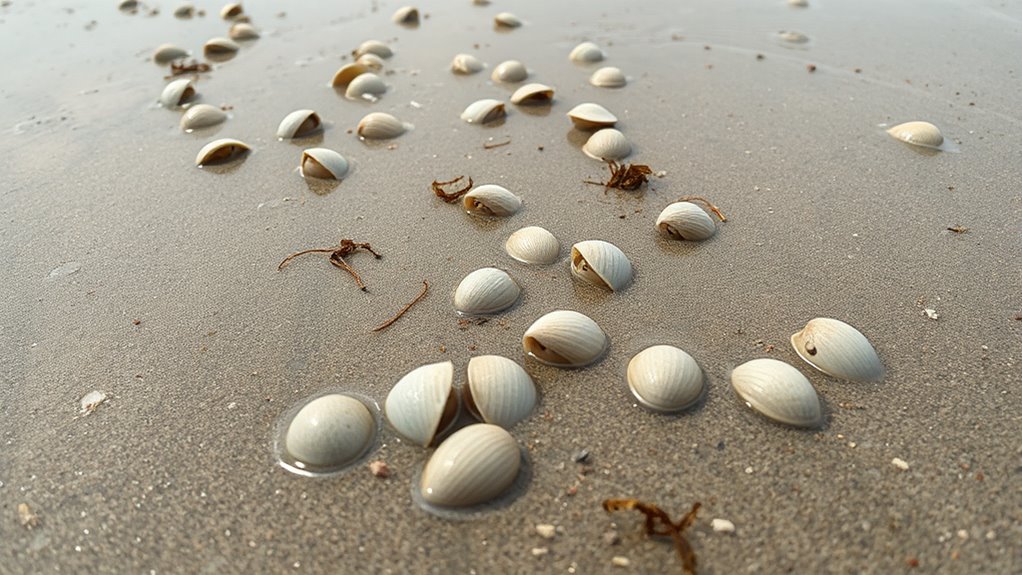
After a storm surge, look for signs like disturbed sand, small ridges, or circular depressions that hint at buried clams. Water receding or stirring sediment exposes shells or makes clams easier to spot. Gently tap or prod these areas to confirm the presence of clams. Focus on soft, moist sand and use careful digging techniques. Keep exploring these clues, and you’ll uncover more tips to improve your clam-hunting success.
Key Takeaways
- Look for disturbed or irregular sand patches, small depressions, or tiny holes indicating buried clams after a storm.
- Observe areas where water has receded or stirred sediment, exposing clam tops or ridges.
- Use gentle tapping or prodding to confirm the presence of buried clams beneath disturbed sand.
- Focus on soft, moist sand and post-storm beaches for easier detection and less crowd interference.
- Practice patience and slow movements to avoid startling or damaging the clams during discovery.

Beneath the ocean’s surface, many clams hide in plain sight, their shells blending seamlessly with the sandy seabed. After a storm surge, these buried treasures can become more visible, but spotting them requires a keen eye and some practical know-how. If you’re interested in clam digging or just want to enhance your beachcombing tips, understanding how clams behave after turbulent weather is crucial. Storm surges often displace the sand, exposing the tops of shells or creating small ridges where clams are buried just beneath the surface. To find them, you need to pay attention to subtle signs, like irregularities in the sand or tiny holes indicating where a clam might be hiding underground.
After storms, sand shifts reveal clams hiding beneath the surface, making them easier to find with keen observation.
When searching for clams after a storm, start by scanning the beach for areas with disturbed sand. Look for small, circular depressions or mounds that suggest a shell is just beneath the surface. These signs often appear where the water has recently receded or stirred up the sediment. As part of your beachcombing tips, gently tap or prod these spots with your finger or a small tool. If you hear a hollow sound or feel resistance, there’s a good chance a clam is waiting underneath. Remember, clams often close tightly when disturbed, so don’t be discouraged if they don’t immediately respond.
Clam digging isn’t just about luck; it’s about strategy. Use a small, sturdy shovel or clam rake to carefully dig around promising signs without damaging the shells or disturbing the surrounding habitat. Digging at a slight angle helps preserve the clam and makes extraction easier. Be gentle but thorough—clams have delicate siphons that can be damaged if you rush. It’s also wise to check the tide charts and aim for low tide or after the storm surge has settled, as more clams tend to be exposed or closer to the surface during these times. Additionally, understanding the importance of contrast ratio can help you choose the right equipment for better visibility in different lighting conditions.
As you dig, stay patient and observant. Sometimes, a clam might slip back into its burrow if you’re too rough, so slow and steady wins the race. Many beachcombers find that the best clam digging occurs in areas where the sand is soft and moist, which makes digging easier and reduces the risk of damaging the shells. After a storm, the beach might be less crowded, giving you more room to carefully search for these hidden bivalves. With practice, your eye will become sharper at spotting the subtle signs that reveal where clams are hiding just beneath the surface, turning a simple walk on the beach into an exciting treasure hunt.
Top picks for "hidden clam reveal"
As an affiliate, we earn on qualifying purchases.
Frequently Asked Questions
Are Buried Clams Safe to Eat After a Storm?
After a storm, you might wonder if buried clams are safe to eat. It’s best to check local clamming regulations before harvesting, as storms can contaminate shellfish with bacteria or toxins. Even if you find them, seafood safety is vital; avoid eating clams that look or smell off. Always verify with health advisories and proper testing to guarantee your catch is safe for consumption.
How Deep Can Clams Be Buried Underground?
Clam depth varies depending on their burrowing behavior, but most burrow 1 to 3 inches underground. Some species can dig deeper, up to 12 inches, especially in loose or sandy sediment. You should look for signs like slight depressions or siphon holes, which indicate their presence. Understanding their burrowing depth helps you locate them effectively, but always exercise caution to avoid damaging their habitat or harvesting unsafe clams.
Do All Storm Surges Displace Clams Equally?
Imagine a gentle wave nudging a sandcastle, then a storm surge smashing it apart. Not all storm surge impacts displace clams equally—some are barely disturbed, while others are swept away entirely. Factors like surge strength and shoreline conditions influence clam displacement. So, you’ll see varied effects; some clams stay buried, others get exposed or relocated, revealing how unpredictable the storm surge impact truly is on these benthic creatures.
Can Severe Weather Damage Clam Habitats Permanently?
Severe weather can permanently damage clam habitats, especially if it causes erosion or disrupts sediment layers. You should check local clamming regulations before harvesting, as some areas require permits due to habitat sensitivity. If you’re involved in clam farming, you’ll need to evaluate storm impact carefully, since natural disruptions can affect growth and sustainability. Protecting habitats helps guarantee healthy clam populations for future harvests.
What Tools Are Best for Locating Buried Clams?
You might think finding buried clams is easy, but it’s like searching for buried treasure in a sea of mud. Use detection equipment like metal detectors or ground-penetrating radar for precise clam excavation. These tools help you locate bivalves hidden beneath the surface, saving time and effort. With the right detection equipment, you can uncover clams efficiently and avoid damaging their delicate habitats, making your search both successful and eco-friendly.
Conclusion
Now that you know how to spot buried clams after a storm surge, you’ll be ready to uncover these hidden treasures. Keep your eyes peeled and your hands steady—patience is key. Remember, sometimes you have to dig a little deeper to find what’s truly worth the effort. Don’t let the opportunity slip through your fingers; with a keen eye, you’ll strike gold where others just see mud. Happy clam hunting!